The exploration of addiction and recovery, a painful and messy terrain, has been a cornerstone of storytelling in all forms for generations. Books, television, and movies have delved into the grimy nooks and crud-filled crannies of disparate lives, seeking redemption and reconnection with the world. These narratives, more than mere ‘entertainment’, serve as powerful reminders of the strength in a supportive community and the raw hopelessness that can occur when an individual in the grip of dependence cannot pull themselves out of their darkness.
I first saw The Outrun, based on Amy Liptrot’s 2016 memoir, at its world premiere at the Sundance Film Festival in January, and at the time, I couldn’t quite get my head or heart around it. Directed by Nora Fingscheidt, it’s an often-chaotic swirl of London’s intoxicating sound and color that only slows down when set against the rugged backdrop of Scotland’s remote Orkney Islands. Rona (Saoirse Ronan, Little Women), lost amidst the hustle of the big city, develops a brutal addiction to drugs and alcohol that alienate her from her loved ones. Retreating from temptation as far as she can, the raw wildness of Orkney offers a wind-swept haven that heals her externally, but the internal wounds run deep.
Working with Ronan to deliver a quiet yet powerful narrative, it was on a second viewing that I recognized (understood?) how intricate of a balance Fingscheidt has found between Rona’s dreamlike urban existence and her meditative rebuilding of a life she never thought possible. On Orkney, Rona’s memories collide with the torrential elements that don’t discern right and wrong, instilling in her a newfound sense of purpose and strength that allows her to stand on her own two feet.
It may be challenging for some audiences to reach this point because The Outrun doesn’t hold your hand. Unlike the addiction drama genre’s typical focus on gradual isolation and subsequent rebuilding, Fingscheidt and Liptrot (along with Daisy Lewis, who receives story credit) have framed the recovery as a deliberately paced return to nature in a non-linear narrative, which can be hard to follow. The film’s pacing, while it may seem too slow for some, is intentional. Like recovery, The Outrun doesn’t rush to conclusions but allows space for the gradual accumulation of emotional depth. Little clues are left along the way, but it’s up to the viewer to be attentive to how the story evolves (or devolves) as it works to make itself whole.
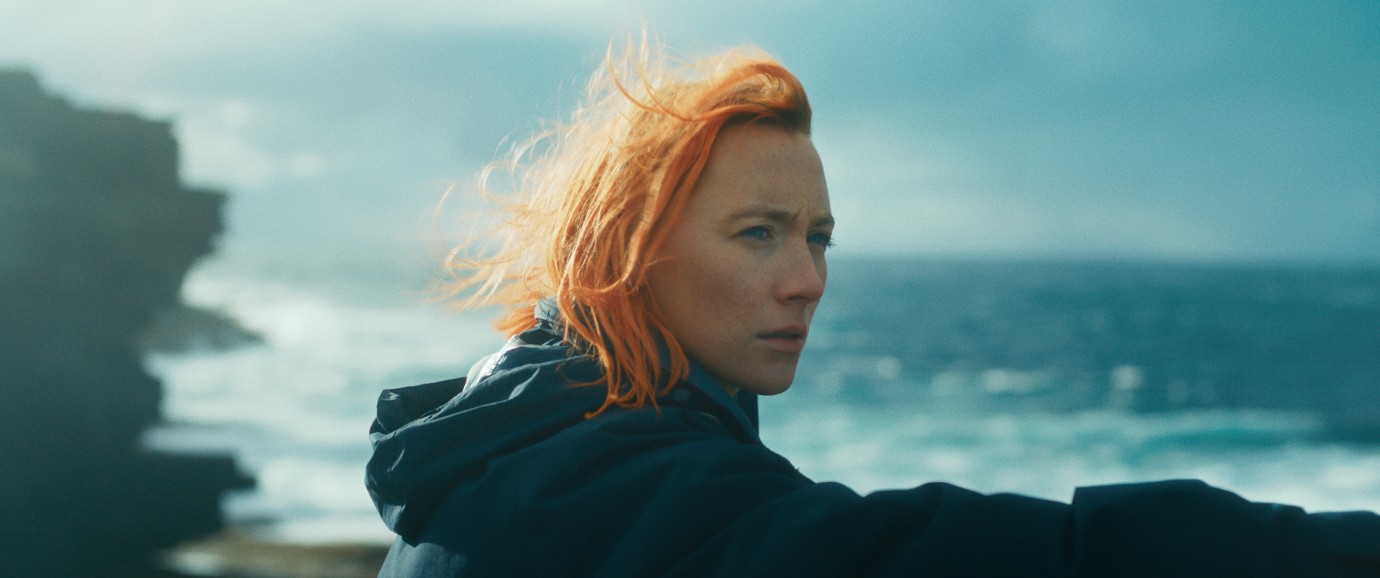
Ronan’s deeply absorbing performance is the heart of the film. Without forcefully dominating the screen by heaping on layers of melodrama, she opts for quiet devastation found in the smallest shifts in her expression. Throughout her career, Ronan has excelled in communicating internal storms through her eyes, and cinematographer Yunus Roy Imer is right there to capture every bruised flicker of self-doubt and flash of hope. Imer’s skillful use of light and framing enhances the emotional resonance of Ronan’s performance. The role could easily have been chock full of clichéd moments, but Ronan has done impressive work to keep Rona strong, uncertain, and always relatable.
An equally strong ensemble cast supports Ronan. Poised with tenderness and a deep, unspoken sadness, Saskia Reeves is a standout as Rona’s mother. And Stephen Dillane (Darkest Hour) brings a grounded intensity as Rona’s father, Andrew, battles long-standing demons of his own. Though I’m grateful a love story wasn’t forced on the film, Paapa Essiedu’s (Genie) subtly optimistic character is the closest we get to Rona finding happiness before her fall.
Hausner’s lens lingers on the rugged beauty of the islands, transforming the Orkney Islands into a central character in the film. I’m not going to say that it will inspire huge tourism to this remote part of the world, but its rolling waves, desolate moors, and skies choked by clouds possess a rich beauty that’s as haunting as it is hopeful. You feel this strongly during The Outrun’s most affecting scene; it’s near the end and involves Ronan in full communion with her setting, orchestrating the elements in a breathtaking symphony of nature.
The film’s repetition of scenes and themes can sometimes make it feel unnecessarily drawn out, dulling the emotional impact. However, most of these slow moments revealed their purpose in my second viewing. These are the unpredictable patterns of the recovery process when momentum stalls and progress comes in fits and starts. For those willing to immerse themselves in these patient rhythms, there is an opportunity for profound clarity in one’s life.
Rewarding you with moments of stunning visual beauty where nature serves as both a pot-stirrer and an ultimate healer, Ronan’s fearless performance refines familiar themes found in recovery dramas. It may not break significant new ground in the genre, but The Outrun reminds you that finding your footing again is often the best place to start in the face of life’s commotion.


Leave a Reply