The MN Movie Man

The Baltimorons Review: Broken Tooth, Healing Heart

Synopsis: A newly sober man’s Christmas Eve dental emergency leads to an unexpected romance with his older dentist as they explore Baltimore together.
Stars: Michael Strassner, Liz Larson, Olivia Luccardi, Jessie Cohen, Brian Mendes, Mary Catherine Garrison
Director: Jay Duplass
Rated: NR
Running Length: 100 minutes
Movie Review in Brief: The Baltimorons transforms personal trauma into universal truth, with Strassner and Larsen creating authentic chemistry that elevates Jay Duplass’s intimate return to independent filmmaking.

Review:

Twenty years after The Puffy Chair helped birth mumblecore, Jay Duplass (Pain Hustlers) returns solo to remind us what independent cinema does best: illuminate enormous truths through intimate stories. The Baltimorons arrives when American indies desperately need this reminder, delivering a Christmas Eve romance that glows with hard-won wisdom about recovery, connection, and choosing vulnerability despite every instinct screaming against it.

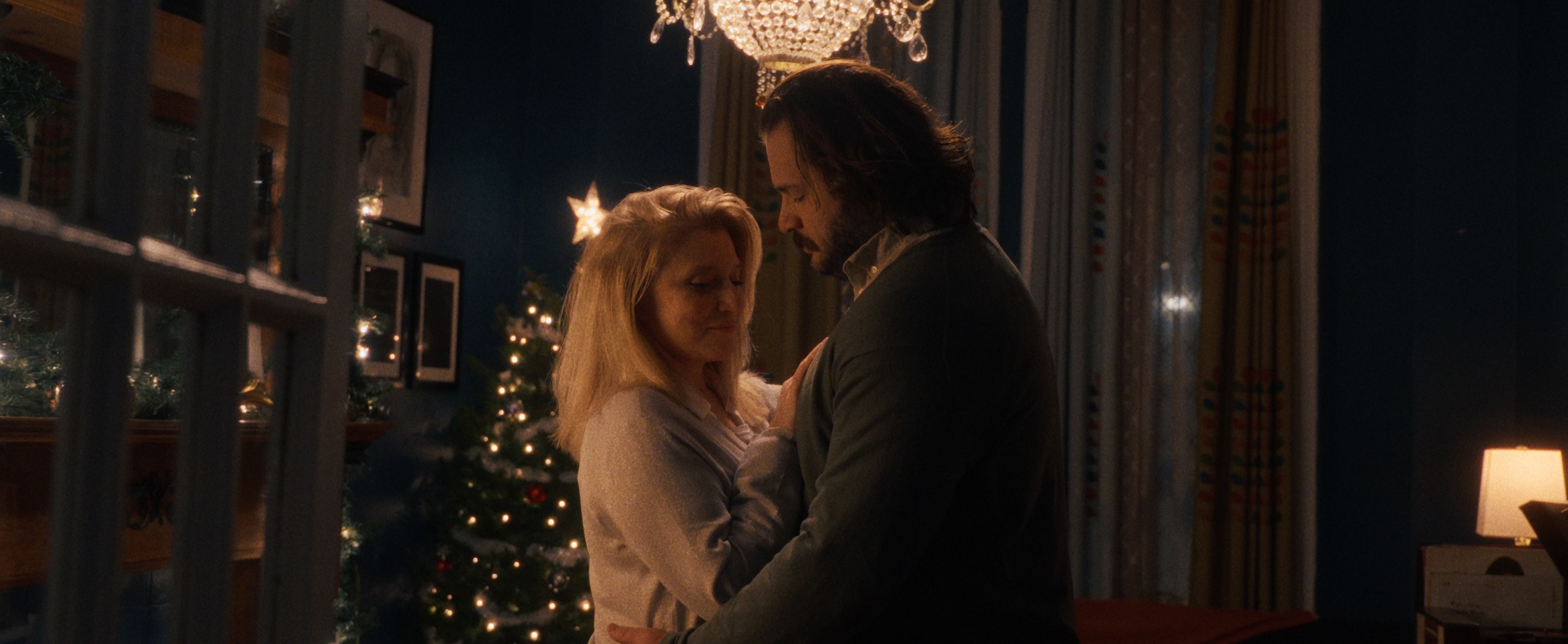
The film opens with a literal and emotional emergency. Cliff (Michael Strassner), a newly sober improv comedian, cracks a tooth before he even sets foot inside his fiancée’s childhood home for family dinner. This sends him on a frantic search for an emergency dentist, which lands him in the chair of Dr. Didi Delacroix (Liz Larsen), barely concealing her holiday baggage beneath no-nonsense professionalism. Their anything but routine dental visit evolves into a one-night Baltimore odyssey through broken families, surprise comedy sets, and the tentative possibility of something real.

Yes, it’s a meet-cute. But The Baltimorons dodges every rom-com cliché with grace. Strassner and Larsen don’t have movie star chemistry—they have something better: two souls figuring out how to be vulnerable in real time. Their dynamic unfolds in fragments and half-jokes, awkward silences and sharp left turns. Not only does it feel real, it feels familiar on an almost indescribably personal level.

Strassner, who co-wrote the screenplay based on his own recovery journey, vibrates with a rawness that transcends typical addiction narratives. He makes you feel that underlying terror beneath desperate charm, how sobriety strips away comfortable lies. When his belt snaps during a flashback to his suicide attempt (drawn from Strassner’s actual experience), the film achieves something profound: transforming personal trauma into universal recognition without exploitation.

But make no mistake: this is Larsen’s movie to steal. And if taken to court she’d be charged with grand larceny for a performance that deserves serious award attention. The Broadway vet portrays Didi moving through Baltimore with careful precision, someone who’s built excellent defenses after being hurt repeatedly. You believe her history. You believe she’s built walls and doesn’t want to tear them down for some sad sack with a sore mouth. And yet, she listens. She softens. She stays. Not because the script demands it, but because you feel the possibility opening up in her—scene by scene, beat by beat.

Duplass, directing a feature film solo for the first time since splitting from brother Mark‘s creative partnership, strips his visual approach to essentials and keeps things simple behind the camera. Cinematographer Jon Bregel captures Baltimore’s working-class neighborhoods with unsentimental affection—row houses strung with droopy Christmas lights, corner stores locals call “Rofo” glowing against winter darkness. 

The supporting cast enriches texture without overwhelming the central duet. Olivia Luccardi (It Follows) brings complexity to what could’ve been a thankless fiancée role, while Brian Mendes as Didi’s ex and Mary Catherine Garrison as the new woman in his life round out an ensemble that feels authentically Baltimore. Jordan Seigel‘s score threads through scenes with melancholic warmth, channeling Vince Guaraldi‘s A Charlie Brown Christmas music.  It’s a perfect tonal accompaniment for this story about finding meaning during holidays.

What elevates The Baltimorons beyond typical recovery dramas is its refusal to romanticize or overreach either sobriety or romance. The film understands that getting sober doesn’t immediately fix your life. it just provides clarity to see how much needs fixing. Similarly, Cliff and Didi’s connection isn’t presented as salvation but as a possibility, two people choosing openness despite experience teaching them otherwise and finding a small reason to keep going.

Shot in freezing Baltimore winter for pocket change compared to studio budgets, the film radiates creative urgency money can’t buy. This is personal filmmaking at its most vital—Duplass and Strassner transmuting real pain into beauty without sanitizing edges. Where by-the-numbers rom-coms and focus-grouped recovery stories dominate streaming platforms and cinemas, The Baltimorons offers something increasingly rare and radical: messy, recognizable humanity.

Duplass wanted to make movies “the old way”—with friends, heart, and limited resources. He succeeded, but more importantly, created something honest that matters. This is second chances incarnate: for Cliff, for Didi, for Strassner, for Jay himself, and for the entire notion that personal, small-scale stories still pack emotional wallops. The film grasps something essential about both Baltimore and human hearts—rough exteriors often conceal the tenderest centers, and the best connections occur when we stop trying so hard to appear okay.

The Baltimorons won’t change the world, but it might warm your cynical heart enough to call someone you’ve been meaning to forgive—maybe even yourself. For a Christmas movie, what more could you ask?

Looking for something?  Search for it here!  Try an actor, movie, director, genre, or keyword!

Subscribe to Blog via Email

Enter your email address to subscribe to this blog and receive notifications of new posts by email.

Join 5,228 other subscribers
Where to watch The Baltimorons
Powered by JustWatch
Exit mobile version