The MN Movie Man

The Smashing Machine Review: Requiem for a Heavyweight

Synopsis: The powerful story of pioneering mixed martial arts/UFC fighter Mark Kerr who helped grow the sport’s popularity in its early days.
Stars: Dwayne Johnson, Emily Blunt, Ryan Bader, Bas Rutten, Oleksandr Usyk
Director: Benny Safdie
Rated: R
Running Length: 123 minutes
Movie Review in Brief: Despite Dwayne Johnson’s committed physical transformation and strong performance as MMA pioneer Mark Kerr, The Smashing Machine is a frustratingly hollow biopic that squanders its subject’s compelling story with an emotionally vacant script and misguided direction from Benny Safdie.

Review:

Sports biopics thrive on turning physical brutality into emotional revelation. From Raging Bull to The Wrestler, the best ones understand that every punch thrown reflects an internal battle. The Smashing Machine should join that pantheon—it follows Mark Kerr, one of MMA‘s most tortured pioneers, through addiction, violence, and redemption. Instead, Benny Safdie‘s solo directorial debut feels like watching a fight through frosted glass: you see the movements but never feel the impact.

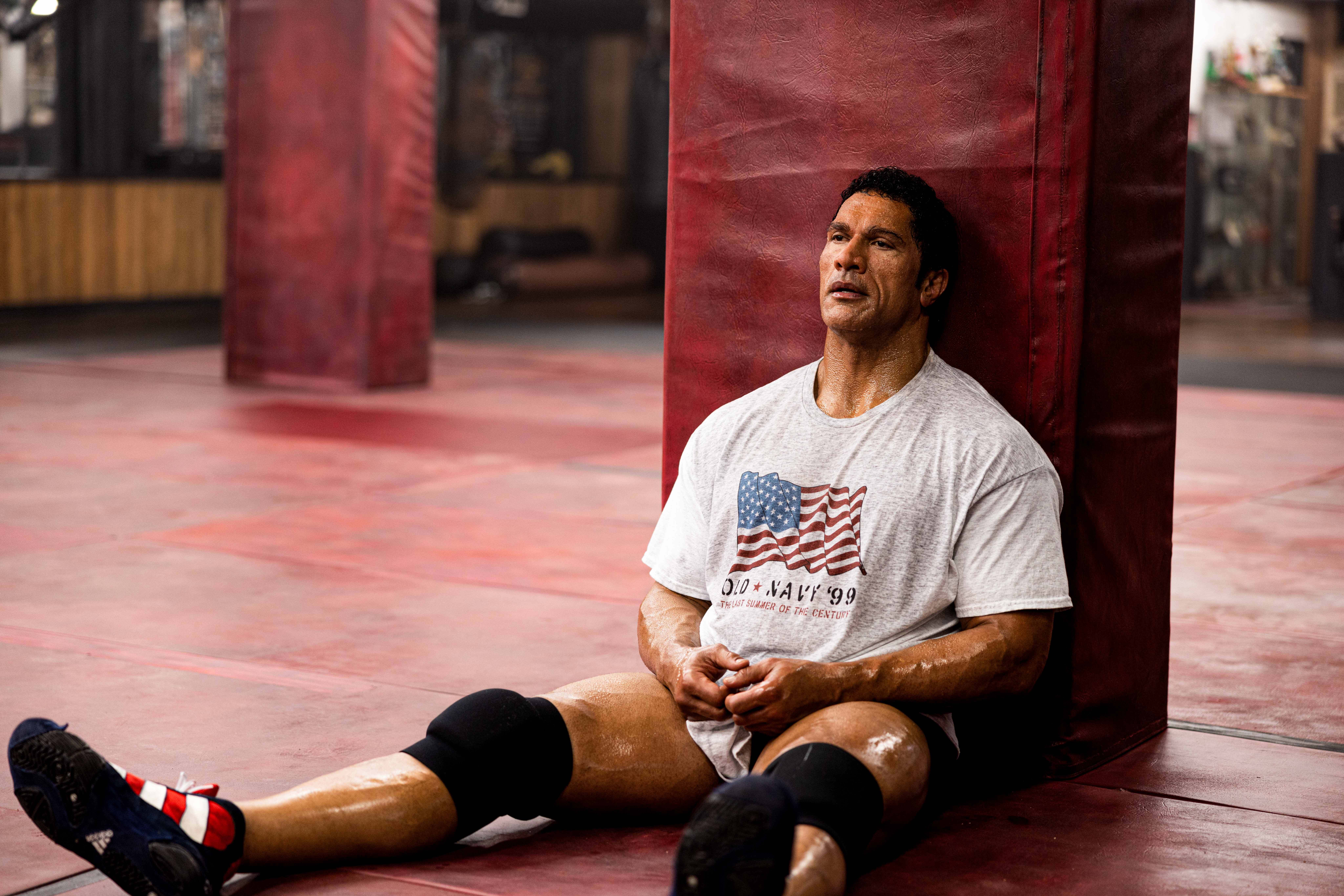
Dwayne Johnson (Skyscraper) disappears into Kerr with stunning commitment. Behind remarkably convincing prosthetics and careful voice work, the action star transforms his blockbuster physique into something vulnerable and broken. This isn’t the charismatic movie star with expressive eyebrows we know—it’s an actor excavating genuine dramatic depths. Johnson captures Kerr’s contradictions perfectly: the soft-spoken wrestler from Ohio who became “The Smashing Machine” in the octagon while battling painkiller addiction outside it. His sobbing breakdown after a brutal loss represents the film’s sole moment of raw honesty, yet Safdie cuts away, afraid of what emotions might surface.

Without his brother Josh, Safdie seems lost. The jittery energy that made Uncut Gems electric becomes aimless here, meandering through 1997-2000 without narrative momentum. We witness Kerr’s dominance in Pride Fighting Championships and his spiral into addiction, but these events feel disconnected, like watching highlights with the sound off. One quietly devastating scene shows Kerr begging Japanese promoters for payment, yet such moments arrive isolated, never building toward anything meaningful.

Emily Blunt (Mary Poppins Returns) faces an impossible task as Dawn Staples, Kerr’s girlfriend. The screenplay defines her solely through reactions to Kerr’s addiction—she’s either screaming or sulking, with no inner life beyond enabling or attacking. Even Blunt’s considerable talent can’t animate this thankless ghost of a character. She becomes the film’s inadvertent villain, mysteriously appearing to sabotage important fights without explanation or depth. Real MMA fighter Ryan Bader, playing Mark Coleman, demonstrates more authentic presence in limited screen time than Blunt manages across the entire film. When Bader is onscreen, the film briefly sparks to life and it’s the first time you feel like you’re watching something genuine.

Technically, The Smashing Machine actively repels engagement. Cinematographer Maceo Bishop keeps his camera at arm’s length, draining fight scenes of visceral power. The octagon battles feel like memories rather than experiences—you see sweat and hear grunts without feeling either. Production designer James Chinlund (The Batman) renders late-’90s Arizona in deadening browns and beiges, creating visual monotony that mirrors the film’s emotional vacancy. Nala Sinephro‘s droning score doesn’t support scenes; it suffocates them.

Most frustrating is everything Safdie leaves unexplored. End credits reveal bombshells about Kerr and Coleman’s massive impact on MMA’s evolution—crucial context the film never examines. We learn nothing about who these fighters were beyond the ring: no families, no friendships, no lives. The film jumps 25 years forward for a meta-twist ending that feels like a guilt trip—an emotional payout we never earned because the film never let us in. You don’t understand what he lost. You don’t understand what he meant.

And that’s the core problem: the film is too cool to care. Safdie had rich material: MMA’s wild early days when the sport was banned in most states, Kerr’s gentle nature clashing with his fighting persona, the cost of chasing glory through pharmaceutical haze. Kerr wasn’t a gambler chasing a score—he was a man falling apart in public. That should be harrowing. That should hurt. But The Smashing Machine avoids discomfort in favor of mood.

In our current moment of reckoning with violence in sports and performance versus self-destruction, The Smashing Machine could have asked vital questions about why we love watching people break themselves. Instead, it offers noise without insight, fights without stakes.

Johnson endured real hits to avoid using body doubles—his dedication deserved a film that matched it. But Safdie, supposedly crafting a love letter to the sport he grew up watching, forgot to include either love or letter. He turned one of MMA’s most fascinating pioneers into something unforgivable: boring. In a year when audiences crave authentic stories about glory’s price, The Smashing Machine delivers surface bruises with no beating heart underneath. For a film about the price of pain, it never lets us feel the cost.

Looking for something?  Search for it here!  Try an actor, movie, director, genre, or keyword!

Subscribe to Blog via Email

Enter your email address to subscribe to this blog and receive notifications of new posts by email.

Join 5,228 other subscribers
Where to watch The Smashing Machine
Powered by JustWatch
Exit mobile version