Synopsis: After leaving her husband for Africa, Wendy unknowingly travels with a serial killer who is actually a soul-stealing, shape-shifting demon—and soon becomes his next target.
Stars:Robert John Burke, Chelsea Field, Zakes Mokae, John Matshikiza, Rufus Swart, William Hootkins
Director: Richard Stanley
Rated: R
Running Length: 108 mins / 88 mins
Disc Review in Brief: Richard Stanley’s ambitious but narratively flawed supernatural thriller receives a jaw-dropping 4K restoration that makes the Namibian desert look magnificent, even when the story leaves you cold.
Sometimes a film leaves you in neutral while its technical presentation fires on all cylinders. Richard Stanley‘s Dust Devil is exactly that kind of experience. The South African-shot horror film with a checkered past has passionate defenders and equally vocal detractors. Wherever you land on the spectrum, there’s no denying Kino Lorber’s 4K restoration is absolutely stunning — a visual knockout that demands a peek.
The story draws from the unsolved murders attributed to a South African serial killer named Nhadiep. Stanley transforms that true crime foundation into supernatural folklore for his screenplay that is frequently impossible to pin down but fascinating nonetheless.
Through the film’s narrator (John Matshikiza), Stanley introduces three disparate characters who are brought together in a no man’s land as far as the eye can see. A mysterious hitchhiker (Robert John Burke, Boston Strangler) wanders the Namibian desert, killing travelers in ritualistic fashion. Local legend calls such beings “Dust Devils”—shape-shifting demons who hunt the spiritually broken. Wendy (Chelsea Field), a woman fleeing her failed marriage, picks up the wrong passenger. Sergeant Ben Mukurob (Zakes Mokae) investigates the mounting bodies while Zulu healer Matshikiza warns him of darker forces at work.
Stanley’s ambitions far exceed his execution. He’s described the film as a marriage between Italian gialli and Sergio Leone’s spaghetti westerns, with nods to Alejandro Jodorowsky and Pier Paolo Pasolini. Those influences are evident, visible without the obvious ways Stanely is urgently pointing them out to us. The Namib Desert locations are stunning, pulsing with atmosphere against Simon Boswell‘s moody score. Individual sequences achieve genuine eeriness. Yet the narrative never coheres properly. The cat-and-mouse dynamic between Wendy and the Dust Devil competes awkwardly with the supernatural mythology. Neither element receives adequate development.
The film’s troubled production history explains much. Originally conceived as a 120-minute vision, Dust Devil was repeatedly cut and re-edited by various distributors, eventually being released with a full half-hour missing. The version included here as the Director’s Cut represents Stanley’s closest approximation of his original intent. A shorter Theatrical Cut is also included for comparison. The Director’s Cut is undeniably preferable, though even at 108 minutes, structural issues remain. Comparing the two is a fascinating exercise in understanding the difference between art and commerce in that era.
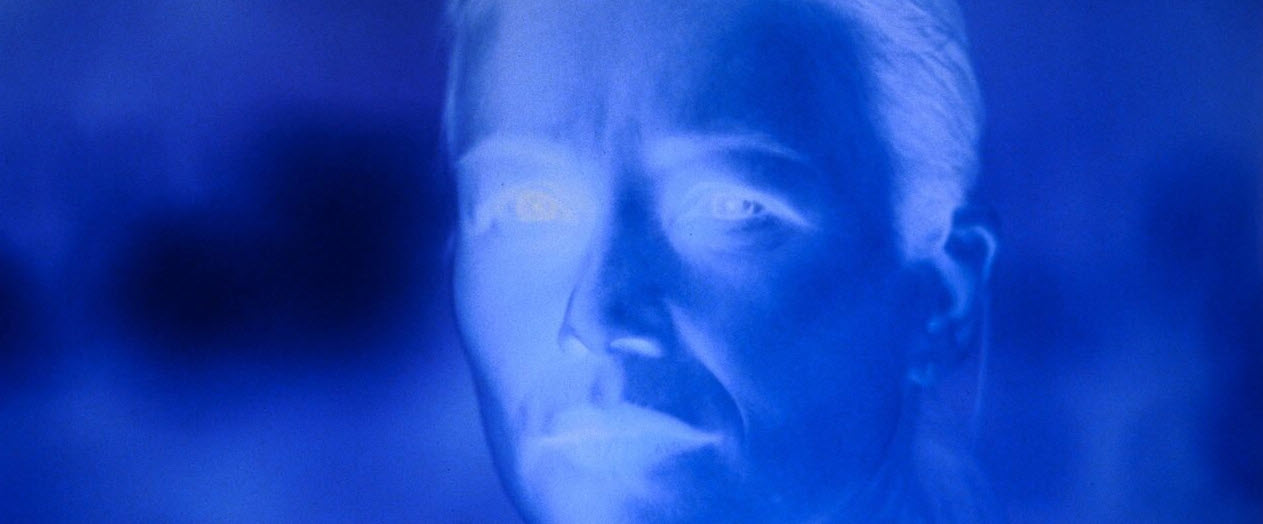
What cannot be denied is how magnificent the restoration looks. Kino Lorber’s 4K transfer, scanned from the original camera negative with Stanley’s approval, is reference quality. The desert landscapes achieve remarkable depth and clarity. Color reproduction is outstanding, giving the film an authentic period appearance. The HDR grade enhances already striking imagery. Both DTS-HD Master Audio tracks—5.1 and 2.0—present Boswell’s score with appropriate presence.
Stanley provides a passionate, informative commentary covering the film’s difficult journey from conception to multiple cuts. An archival interview with Stanley and Boswell adds further context to the saga everyone who worked on the film went through. I would have loved an interview with Field or Burke, one of the two surviving stars but alas, their recollections remain with them. Further archival material presented are original storyboards and polaroids which document the production.
Stanley made his feature debut with Hardware (1990), a post-apocalyptic sci-fi horror film that earned a cult following despite its own battles over final cut. That film’s industrial nightmare imagery and genre-bending ambition made Stanley a name to watch. Dust Devil was meant to expand on that promise. Instead, it became another casualty of studio interference — a pattern that would define much of Stanley’s career.
His next major project, the 1996 remake of The Island of Dr. Moreau, became legendary for all the wrong reasons. Stanley was fired as director early in production, leading to a chaotic shoot that spawned its own documentary, Lost Soul: The Doomed Journey of Richard Stanley’s Island of Dr. Moreau. In one of cinema’s strangest footnotes, Stanley actually snuck back onto his own set disguised as one of the film’s mutant extras. That’s moxie.
It took over two decades for Stanley to direct another feature. When he finally returned with Color Out of Space (2019), starring Nicolas Cage, it felt like genuine redemption — proof that his singular vision could still connect with audiences when given the chance. For Hardware fans expecting similar impact, Dust Devil may disappoint. But for those who appreciate flawed ambition presented in pristine form, this release delivers. Cautiously recommended for genre fans that are willing to take a leap of faith.
Looking for something? Search for it here! Try an actor, movie, director, genre, or keyword!
The MN Movie Man
Spoiler-free film critic on a mission to ensure your cinematic experience is unforgettable. Let's dive into the magic of movies together!
<script async src="https://widget.justwatch.com/justwatch_widget.js"></script>