After The Brutalist became one of the most talked-about films of 2024, I kept my ears to the ground waiting for whatever Brady Corbet and Mona Fastvold would do next, because that staggering work of art announced them as major filmmakers operating on a level that demanded attention. The answer came faster than I expected—just one year later, The Testament of Ann Lee has arrived, this time with Fastvold in the director’s chair for a film she and Corbet co-wrote together. When I tell you the subject is a historical drama about the 18th-century founder of the Shakers religious sect, I can already see the eyes glazing over and can hear the skepticism forming, but stay with me here because this is one you’re going to want to investigate further.
Fastvold first stumbled onto the idea while finishing her second film, The World to Come, in 2020, when she discovered a Shaker hymn that burrowed into her imagination and wouldn’t let go. She brought the concept to Corbet, and they developed a screenplay together, after which they spent years being told no by everyone in the industry. But Fastvold persisted, eventually securing a modest $10 million budget that would be laughed out of most studio meetings, and shot the film on 35mm film stock in Budapest with Corbet serving as second unit director. Like The Brutalist, they’ve created something that feels impossible for the money, not a single frame looking compromised or cheapened by limitation, every image feeling considered and intentional and built to last.
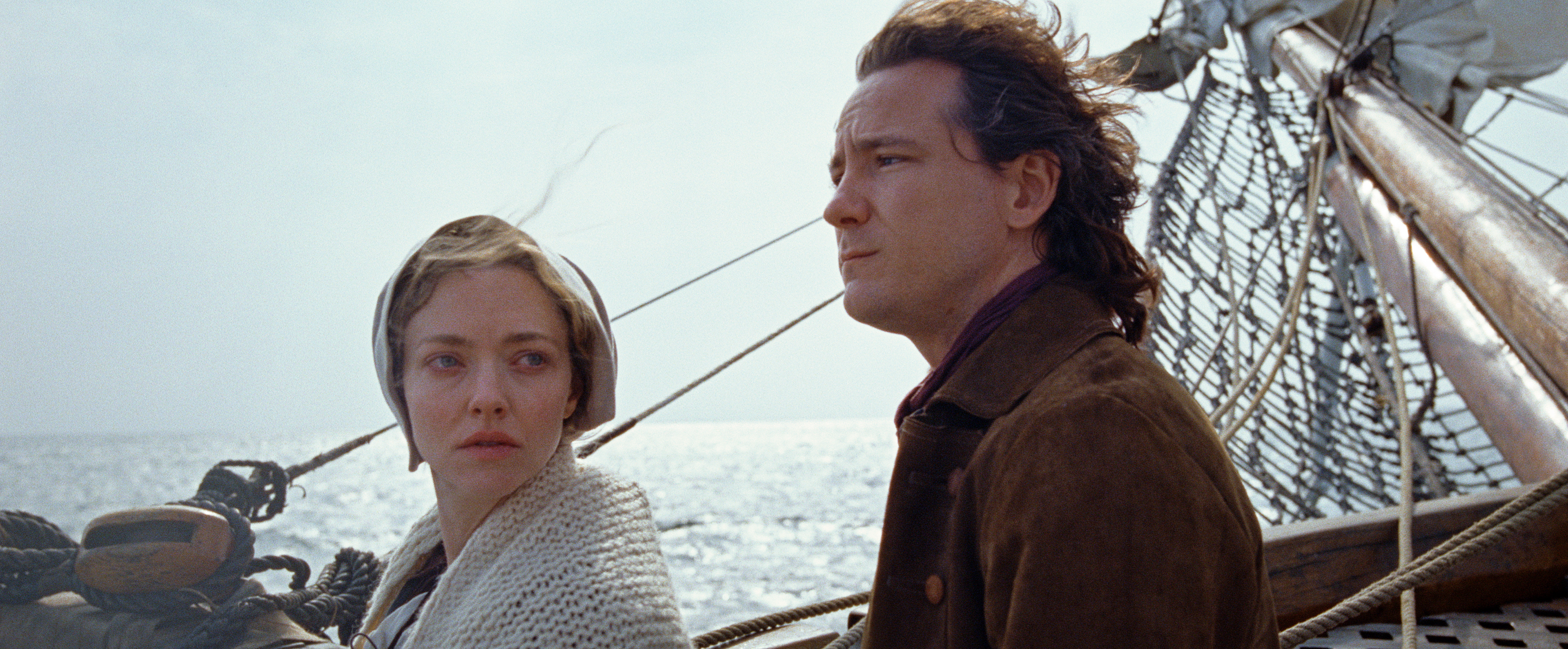
Amanda Seyfried (Lovelace) plays Ann Lee, and what she achieves here goes so far beyond classification as a “good performance” that I’ve been struggling to find the right words. Seyfried has been doing strong, reliable work for years, but nothing in her filmography prepared me for the totality of what she brings to this role, the way she seems to have crawled inside Ann Lee and reconstructed herself from the inside out.
Fastvold wanted someone who could access kindness and gentleness and tenderness but also power and madness, all of it living in the same body, and Seyfried spent over a year preparing, learning a Mancunian accent from the 1700s without any audio reference to guide her, just historical research and her own instincts about how this woman might have sounded.
The physical demands are extraordinary—the film depicts Ann giving birth to four children, all of whom died in infancy, and Fastvold insisted on showing these moments as real and direct and graphic as possible, using prosthetics to avoid any sanitizing—and Seyfried commits so completely that you forget you’re watching an actress at all.
And then there’s the singing, which operates unlike any musical I’ve ever encountered. Composer Daniel Blumberg, fresh off his Oscar for The Brutalist, drew from original Shaker hymns to create something genuinely experimental. Seyfried’s voice has always had a fragile, birdlike quality that lends itself to vulnerability, and here Fastvold and Blumberg push that quality into territory that’s intentionally uncomfortable.
Much of the singing is not meant to be beautiful in any conventional sense but rather meant to evoke a woman on her knees communing with something beyond human understanding. The result defies easy categorization. There are fully staged sequences that arrive when they need to, one particular passage using music to compress years of time in a way that raised goosebumps on my arms, but this isn’t Les Misérables and it isn’t trying to be.
The supporting cast matches Seyfried’s commitment at every turn. Lewis Pullman (Thunderbolts*) brings real emotional heft as Ann’s devoted brother William, their bond forming the story’s most tender throughline and providing moments of warmth in a world determined to crush them. Thomasin McKenzie (True History of the Kelly Gang) narrates portions of the film with voiceover that manages to be both serious, wry, and surprisingly playful. Tim Blake Nelson (Lincoln) and Christopher Abbott (Wolf Man) round out an ensemble that never hits a wrong note, and choreographer Celia Rowlson-Hall, who worked with Corbet on Vox Lux, stages the Shaker dances with stunning physicality—bodies moving with ecstatic devotion that feels both alien and deeply human, worship expressed through movement in ways that words could never capture.
I saw this in 70mm, and if you have access to that format anywhere near you, it’s worth the effort to seek it out. DP William Rexer maximizes the devotional grandeur of the Shaker dances while giving the squint for your supper dimly lit interiors a warm, painterly quality, every candle and hearth fire outlined with care. Production designer Sam Bader (The Unforgivable) and costume designer Małgorzata Karpiuk (The Zone of Interest) build a world of obsessive period detail where every frame feels personally labored over. Fastvold does not shy away from the ugliness of that cruelty—blood and viscous fluids and warts, childbirth shown unflinchingly, violence that doesn’t cut away when you want it to—and the final act becomes genuinely difficult to watch as the world closes in on Ann and her community.
There’s something happening in that final stretch that feels uncomfortably relevant, because early America’s supposed welcome for religious expression reveals itself as conditional at best and hostile at worst, and the parallels to our current moment don’t need underlining. What happens when people come together for something larger than themselves? Why does that terrify certain powers? Why do we keep destroying the communities we claim to celebrate? The film doesn’t answer these questions so much as let them hang in the air, unanswerable but unavoidable, and I found myself thinking about them for days afterward.
Together with The Brutalist, The Testament of Ann Lee becomes a double shot regarding American myths—Corbet’s film questioning the siren’s call of individual success that draws immigrants to our shores, Fastvold’s examining the founding tenet of America as a new Eden for religious immigrants. If these pedastaled ideals are well-intended, they aren’t indestructible, suggesting that America has always known about the destruction that follows its promise to create. Yet both films are visually stunning and emotionally devastating, created on budgets that wouldn’t cover catering on a Marvel production. Amazing.
Seyfried is already earning Golden Globe and Critics’ Choice nominations for Best Actress, and she deserves every one of them and more. This is a challenging, unforgettable film which, like The Brutalist, I won’t forget for a very long time, and I suspect you won’t either.


Leave a Reply