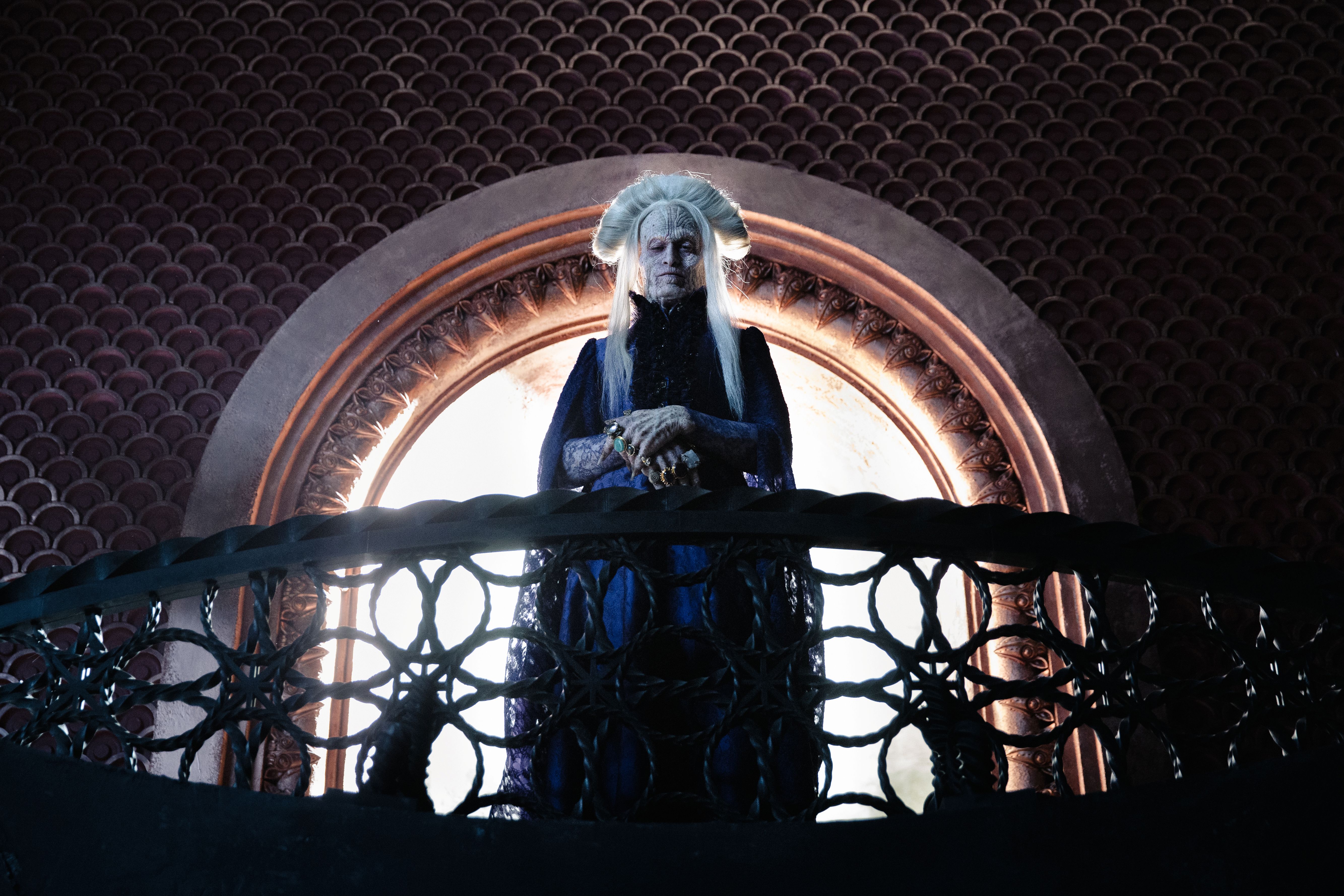
Dracula has been portrayed on screen more times than I can count, from Max Schreck‘s rat-faced Nosferatu to Bela Lugosi‘s suave Count to Gary Oldman‘s operatic heartbreak in Francis Ford Coppola‘s 1992 adaptation. That film alienated horror audiences at the time who came expecting gnashing teeth and jump scares but instead got an immaculately designed work of art. Over time, it’s been appreciated for its incredible practical effects and the emotional depth Coppola brought to a character usually played as little more than a wild-eyed bloodsucker.
So when I heard Luc Besson was tackling the material, I braced myself. The French director made his name during the Cinéma du look movement of the 1980s and 90s, with films that favored style over substance and spectacle over narrative. His one-two punch of Léon: The Professional in 1994 and The Fifth Element in 1997 cemented his status with American audiences hungry for visual stimulation, yet his track record over the last decade has been spotty at best, Valerian and the City of a Thousand Planets at its weirdest. But here’s the pleasant surprise: his Dracula finds a balance. Polish and precision get equal billing, yielding an intriguing take on a tale that’s been told countless times.
Make no mistake, lest you be like those 1992 audiences: this is a love story first and a horror film second. In France they made it ctystal clear. It was released as Dracula: A Love Tale, but fearing audiences would stay away from something that sounded mushy, the subtitle got gnawed off for U.S. markets.
The film opens in 1480 with Prince Vlad (Caleb Landry Jones, Nitram) passionately in love with his wife Elisabeta (Zoë Bleu, daughter of Rosanna Arquette). When she’s killed during a battle with the Ottomans, Vlad renounces God, stabs a priest with a crucifix, and inherits an eternal curse. Four hundred years later, he’s still searching for her reincarnation and an end to his ghastly immortality.
Landry Jones carries the film despite wearing mountains of prosthetics throughout. His performance can be broad, but it always aligns with where Dracula is emotionally. This is a man who loves deeply, passionately, obsessively. I’m not sure anyone else could garner sympathy with a blood-stained mouth quite like he does. Bleu is also a find, taking on a role that could be little more than bodice-ripper material and making it compelling and fleshed out.
Where things get shaky is in some of the supporting performances. Christoph Waltz (Big Eyes) arrives as The Priest, essentially functioning as Van Helsing with divine power. Waltz requires specificity in his role choices, and here he slips into goofy mode several times, pulling you out of the period. Matilda De Angelis as Maria, an amalgam of doomed Lucy and loony Renfield, has a terrific entrance visually with her flame-red hair and porcelain skin, but the performance feels like it’s from another movie entirely. Both actors seem to want to out-ham each other whenever they share a scene and it’s always Sunday dinner time.
As is his tendency, Besson can’t help himself from inserting a controversial sequence or two. One involves Dracula visiting a nunnery and using his powers of seduction to create a tower of nuns around him. It’s overtly sexualy and stunning but deeply uncomfortable to watch. Then there are also the stone gargoyles that spring to life as Dracula’s servants in ways that reminded me of Disney’s The Hunchback of Notre Dame. They’re not played for comedy or rendered poorly, but they can come off as unintentionally hilarious because they’re so far out of left field. So French.
The technical craft, however, is exceptional. Cinematographer Colin Wandersman draws inspiration from Flemish paintings and the contrast between light and dark techniques, giving every frame the quality of a dark Renaissance portrait. Costume designer Corinne Bruand created an eye-popping 550 costumes for the production, including Dracula’s armor crafted by the artisan who worked on Besson’s The Messenger: The Story of Joan of Arc. Danny Elfman‘s score feels indebted to Wojciech Kilar‘s work on Coppola’s version, but there’s also that chilling choir of soprano voices that will tingle your spine. Money was spent on this film, and it was spent well.
Much like I said about Guillermo del Toro’s Frankenstein late last year, I’m not sure the world needed another regal Dracula origin story. But this one is so rich-looking and well-made that it justifies its existence in the prologue alone. The cast is, by and large, excellent, and watching Landry Jones continue to evolve as an actor is a thrill worth the price of admission.