
Identity (2003)
4K UHD · Arrow Video
Shelf Worthy
In Brief
James Mangold’s rain-soaked motel mystery reaches 4K with a director-approved camera-negative restoration, both cuts, and two new interviews. The big reveal still divides viewers, but the craft of getting there makes the return trip worthwhile.
The Facts
Synopsis: A flooded desert road strands a group of strangers at a remote motel during a violent storm. When guests begin dying one by one, the survivors must work out who among them is responsible.
Starring: John Cusack, Ray Liotta, Amanda Peet, John Hawkes
Directed by: James Mangold
Rated: R
Running Length: 90 minutes (Theatrical Cut), 91 minutes (Extended Cut)
Buy It Here
The Package
Label: Arrow Video
Format: 4K UHD
Release Date: August 25, 2026
Video: 2160p, Dolby Vision and HDR10, 2.39:1. Sony 4K restoration from the original 35mm picture negative, approved by James Mangold. Both cuts included
Audio: English DTS-HD Master Audio 5.1
Subtitles: English SDH
Discs: 1 4K UHD with both cuts and all extras. Limited edition with reversible sleeve, collector’s booklet, and slipcover on initial pressings
The Film
Nearly every drop of rain in Identity fell inside a soundstage. Director James Mangold estimated that roughly 95 percent of the movie was filmed on Stage 27 at Sony Pictures Studios, where production designer Mark Friedberg constructed an entire motel, complete with fourteen rooms, a swimming pool, and a stretch of desert. It’s an impressive amount of work for a place nobody in their right mind would want to spend the night. Producer Cathy Konrad brought Mangold a screenplay by Michael Cooney, whose story borrows the basic setup of Agatha Christie’s And Then There Were None before heading into territory that Christie probably never imagined.
On a stormy night in the Nevada desert, a series of unfortunate encounters brings ten strangers to an isolated roadside motel. Former police officer Ed Dakota (John Cusack, Maps to the Stars) is working as a limousine driver for Caroline Suzanne (Rebecca De Mornay, The Hand That Rocks the Cradle), a fading actress whose patience for ordinary people is practically nonexistent. When their limousine accidentally strikes Alice York (Leila Kenzle, Mad About You), Ed tries to get her medical attention. Alice’s distraught husband, George (John C. McGinley, The Belko Experiment), and their young son, Timmy (Bret Loehr), accompany them to the nearest motel, where the storm has already made the surrounding roads impassable.
They’re soon joined by an assortment of travelers whose reasons for being on the road are as different as their personalities. Rhodes (Ray Liotta, The Iceman) is transporting a dangerous prisoner, Robert Maine (Jake Busey, The Frighteners), whose presence makes everyone understandably nervous. Paris (Amanda Peet, Fantasy Life) is a sex worker hoping to leave Las Vegas and start a new life somewhere far away. Newlyweds Ginny (Clea DuVall, The Faculty) and Lou (William Lee Scott, October Sky) are already discovering that marriage hasn’t solved their problems. Presiding over this collection of increasingly unhappy guests is Larry (John Hawkes, The Sessions), the nervous night manager, who seems about as qualified to handle an emergency as the motel is to accommodate one.
With the telephone lines down, the roads flooded, and an injured woman needing help, Ed becomes the group’s reluctant problem solver. His experience as a police officer makes him the most capable person in the building, although Rhodes doesn’t particularly appreciate someone else taking charge. Then one of the guests is murdered, and the situation goes from inconvenient to terrifying. As more bodies turn up, suspicions shift from room to room. Everyone seems to have something worth hiding, and nobody is particularly interested in sharing. The question isn’t simply who’s responsible but whether anyone will still be alive when the storm passes.
Complicating the mystery is a separate storyline involving a condemned murderer, Malcolm Rivers (Pruitt Taylor Vince, Jacob’s Ladder), whose execution is approaching. A last-minute hearing brings his psychiatrist (Alfred Molina, Species) before a judge with evidence that could change the outcome of the case. How this proceeding connects to the nightmare unfolding at the motel is something best left for the movie to explain. Mangold introduces the two stories with enough confidence that you trust there’s a reason they’re sharing the same film, even when the connections aren’t immediately apparent.
The impressive ensemble is a major reason the setup works as well as it does. Cusack is particularly effective as Ed, playing him as a man who would rather be anywhere else but can’t bring himself to abandon people in trouble. Liotta gives Rhodes his familiar intensity, making even ordinary conversations feel like they could erupt into an argument. Peet brings a welcome combination of toughness and vulnerability to Paris, who has more personality than the familiar troubled-woman role might suggest. Hawkes is terrific as Larry, a jittery motel employee whose discomfort makes him suspicious whether he’s actually done anything wrong or not. With so many recognizable faces occupying the rooms, it’s difficult to settle on a favorite suspect.
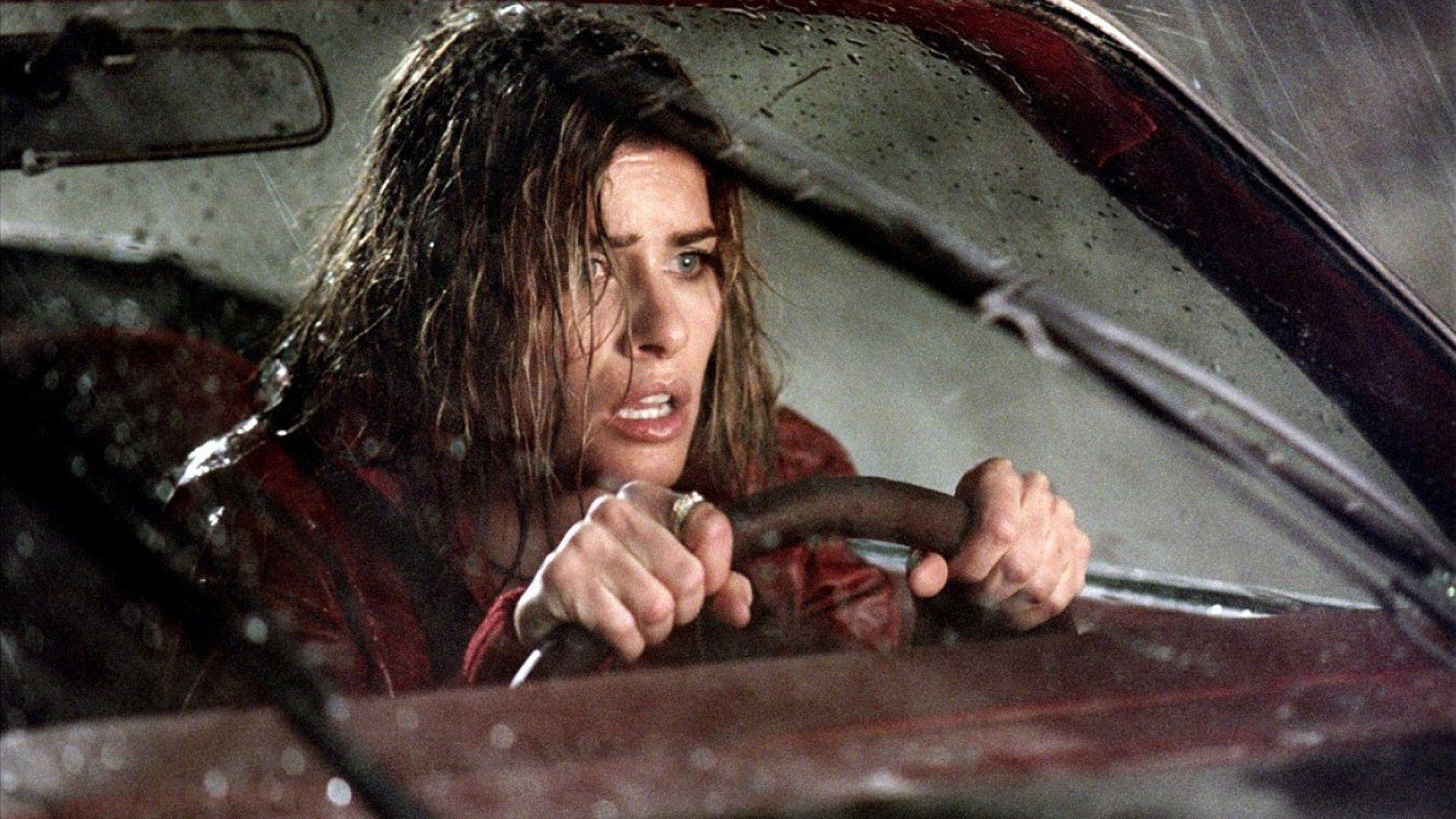
Mangold and cinematographer Phedon Papamichael have a wonderful time making the motel feel increasingly oppressive. Rain pours off the rooftops, headlights cut through the downpour, and every doorway seems capable of hiding someone who shouldn’t be there. The rooms are cramped, the lighting is unforgiving, and the parking lot becomes a muddy obstacle course whenever somebody ventures outside. It’s the sort of place where you would normally complain about the accommodations, except the possibility of being murdered tends to take priority. Alan Silvestri’s score adds to the unease without constantly announcing that something terrible is about to happen. This is a whodunit you can practically smell the mildew on.
What I especially enjoy is how Mangold takes a familiar mystery setup and gradually makes the situation feel stranger without immediately abandoning the rules of a traditional thriller. The early scenes establish the characters, their relationships, and the practical problems trapping them together. Once the murders begin, small details take on new importance, and even seemingly ordinary conversations become worth revisiting. Mangold knows how to direct an audience’s attention without making every suspicious glance feel like a flashing warning sign. There are a few familiar horror-movie decisions along the way, but the film moves quickly enough that there’s rarely much time to complain.
The final act is where Identity makes its biggest gamble. Without spoiling anything, the explanation asks viewers to reconsider much of what they’ve seen, and whether that works will depend on how willing they are to follow Cooney’s screenplay beyond the conventional murder mystery it initially promises. I can understand why some people find the conclusion clever and others feel the film has changed the rules on them. For me, the pleasure is in how confidently Mangold arranges the pieces, particularly on a second viewing, when details that originally seemed insignificant begin to look very different.
Released in April 2003, Identity opened at number one and eventually earned roughly $90 million worldwide against a $28 million budget. Mangold would go on to direct Walk the Line, Logan, Ford v Ferrari, and get fairly close to winning Best Director for the Bob Dylan biopic A Complete Unknown, but this remains an enjoyable example of what he can accomplish with a relatively contained story, a strong cast, and a location that practically becomes another character.
Like Clue, Identity is one of those mysteries that offers a different experience the second time around. You may already know who’s behind the murders, but watching how Mangold gets you there is half the entertainment. Just don’t expect a complimentary continental breakfast.

The Transfer
Video
Arrow presents Sony’s 4K restoration of the original 35mm picture negative, approved by Mangold and framed at 2.39:1 with Dolby Vision and HDR10. The new transfer gives the relentless rain, glowing headlights, and neon motel signage more room to register than they had on Sony’s early Blu-ray. Inside, warm amber and peach highlights play against cool blue-green darkness, while close-ups and production details benefit from the higher-resolution source. The storm never lets up, and the motel finally gets the resolution it deserves.
Audio
English DTS-HD Master Audio 5.1 carries the movie’s original surround presentation. Rain fills the channels, thunder arrives without much warning, and engines and other effects move through the soundfield while the dialogue stays central to the mystery. Silvestri’s score adds to the pressure. English SDH subtitles are included.
Transfer Notes
Both versions are available from a Choose Version menu: the Theatrical Cut runs approximately 90 minutes and the Extended Cut about 91. The difference is just over a minute, rather than an entirely reworked film. Sony’s 2007 Blu-ray included the earlier HD presentation; this marks the feature’s first 4K edition. There is no companion Blu-ray in the package.

Special Features
- Audio Commentary by Director James Mangold: An archival track from Sony’s earlier releases. Save it until after the mystery has played out.
- Audio Commentary by Screenwriter Michael Cooney: The writer’s perspective on constructing the story.
- “I Met a Man That Wasn’t There” (NEW) (12:56): A fresh interview with Pruitt Taylor Vince, who also starred in Mangold’s debut, Heavy.
- Producing Identity (NEW) (26:22): Cathy Konrad discusses bringing Cooney’s script to the screen.
- On the Set (14:18): Archival behind-the-scenes coverage.
- Deleted Scenes (6:15): Additional material, with optional Mangold commentary.
- Storyboard Comparisons (4:47): Three sequences shown from planning to finished scene.
- Theatrical Trailer (2:20) and Image Gallery: The original promotional material.
- Collector’s Booklet (NEW): Andrew Cardno’s essay and original production notes, included with the first pressing.
- Reversible Sleeve: Two original artwork options, with a slipcover on early copies.
Everything from Sony’s earlier supplemental package returns, and the interviews with Konrad and Vince offer two genuinely new perspectives. There is more than enough here to occupy a second visit after the first one answers the movie’s central question.
Shelf Worthy?
Shelf Worthy
The ending may test your patience or send you straight back to the beginning, but Mangold’s control of the atmosphere, cast, and misdirection is difficult to dismiss. Arrow’s new restoration gives the elaborate soundstage production its due, while both cuts and the complete archive make this a sensible upgrade for thriller fans. The twist may work only once. The craftsmanship keeps checking in.
Shelf Worthy: Buy it. This one earns a spot on the shelf.
Stream First: Watch it before you buy.
Completionists Only: For collectors who need every edition.
Arrow Video provided a copy for review. My opinions are my own.

Reviewed by Joe Botten
Joe Botten is The MN Movie Man, a Twin Cities film critic writing spoiler-free reviews since 2012. He also writes for Loud and Clear Reviews, a Rotten Tomatoes approved site. Find him on Instagram and Letterboxd.
Looking for something?
Search by actor, movie, director, genre or keyword.


Leave a Reply