
The Last House on the Left (1972)
Blu-ray · 88 Films
Stream First
In Brief
Wes Craven’s disturbing debut arrives in a lavish Blu-ray edition containing both the unrated and R-rated cuts. Two new feature-length documentaries, a video essay, and new commentaries make this a substantial release, although Arrow’s earlier edition remains formidable competition.
The Facts
Synopsis: Two teenagers traveling into New York for a concert try to buy marijuana and end up captive to an escaped convict and his violent gang.
Starring: Sandra Peabody, Lucy Grantham, David Hess, Fred Lincoln
Directed by: Wes Craven
Rated: Not Rated (Unrated Cut), R (R-rated Cut)
Running Length: 84 minutes (Unrated Cut), 82 minutes (R-rated Cut)
Buy It Here
The Package
Label: 88 Films
Format: Blu-ray
Release Date: September 7, 2026
Video: 1080p, 1.85:1. Unrated and R-rated cuts in HD
Audio: Original English mono on both cuts; isolated score on the Unrated Cut
Subtitles: English SDH
Discs: 1 Blu-ray, Region B. Limited edition with rigid slipcase, O-ring featuring Devon Whitehead artwork, picture booklet, and reversible sleeve with original art
The Film
British censors refused The Last House on the Left a certificate in 1974, and the film spent decades caught up in the country’s battles over so-called video nasties before finally receiving an uncut classification in 2008. That’s quite an afterlife for a $90,000 American horror movie whose original advertising instructed audiences to keep reminding themselves that it was only a movie. More than fifty years later, Wes Craven‘s directorial debut remains one of the most uncomfortable films of its era, and not simply because of what happens on screen.
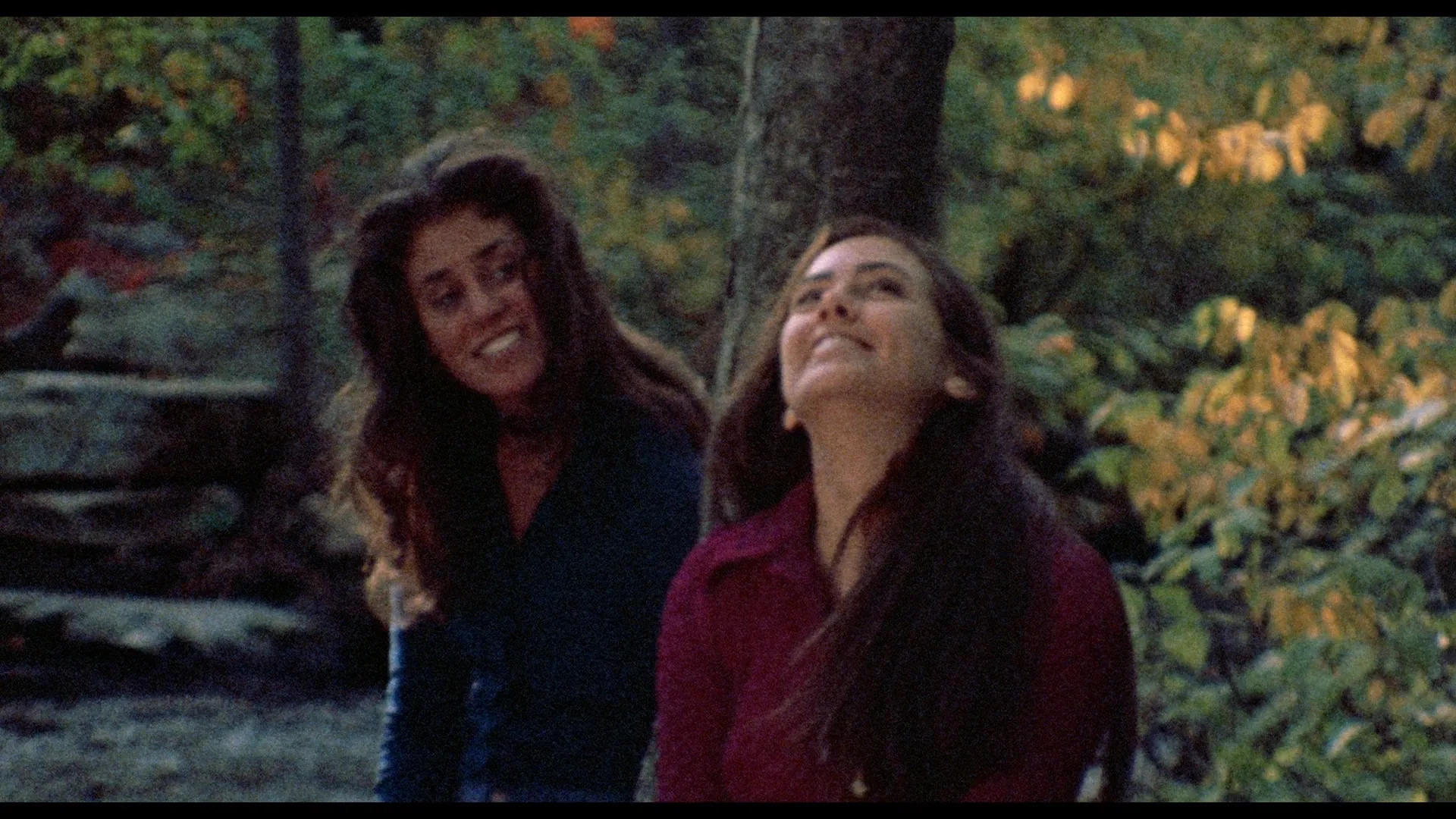
Mari Collingwood (Sandra Peabody, credited as Sandra Cassel) is preparing to celebrate her seventeenth birthday with her best friend, Phyllis Stone (Lucy Grantham). The girls have tickets to a rock concert in New York City, and Mari’s parents, John (Gaylord St. James) and Estelle (Cynthia Carr), are reluctantly letting her go. They’re protective but loving, the sort of parents who worry about their daughter growing up while making sure there’s a birthday cake waiting when she gets home. Before Mari leaves, they give her a necklace bearing a peace symbol, a small gesture that becomes increasingly painful as the evening unfolds.
In the city, Mari and Phyllis decide to buy some marijuana before the concert and approach a young man named Junior (Marc Sheffler), who offers to help. Unfortunately, Junior is the son of Krug Stillo (David Hess, The House on the Edge of the Park), a sadistic criminal who has recently escaped from prison. Along with his equally vicious accomplice Weasel (Fred Lincoln) and the unpredictable Sadie (Jeramie Rain), Krug has been hiding out while planning his next move. Junior is addicted to heroin and lives in fear of his father, making him both a participant in the group’s crimes and another victim of Krug’s control. When the girls follow him to the apartment, their harmless night out becomes a nightmare.
The following morning, the gang takes the girls out of the city, intending to escape the area. A mechanical problem leaves their car stranded along a wooded road, and in one of the film’s cruelest coincidences, they’re now frighteningly close to Mari’s own home. While her parents continue worrying about their daughter’s disappearance, Mari and Phyllis are subjected to increasingly brutal acts of humiliation and violence. The contrast between the two worlds is devastating, especially as Craven begins bringing them closer together. What started as a story about two teenagers encountering the wrong people gradually becomes something even uglier, as ordinary parents are forced to confront a degree of cruelty they could never have imagined.
Craven made the film with financing arranged through producer Sean S. Cunningham, whose earlier success with Together helped get the project moving. The story draws from the medieval Swedish ballad that also inspired Ingmar Bergman‘s The Virgin Spring, although Craven moves the material into contemporary America, where the violence of the Vietnam War was still appearing on television screens and faith in traditional authority was badly shaken. With a tiny crew, handheld cameras, and rough 16mm photography, he gives the movie an almost documentary-like immediacy. There are moments when it feels less like a carefully constructed horror film than something terrible unfolding in front of a camera that nobody has thought to turn off.
Hess is genuinely frightening as Krug because he doesn’t play the character as some elaborate horror-movie monster. He’s cruel, manipulative, and frighteningly comfortable with himself, treating the suffering of others as little more than entertainment. Lincoln and Rain make his accomplices equally unpleasant, while Sheffler gives Junior enough vulnerability to suggest how thoroughly his father has destroyed whatever independence he might once have possessed. Peabody and Grantham, meanwhile, bring an ordinary teenage warmth to Mari and Phyllis that makes their ordeal especially upsetting. These aren’t characters who have wandered into a supernatural nightmare. They’re two girls who made an everyday decision and encountered people capable of extraordinary cruelty.
The film’s strangest choice may be its soundtrack. Hess collaborated with Stephen Chapin on a collection of folk and bluegrass songs that sometimes sound almost cheerful against the horrifying events taking place. There’s something deeply unsettling about hearing such pleasant music accompanying images that offer no comfort whatsoever. Craven also introduces a bumbling sheriff and deputy whose misadventures appear to belong in an entirely different movie. I’ve never been convinced those scenes work. The comic interruptions don’t provide much relief, and their broad humor occasionally undermines the tension. Perhaps Craven wanted to expose the incompetence of the authorities or give audiences a moment to recover, but the changes in tone can be downright jarring.
The production’s treatment of Sandra Peabody also deserves consideration. Accounts from the set describe how some of her fellow actors deliberately frightened and intimidated her, apparently believing that genuine fear would improve her performance. Sheffler later admitted threatening her during the filming of a particularly difficult scene. It’s disturbing material to encounter in the film’s making-of history, especially when the violence against women is already so difficult to watch. Whatever Craven hoped to communicate about brutality and its consequences, frightening a young actress to obtain a reaction is not something that becomes acceptable because the resulting film is effective.
That leaves The Last House on the Left in a complicated position. Its examination of violence, revenge, and the thin line separating supposedly civilized people from the criminals they condemn remains provocative, and the film refuses to provide the easy satisfaction that a conventional revenge thriller might offer. Yet its intentions don’t excuse every creative decision, nor do they make the experience any more pleasant. At only 84 minutes, the movie can feel considerably longer because so much of its running time is designed to make you uncomfortable. Even the promise of retaliation offers little reassurance when everyone involved has already been changed by what happened.
Despite the controversy, the film became a drive-in success, frequently paired with Mario Bava‘s Twitch of the Death Nerve, and helped launch two filmmakers who would reshape American horror. Cunningham went on to produce Friday the 13th, while Craven eventually gave audiences A Nightmare on Elm Street and Scream. You can see the beginnings of his fascination with violence, fractured families, and the terrible things people are capable of doing to one another, even if his skills as a director hadn’t yet caught up with his ambitions.
I can’t imagine recommending The Last House on the Left casually, and I certainly wouldn’t blame anyone who never wanted to watch it again. But there’s a reason it has survived decades of controversy, censorship, and changing attitudes toward screen violence. It’s an angry, frequently unpleasant film that helped change what American horror could look like, even as it raised questions about how far filmmakers should go to make their point.
The advertising kept insisting, “It’s only a movie.” More than fifty years later, that still doesn’t make it any easier to watch.

The Transfer
Video
88 Films presents both versions in 1080p at 1.85:1. The original 16mm photography gives the film its coarse grain, softness, and harsh documentary texture, qualities that remain part of its identity in high definition. Previous restorations, including Arrow’s 2018 2K presentation, were assembled using later-generation film elements because the original 16mm negative is believed to be lost. This is not a film that was ever supposed to look polished.
Audio
The original English mono accompanies both versions, with an isolated score available for the Unrated Cut and English SDH subtitles included. Hearing Hess and Chapin’s gentle songs without the surrounding images offers an especially unsettling reminder of how deliberately the film sets sound against subject matter.
Transfer Notes
The Unrated Cut runs approximately 84 minutes, while the R-rated version is about two minutes shorter because of the original MPAA trims. Arrow’s 2018 release also included a third Krug and Company version and additional archival material. This edition concentrates on the two principal cuts while building a notably large new documentary package around them.

Special Features
- Audio Commentary by Eugenio Ercolani and Troy Howarth (NEW): A new historical discussion of Craven’s debut, accompanying the Unrated Cut.
- Audio Commentary with The Nasty Pasty (NEW): A second newly recorded track for the Unrated Cut.
- Audio Commentary with David Hess, Marc Sheffler, and Fred Lincoln: The archival 2003 cast commentary.
- Isolated Score: David Hess and Stephen Chapin’s music, on the Unrated Cut.
- Betrayal and Retribution: The Spawn of The Last House on the Left (NEW) (90:50): An extensive look at the films influenced by Craven’s debut, featuring voices including Ruggero Deodato and Abel Ferrara.
- Endangered Teens: A Video Essay by Heather Wixson (NEW) (23:06): A focused examination of the film and its legacy.
- Remembering Wes Craven: His Life, Legacy and Nightmares (NEW) (107:31): Heather Langenkamp, Michael Berryman, and others remember the filmmaker.
- Celluloid Crime of the Century (39:34): The 2002 retrospective documentary.
- It’s Only a Movie: The Making of Last House on the Left (29:00): The archival making-of featurette.
- Scoring Last House (9:44): Hess on the film’s music.
- Forbidden Footage (8:13): Additional archival material.
- Still Standing: The Legacy of Last House on the Left (14:55): Craven reflects on the film in 2009.
- Archival Wes Craven Introduction (0:41): A short introduction recorded in 2002.
- Tales That Will Tear Your Heart Out (11:19): Craven’s unfinished 1976 short featuring Hess.
- Outtakes and Dailies (47:30): An extended collection of raw footage.
- Deleted Scene (0:59): Best saved until after a first viewing, since the menu title reveals a plot detail.
- Trailer (2:06) and Image Gallery: The original advertising and stills.
There’s enough material here for several evenings of film history, even if Arrow’s edition retains some worthwhile exclusives. The new Craven tribute lasts longer than the film it’s celebrating.
Shelf Worthy?
Stream First
Craven’s debut is essential viewing for anyone studying the development of modern American horror, but essential doesn’t mean enjoyable, and its sexual violence deserves a serious content warning. Owners of Arrow’s expansive edition will find this a companion rather than a replacement, with the two new documentaries providing the strongest argument for adding it to a collection. The advertising told audiences to remember it was only a movie. More than fifty years later, that remains a difficult instruction to follow.
Shelf Worthy: Buy it. This one earns a spot on the shelf.
Stream First: Watch it before you buy.
Completionists Only: For collectors who need every edition.
88 Films provided a copy for review. My opinions are my own.

Reviewed by Joe Botten
Joe Botten is The MN Movie Man, a Twin Cities film critic writing spoiler-free reviews since 2012. He also writes for Loud and Clear Reviews, a Rotten Tomatoes approved site. Find him on Instagram and Letterboxd.
Looking for something?
Search by actor, movie, director, genre or keyword.


Leave a Reply