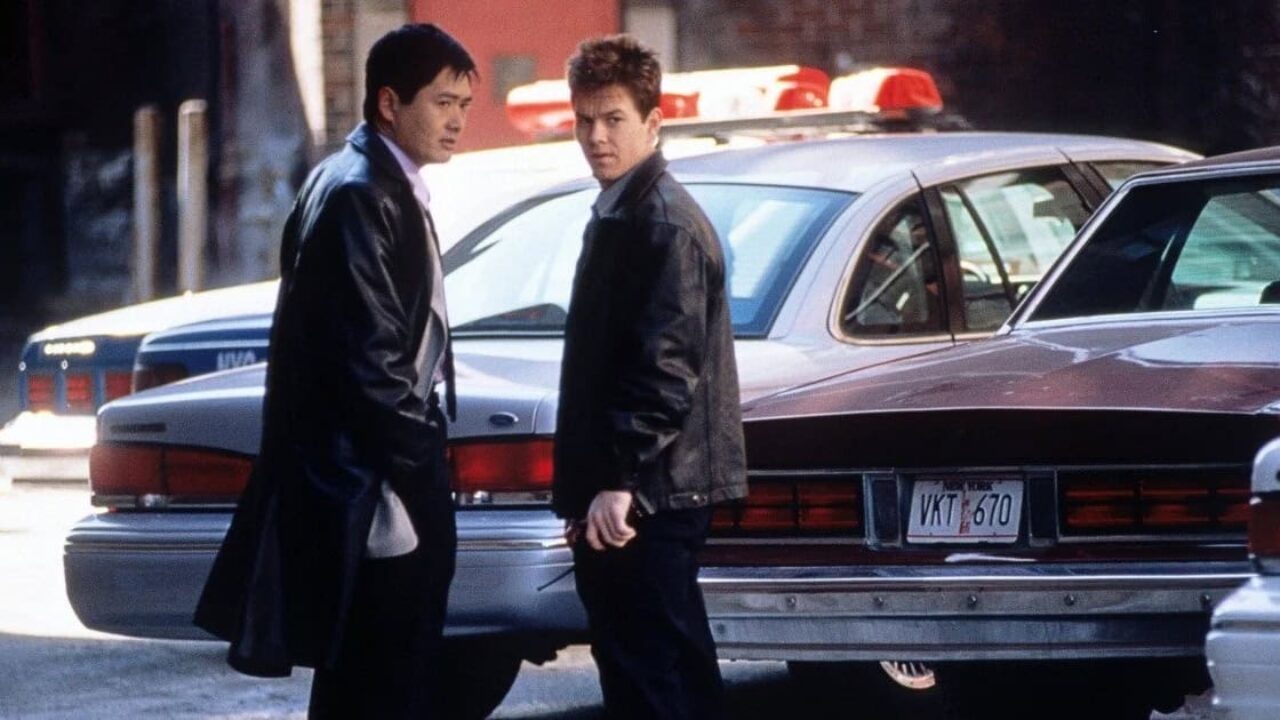

The Corruptor (1999)
4K UHD + Blu-ray · Toy Robot
Stream First
In Brief
Chow Yun-fat’s Chinatown cop thriller returns in a new camera-negative 4K restoration, with three fresh interviews exploring its music, production design, and stunt work. One terrific car chase nearly steals the whole picture, though the story around it has trouble keeping pace.
The Facts
Synopsis: The head of the NYPD’s Asian Gang Unit keeps Chinatown’s peace by making deals in the shadows. When a gang war erupts, he’s assigned an eager new partner whom nobody in the unit asked for.
Starring: Chow Yun-fat, Mark Wahlberg, Ric Young, Paul Ben-Victor
Directed by: James Foley
Rated: R
Running Length: 110 minutes
Buy It Here
The Package
Label: Toy Robot
Format: 4K UHD + Blu-ray
Release Date: November 10, 2026
Video: 2160p, 2.39:1. New 4K restoration from the original camera negative. Theatrical cut
Audio: English 5.1 surround
Subtitles: English SDH
Discs: 2 discs: 4K UHD and Blu-ray. Slipcover
The Film
The Film
Hollywood spent much of the late 1990s trying to figure out what to do with Chow Yun-fat. After becoming an international superstar in John Woo’s Hong Kong action films, he arrived in America with the kind of charisma that should have made the transition easy. The Replacement Killers gave the Hard Boiled star a pair of pistols and a conscience, while The Corruptor handed him a badge, a questionable moral compass, and a partner who might be more trouble than he’s worth. Unfortunately, audiences weren’t particularly interested. Released by New Line in March 1999, the film earned approximately $15.2 million domestically against a reported $25 million budget, becoming another disappointment in Chow’s early American career.
Lieutenant Nick Chen (Chow, Crouching Tiger, Hidden Dragon) heads the NYPD’s Asian Gang Unit, where maintaining order in Chinatown requires more than simply arresting criminals. The neighborhood is caught between the established Tung Fung Benevolent Association, a powerful tong controlled by Uncle Benny Wong (Kim Chan, Lethal Weapon 4), and the younger, increasingly violent Fukienese Dragons, led by the ambitious Bobby Vu (Byron Mann, Street Fighter). Chen has spent years maintaining an uneasy peace, building relationships with the criminal organizations and occasionally looking the other way when it serves his purposes. His arrangement with tong lieutenant Henry Lee (Ric Young, Seven Years in Tibet) has made him influential on both sides of the law, but it has also left him dangerously compromised.
When a bombing threatens to ignite an all-out gang war, Chen finds himself assigned a new partner, Danny Wallace (Mark Wahlberg, Joe Bell). Danny is a young white officer who claims he wants to advance his career by working in the unit, though Chen isn’t convinced that’s the whole story. He doesn’t know the neighborhood, struggles to understand its complicated relationships, and seems remarkably eager to prove himself. Chen has little patience for him, but their relationship begins to change when a dangerous raid forces the two men to depend on each other. Danny also has problems outside the precinct, particularly involving his father, Sean (Brian Cox, The Ring), whose gambling troubles create another set of complications.
As the investigation progresses, the lines between the police, the tongs, and the federal authorities become increasingly difficult to distinguish. Henry Lee is particularly interesting because his polished manner disguises a ruthless willingness to protect his own interests, while Bobby Vu represents a younger generation with little respect for the arrangements that have kept the neighborhood functioning. Danny begins discovering that Chinatown operates according to rules nobody bothered explaining to him, while Chen finds himself questioning just how much he can trust the young man assigned to watch his back. Before long, everyone seems to be working an angle, and the number of people with something to hide threatens to exceed the number actually trying to solve the case.
Director James Foley, who died in 2025, had previously worked with Wahlberg on Fear. His career took some unusual turns, from the bruising family drama At Close Range and David Mamet’s Glengarry Glen Ross to Fifty Shades Darker and Fifty Shades Freed. He’s an interesting choice for a film that wants to combine the kinetic action of Hong Kong cinema with an American police-corruption thriller. Foley is most comfortable when his characters are sitting across from each other, trying to determine who is lying and how much they can afford to reveal.
Chow is easily the film’s greatest asset. There’s an effortless authority to his performance, whether Chen is negotiating with gang leaders, intimidating a suspect, or demonstrating exactly why nobody should challenge him in a fight. More importantly, he makes Chen’s corruption feel like something that developed gradually through years of compromise rather than simple greed. Wahlberg gives Danny a nervous energy that plays nicely against Chow’s confidence, although the screenplay occasionally makes him more reactive than interesting. Ric Young is appropriately slippery as Henry Lee, and Mann brings a dangerous unpredictability to Bobby Vu. Together, they give the gang conflict some personality beyond the usual collection of criminals exchanging threats.
Unfortunately, Robert Pucci’s screenplay keeps introducing new alliances, betrayals, and investigations until it becomes difficult to care about the details. The film spends so much time explaining who’s working for whom that the central relationship occasionally gets lost. There’s also an uncomfortable reliance on familiar Chinatown crime-movie stereotypes, with nearly every introduction leading to another criminal enterprise or secret arrangement. What begins as an intriguing examination of corruption and divided loyalties gradually becomes another elaborate exercise in double-crossing.
Thankfully, Foley knows when to put the conversations aside and let the action take over. A spectacular car chase through Chinatown becomes the movie’s undeniable centerpiece, combining gunfire, collisions, and some impressively destructive stunt work. It’s the kind of sequence that makes you sit up and wonder why the rest of the film hasn’t been moving with this much confidence. One great chase can’t carry an entire movie, but this one gives it a mighty shove.
The Corruptor never entirely escapes its tangled plotting, but it’s more interesting than its reputation might suggest. There’s a compelling movie buried in the relationship between two officers who begin on opposite sides of a cultural divide and gradually realize that neither has been entirely honest with the other. Foley occasionally finds it, and Chow makes those moments worth watching.
Hollywood wanted Chow Yun-fat to become its next action star. What The Corruptor occasionally remembers is that he was already a movie star long before he got here.

The Transfer
Video
Toy Robot presents the 110-minute theatrical cut in a new 4K restoration from the original camera negative, retaining the film’s 2.39:1 framing. Juan Ruiz Anchía’s photography makes extensive use of nighttime city streets, neon, crowded interiors, and contrasting pockets of light, making the new source a welcome upgrade from Warner’s earlier Blu-ray edition.
Audio
The U.S. edition includes English 5.1 surround and optional English SDH subtitles. Carter Burwell’s moody score shares the soundtrack with gunfire, street traffic, and the film’s centerpiece chase. The original soundtrack release also leaned into late-1990s hip-hop, with contributions from Mobb Deep, Mystikal, and UGK.
Transfer Notes
This is the R-rated theatrical version. An unrated variation of the car chase, among the footage affected by the film’s original ratings process, survives in the archival making-of material. The older New Line DVD included an isolated score and Burwell commentary that have not returned, while Foley’s director commentary and the vintage featurette are included here.

Special Features
- The Music of Chinatown (NEW): Composer Carter Burwell revisits the film’s score.
- Turning Toronto Into Chinatown (NEW): Production designer David Brisbin discusses transforming one city into another on screen.
- Chow’s Right-Hand Man (NEW): Action director Robert Samuels recalls the stunt work and action staging.
- Audio Commentary with Director James Foley: The archival filmmaker track, now a valuable record of the late director’s perspective.
- From the (Under)Ground Up: The original making-of, previously spread across several standard-definition segments.
- UGK “Take It Off” Music Video: A very specific souvenir of 1999.
- Theatrical Trailer and TV Spots: The original theatrical campaign, with the TV spots joining the package.
Three new interviews put the people responsible for the film’s look, sound, and action in the spotlight. Alongside the returning Foley commentary, they’re a good reason for established fans to revisit the movie.
Shelf Worthy?
Stream First
Chow Yun-fat is worth watching even when the movie can’t decide which of its many betrayals matters most. The partnership with Wahlberg has moments of real interest, and that car chase remains the one sequence everyone should see. The restoration and added interviews give admirers a satisfying reason to upgrade, but casual action fans can reasonably test the waters first. If the chase leaves you rattled, there’s a fresh 4K waiting at the curb.
Shelf Worthy: Buy it. This one earns a spot on the shelf.
Stream First: Watch it before you buy.
Completionists Only: For collectors who need every edition.
Toy Robot provided a copy for review. My opinions are my own.

Reviewed by Joe Botten
Joe Botten is The MN Movie Man, a Twin Cities film critic writing spoiler-free reviews since 2012. He also writes for Loud and Clear Reviews, a Rotten Tomatoes approved site. Find him on Instagram and Letterboxd.
Looking for something?
Search by actor, movie, director, genre or keyword.


Leave a Reply