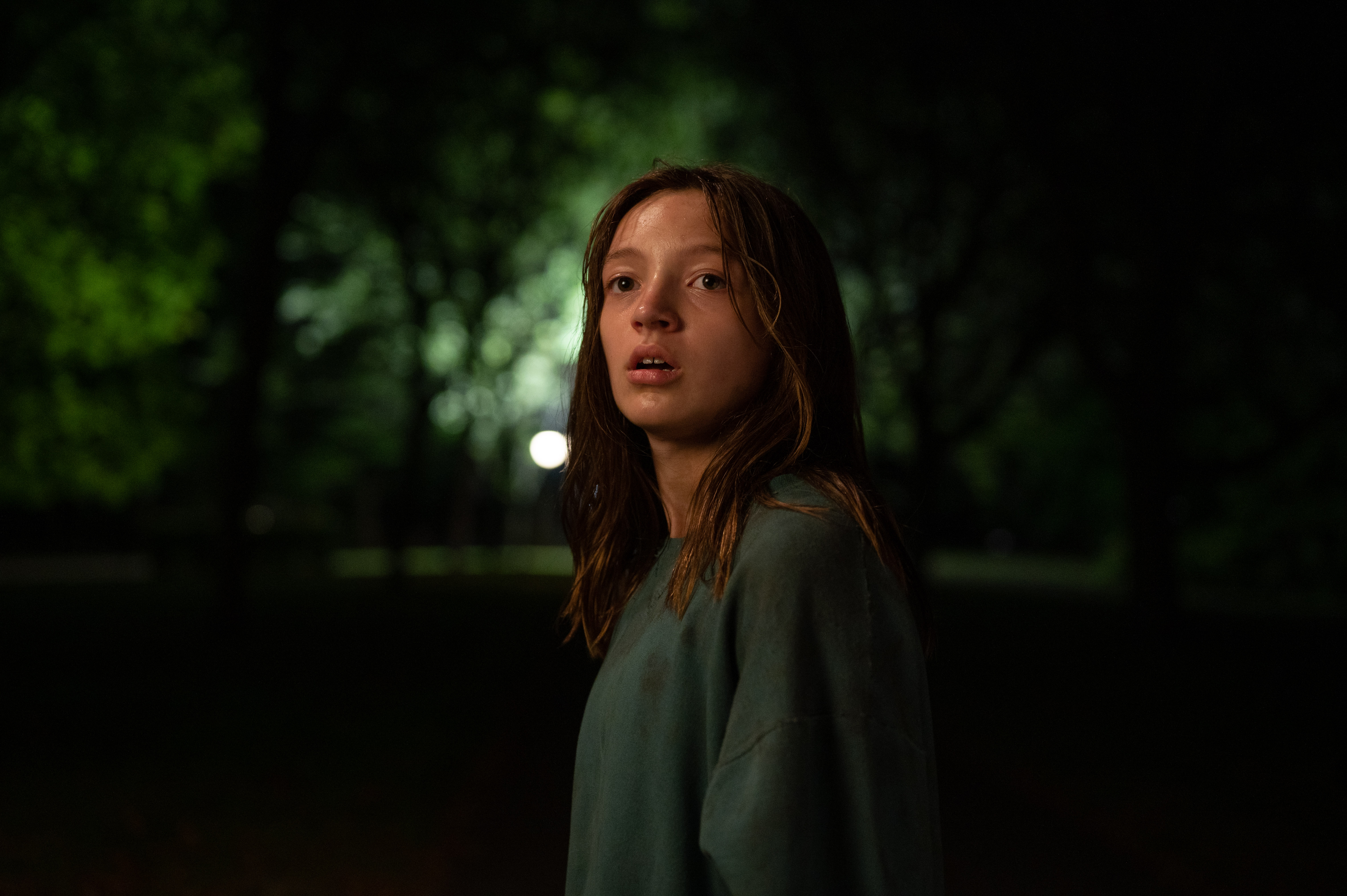
Synopsis: Ten-year-old Johanna and her parents, Naomi and Harry, move back into Naomi’s childhood home in the suburbs of Philadelphia. Johanna hangs a magic birdhouse to protect her ailing father, and his illness gets worse instead. Dark visions creep in, her dog disappears, and she becomes convinced a sinister spirit is doing it.
Stars: Ruth Wilson, Ben Chaplin, Lucinda Lee Gray Dawson, Allan Corduner, Beauden McConnell, Ramsey Faragallah, Ryan Lucy
Director: Benjamin Finkel
Rated: Not Rated
Running Length: 95 min
Movie Review in Brief: Ruth Wilson, Ben Chaplin, and Cameron Dawson Gray give Family a convincing domestic pressure. The creepy imagery and careful craft are worth seeing, but the script’s shifting attention weakens the emotional impact and the scares.
Family Opens the Door and Loses Its Nerve
Horror and family drama ought to be natural roommates. An illness changes the routines of a house, makes adults behave in ways a child can’t understand, and turns familiar rooms into places where bad news might be waiting. Family recognizes all of that, and moments in Benjamin Finkel’s first feature feel painfully close to something real. Then another supernatural idea arrives, the film changes direction, and the connection it was building starts to slip.
I don’t need a movie to choose between frightening me and making me feel something. The best horror does both. What frustrated me was how often the script approached a disturbing idea and then redirected its attention before it could take hold. It’s a beautifully prepared nightmare that never quite gets under the skin. There’s enough talent involved to make the missed opportunities especially irritating.
When the Adults Have No Answers
Ten-year-old Johanna (Cameron Dawson Gray) has moved with her parents into her mother’s childhood home outside Philadelphia. Her father, Harry (Ben Chaplin, September 5), is seriously ill, and her mother, Naomi (Ruth Wilson, See How They Run), is trying to manage the strain of caring for him. Hoping to help, Johanna hangs a magic birdhouse to invite a protective spirit. What follows gives her considerably less reason to feel protected.
The setup has a strong emotional logic. When adults can’t fix something, a child may look for a solution in the imaginary world that has always offered possibilities the real one doesn’t. Finkel’s own experience gives that idea substance: his father had cancer during his childhood and died when Finkel was fourteen. The director describes wanting to capture the confusion of watching illness alter an entire household, rather than reducing it to a handful of sentimental scenes.
That intention comes through. The trouble is turning it into a dramatic experience that keeps deepening, rather than a succession of alarming impressions.
The Cast Keeps the House Standing
Wilson is exactly the sort of actor you want when a character needs to be both familiar and difficult to read. Naomi’s exhaustion gives her behavior a credible source, while the story’s alignment with Johanna leaves room for that same behavior to seem threatening. Wilson can make a look suggest that she’s reached the limit of what she can manage without announcing which emotion is about to spill over.
Chaplin makes a serious physical commitment to Harry’s decline. The changing body is already frightening before the supernatural material asks us to see anything more in it, and his performance gives the household’s anxiety a concrete cause. These are people living alongside something that is taking a person they love away from them, a little more each day.
Gray handles the central role with admirable control. Johanna has to carry the film’s shifting perception, and the young actor remains watchable even when the material gets elusive. I wasn’t entirely convinced by the character’s stated age, but that’s a smaller issue than the screenplay’s reluctance to build on the performance. The cast gives Family a believable domestic pressure that the larger construction doesn’t consistently repay.
The Nightmare Looks Better Than It Feels
Elisha Christian’s cinematography and Olivia Peebles’s production design give the home an atmosphere suited to a child who can no longer count on familiar surroundings to feel safe. The spaces can hold unease without needing a constant parade of shocks. Logan Nelson’s score and the sound work contribute to that unsettled mood, making the film feel carefully assembled even when its dramatic direction becomes less certain.
The editing by David Barker and Julia Bloch has to negotiate a story in which emotional reality and frightening fantasy keep overlapping. That overlap ought to make Johanna’s experience more immediate. Too often, I felt it created another place for the film to move before the previous threat had acquired much weight. Individual creepy visions work, but their cumulative effect is weaker than their design promises.
There’s no shortage of films that turn grief into a haunting, from The Babadook to Hereditary. The useful comparison isn’t whether Finkel can reproduce their scares. It’s whether the horror gives us a more troubling understanding of this particular family. Here, the real-world suffering and the supernatural disturbance don’t consistently strengthen each other.
Stop Changing the Subject and Scare Me
What I wanted was a firmer commitment to the consequences of the film’s own choices. If Johanna’s attempt to help invites something frightening, let that fear develop. If the imagined threat is how she understands what is happening to her father, make that connection hurt. The film can move between those possibilities, but each move needs to add something to the last.
Wilson and Chaplin make the distress in that household believable, while Gray gives Johanna the poise and focus to hold our attention. The image and sound can certainly produce a creepy moment. What keeps those moments from adding up is the script’s habit of changing direction, which interrupts the fear just as readily as it interrupts the family drama.
There’s enough here to warrant a look, especially for viewers interested in a personal first feature with ambition beyond delivering the next jump scare. I came away admiring the pieces more than the film they formed. The cast gives it a pulse; the script keeps interrupting the heartbeat. This is a family worth watching, but I kept wishing its story would stop changing the subject.
Looking for something? Search for it here! Try an actor, movie, director, genre, or keyword!

Leave a Reply