
Last Tango in Paris (1972)
4K UHD + Blu-ray · 88 Films
Stream First
In Brief
Bernardo Bertolucci’s divisive drama comes to 4K with a restoration from the original negatives, plus a new commentary and three interviews. Brando’s extraordinary performance remains part of film history, but the treatment of Maria Schneider during production makes that history impossible to discuss without serious reservations.
The Facts
Synopsis: After his wife’s suicide, an American in Paris begins an anonymous relationship with a young French woman in an empty apartment, insisting they reveal nothing about their lives beyond its walls.
Starring: Marlon Brando, Maria Schneider, Jean-Pierre Léaud, Massimo Girotti
Directed by: Bernardo Bertolucci
Rated: NC-17
Running Length: 130 minutes
Buy It Here
The Package
Label: 88 Films
Format: 4K UHD + Blu-ray
Release Date: August 17, 2026
Video: 2160p, Dolby Vision and HDR10, 1.85:1. 4K remaster from the original negatives; Blu-ray in 1080p. Uncut version
Audio: Original English and French mono, lossless
Subtitles: English SDH
Discs: 2 discs: 4K UHD and Blu-ray. Limited edition of 3,000 copies with Tommy Pocket artwork, rigid slipcase, and picture booklet
The Film
Few movies have spent as long in the middle of a cultural argument as Last Tango in Paris. Pauline Kael compared its New York premiere to the opening of The Rite of Spring, while Italian authorities went so far as to order copies destroyed in the 1970s. As recently as 2024, a screening at the Cinémathèque française was cancelled after protests. The reasons people fought over the film in 1972 and the reasons they question it today aren’t identical, but the controversy has become inseparable from the work itself.
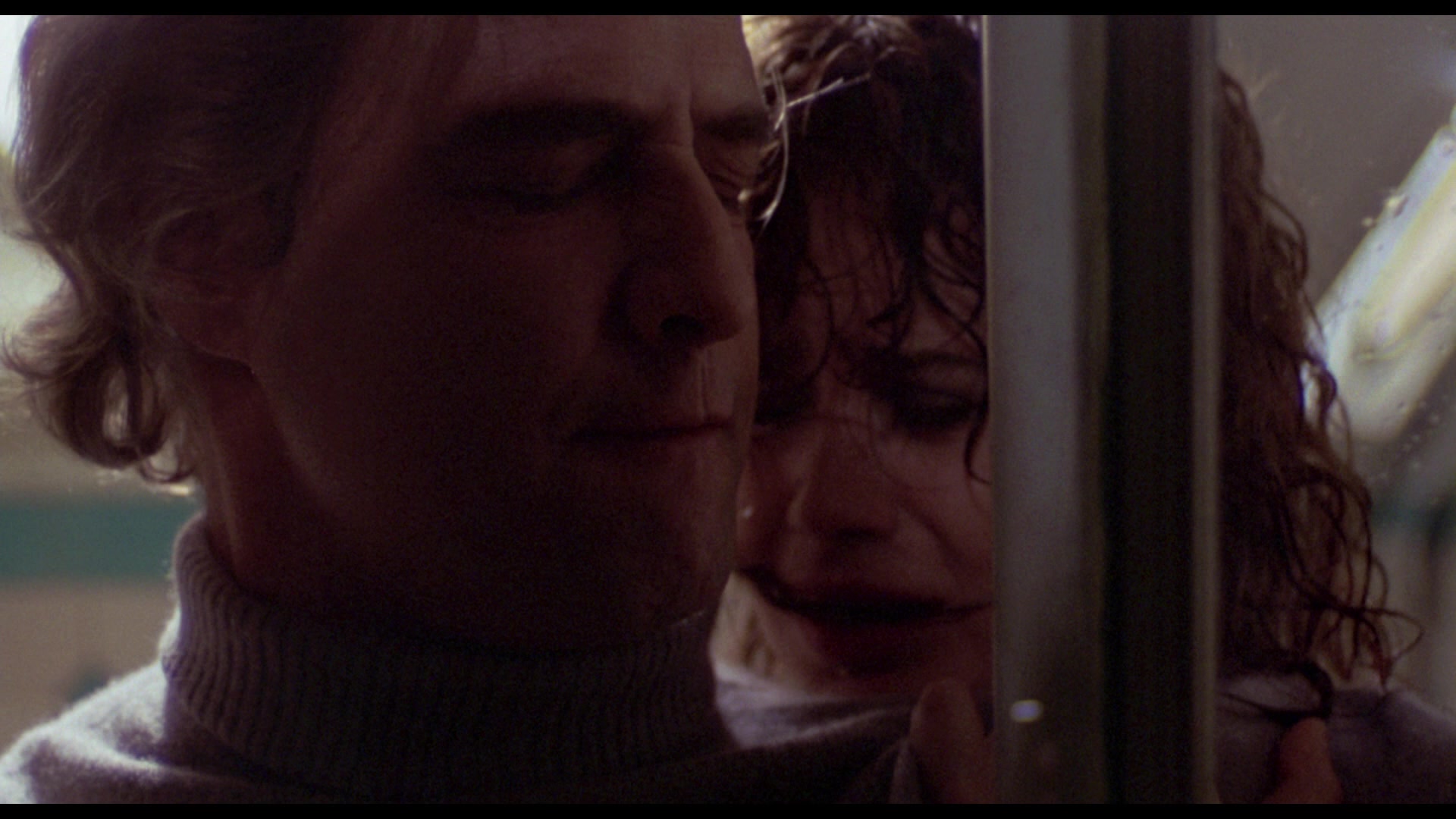
Paul (Marlon Brando, The Godfather) is an American living in Paris and struggling after his wife’s suicide. He encounters Jeanne (Maria Schneider, The Passenger) while both are looking at the same empty apartment, and the two begin a sexual relationship almost immediately. Paul dictates the rules: no names, no pasts, and nothing about their lives beyond those walls. Jeanne, meanwhile, is engaged to Tom (Jean-Pierre Léaud, The 400 Blows), an enthusiastic young filmmaker who seems determined to turn everything around him into a movie. Bertolucci builds a story about grief, power, desire, and the ways anonymity can become another form of control.
The director developed the premise from a fantasy about encountering a stranger without exchanging identities. Working with cinematographer Vittorio Storaro, he shaped the look around the warm oranges and flesh tones of Francis Bacon’s paintings, two of which appear during the opening credits. Brando famously relied on cue cards for some of the dialogue, but the performance still feels startlingly exposed. His work earned an Oscar nomination and remains one of the film’s most compelling features, with a rawness that Martin Scorsese has compared to On the Waterfront.
That artistic achievement cannot be separated from what Schneider later described about making the film. She said that Bertolucci and Brando withheld details of how the notorious simulated sexual-assault scene would be staged, leaving her feeling violated and humiliated. Bertolucci later acknowledged withholding an element of the scene to obtain a genuine reaction. No retrospective assessment should minimize what that decision meant for the young actress at the center of it. Feminist critics had already challenged the film’s overwhelming alignment with Paul’s perspective; Schneider’s account makes those objections harder to dismiss. Brando’s performance may command attention, but Schneider’s experience changes the conversation.
The film’s landmark status, Storaro’s beautiful photography, and Gato Barbieri’s Grammy-winning music remain worth discussing. So does the way Bertolucci’s methods helped produce an image that many viewers now find impossible to watch without thinking of the performer who was denied meaningful advance knowledge of it. Last Tango in Paris is significant, but significance is not the same as an obligation to admire it without question. The 2024 drama Being Maria offers another perspective on Schneider’s life and career.

The Transfer
Video
88 Films presents the uncut feature at 1.85:1 in a 4K remaster drawn from the original negatives, with Dolby Vision and HDR10. The high-resolution presentation is well suited to Storaro’s amber interiors, diffused light, and carefully controlled shadows. The accompanying Blu-ray provides the feature in 1080p. The image has greater clarity, but it still belongs unmistakably to the early 1970s.
Audio
The original English-and-French mono soundtrack is presented in lossless form, with English SDH subtitles. Much of the drama takes place in and around the empty apartment, giving voices, pauses, and Barbieri’s saxophone theme room to shape the mood without needing a modern surround remix.
Transfer Notes
This release contains the 130-minute uncut version. The film originally carried an X rating in the United States and received an NC-17 classification on reissue. 88 Films includes both a UHD and Blu-ray edition in a limited package of 3,000 copies, with new Tommy Pocket artwork and a picture booklet.

Special Features
- Audio Commentary by Eugenio Ercolani and Troy Howarth (NEW): A new film-historical discussion, included on both discs.
- A Hidden Romanticism: An Interview with Film Critic Maurizio Porro (NEW) (26:41): Presented in Italian with English subtitles.
- Tango Blues: An Interview with Co-Editor Roberto Perpignani (NEW) (26:03): A view from the editing room.
- Bernardo’s Initiation: An Interview with Filmmaker Francesco Barilli (NEW) (23:40): Barilli reflects on working with Bertolucci, including Before the Revolution.
- A Conversation with Bernardo Bertolucci (29:58): An archival interview recorded in 1992.
- Where the Tango Took Place (6:16): A tour of the Paris locations.
- U.S. Theatrical Trailer (1:34): The original American campaign.
The new interviews and commentary broaden the historical picture, particularly for viewers interested in the editing and reception of the film. None is specifically presented as an exploration of Schneider’s account of the production, a subject that remains central to any serious discussion of the movie today.
Shelf Worthy?
Stream First
Brando’s work, Storaro’s cinematography, and the film’s enormous cultural footprint justify studying Last Tango in Paris. They don’t require anyone to overlook Schneider’s treatment, and they certainly don’t make it an easy recommendation. This new edition offers a substantial presentation for established admirers, while viewers who haven’t seen the film should make an informed decision about its sexual violence and production history before buying. Watch with an awareness of the film’s achievements, but don’t leave the actress’s experience outside the door.
Shelf Worthy: Buy it. This one earns a spot on the shelf.
Stream First: Watch it before you buy.
Completionists Only: For collectors who need every edition.
88 Films provided a copy for review. My opinions are my own.

Reviewed by Joe Botten
Joe Botten is The MN Movie Man, a Twin Cities film critic writing spoiler-free reviews since 2012. He also writes for Loud and Clear Reviews, a Rotten Tomatoes approved site. Find him on Instagram and Letterboxd.
Looking for something?
Search by actor, movie, director, genre or keyword.


Leave a Reply