
Movie Review
The Paper
9/10
TLDR
Ron Howard’s The Paper is a fast, funny, and involving day in the life of a struggling New York tabloid, with a dynamite Michael Keaton leading a stacked cast. With print shrinking and bad stories shared faster than they’re fixed, its fight to get it right the first time plays even better now.
Where to watch: Rent on Apple TV, Prime Video, YouTube, or Google TV; on Blu-ray from Mill Creek
The Facts
Synopsis: Over one chaotic 24-hour day, New York Sun metro editor Henry Hackett races a deadline to prove two teenagers were wrongly arrested for murder, while juggling a pregnant wife, an ailing boss, a rival job offer, and a managing editor who won’t stop the presses.
Director: Ron Howard
Stars: Michael Keaton, Glenn Close, Marisa Tomei, Randy Quaid, Robert Duvall
Rated: R
Running Length: 112 minutes
The Thoughts
Some movies hit the stands, sell a few copies, and end up lining the birdcage before anyone gives them a proper read, and Ron Howard’s The Paper is one of the best examples I can think of. It has an all-star lineup up top, a script co-written by the guy behind Jurassic Park, and one of Howard’s strongest pools of character actors, and yet, by Howard’s own account, it only really took off in cities with big daily papers. So when it came time to pick the film for my latest Secret Movie Night at Emagine Willow Creek, I knew exactly which underseen gem deserved another run on the big screen.
When I first wrote about it back in 2013, I called it “no classic” (ouch, I must have read a bad horoscope in the paper that day) and gave it a 7.5. My thoughts on it have definitely changed in the 13 years since. With the news cycle spinning faster and print shrinking more and more with each passing year, I see the value in a movie that keeps the tension high while showing what life inside a working newsroom actually looks like. I think it’s an important one to remember as the way we receive information keeps dramatically shifting.
Ron Howard’s The Paper Stops the Presses
Between the period pieces Far and Away and Apollo 13, director Ron Howard (Parenthood, Backdraft) delivered this fast-moving, involving comedy-drama that unfolds over 24 hours and focuses on the goings-on at a New York City daily. The New York Sun isn’t as high-class as the New York Times, but it’s just above the near-tabloid New York Post, and the paper is struggling while its metro editor, Henry Hackett (Michael Keaton), thinks about the future.
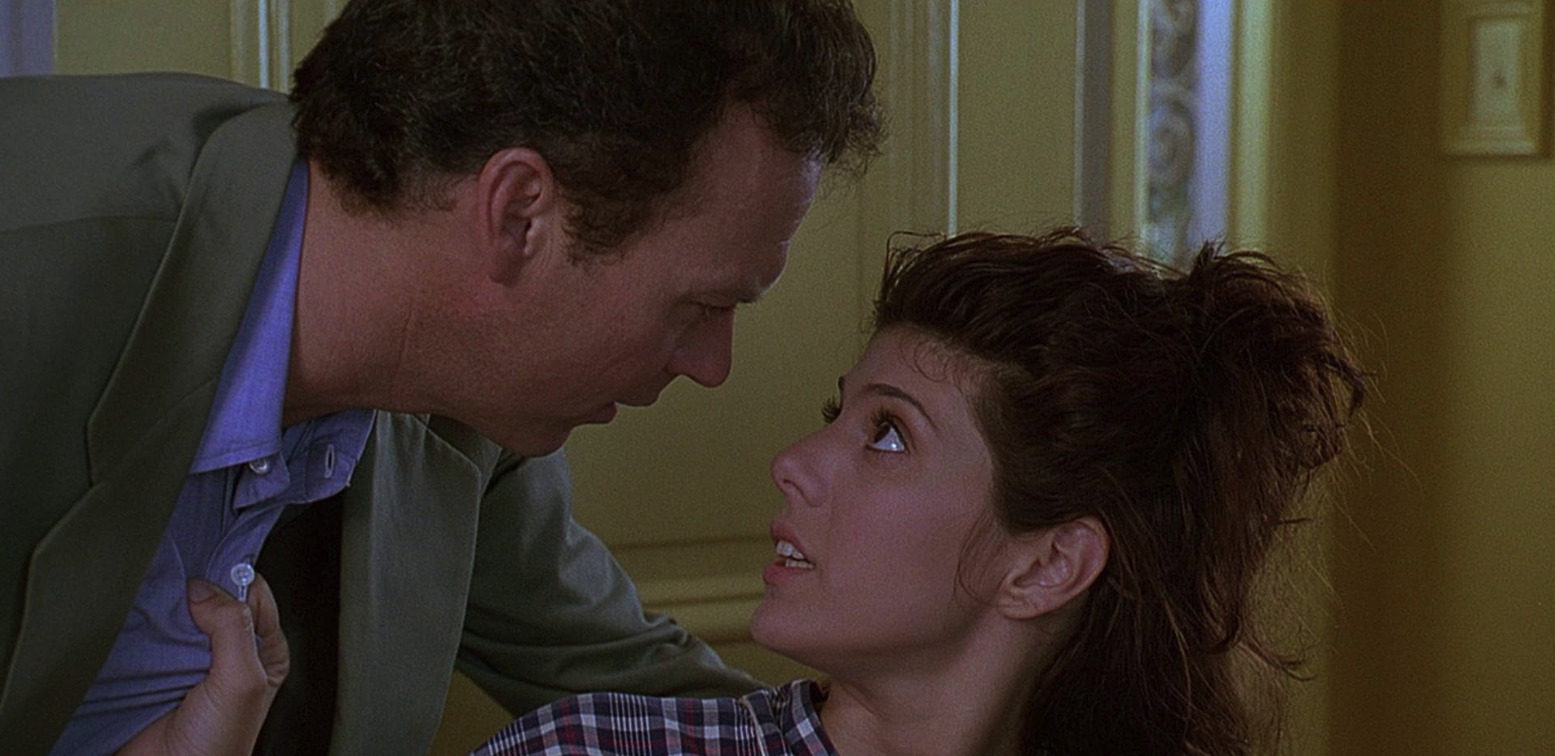
Henry has a lot to juggle on any given day, but this one is a doozy. His very pregnant wife, Martha (Marisa Tomei), a Sun reporter on leave, wants him to take a cushy editor’s job at the buttoned-up New York Sentinel, where the hours and paycheck would be much kinder. His boss, editor-in-chief Bernie White (the late Robert Duvall, Tender Mercies, Jack Reacher), has just gotten bad news from his doctor and is trying to patch things up with the daughter he never made time for.
His gun-toting columnist, Michael McDougal (Randy Quaid), is feuding with a city official he’s been skewering in print, and his managing editor, Alicia Clark (Glenn Close, Albert Nobbs), is slashing budgets for an owner who’s running out of money. Henry gets through all of it on Coke (the drink, not the powder) and pure gumption.
Then two white businessmen turn up dead in a parked car in Williamsburg, and two Black teenagers are arrested for the murders. It seems like any other story, the kind that sells papers, until McDougal overhears the cops grumbling about the arrest on the newsroom scanner and Henry starts doing some actual reporting. The deeper he digs, the less cut-and-dried it looks, and he’s even willing to swipe a tip off a desk at the Sentinel in the middle of his job interview there, which doesn’t exactly help his chances. With a deadline looming, Alicia ready to run the easy headline, and a baby due any day now, the film keeps Keaton plowing on without much of a breather.

Getting It Right the First Time
The film is all about getting it right the first time, not settling for correcting a story a day later, because back then news didn’t travel as fast as it does now. People turned to the newspaper for their information, not the internet, TikTok, Facebook, or Instagram, so when the Sun is ready to slap “Gotcha!” across its front page, the stakes are as real as it gets.
Once that headline hits every newsstand in the city, two teenagers who may not have done anything are guilty in the eyes of every New Yorker who picks up a copy, and no correction tucked inside the next day’s edition is going to undo that. That’s what makes Henry’s fight to stop the presses so gripping in the middle of his own chaotic life, and it’s the kind of integrity that feels commendable now, because it’s not at the forefront of everyone’s minds.
It plays even better today, now that 136 newspapers closed in a single year and one in five American adults regularly gets news on TikTok. These days a bad story can be fixed with a click, but it can also be shared a million times before anyone gets around to fixing it. That makes the people willing to lose sleep, money, and maybe their jobs to get it right the first time more valuable than ever.
There’s something to be said for integrity, and for being unwilling to accept anything less than the right thing, even if it costs you everything. Turning a workplace comedy into a morality tale was an interesting choice, and it puts The Paper comfortably in a long line of respected and rewatchable newspaper movies, from The Front Page and His Girl Friday to Spotlight.
A Newsroom Full of Ringers
I can’t stress enough how well cast this is. Keaton gives a dynamite performance in his third film with Howard, after Night Shift and Gung Ho, and Howard does what he does best, letting the movie develop naturally and placing most of the responsibility on his trusted star, who doesn’t disappoint. Close, too, is very effective as a dragon lady we’ve heard a lot about before we finally see her, and when she does appear, Howard gives her a terrific entrance, presenting her so the first frame tells us everything we heard about her is right on the money. Funnily enough, Alicia was written as a man named Alan, and when Close came aboard, the screenwriters changed the name and kept every line the same.
Henry and Alicia are like oil and water, and eventually, years of bitter resentment boil over into one of the film’s best scenes, a fine moment of acting for both, especially Close, who looks radiant here even as she hides a massive wall of self-doubt and sadness. Henry knows this and pushes her buttons because of their long history together, but this isn’t the day for anyone to test anyone else, and they both learn that the hard way.
Duvall and Tomei also turn in fine performances, navigating some cliché material with ease. Watching Quaid’s McDougal now comes with an extra layer of insider knowledge, since Quaid’s own headlines have long since outrun anything his character could dream up. There was his 2010 run to Canada to escape what he called the “Hollywood star whackers,” and the long extradition fight that ended when a Vermont judge set him and his wife free in 2015. And just this past July, a California appeals court upheld a $3.5 million judgment against the couple over their claims to a Santa Barbara property that once belonged to them.
Aside from the above-the-title leads, Howard once again shows his strength in casting by filling the newsroom and the world outside it with strong character actors like Jason Robards, Jason Alexander, Spalding Gray, and Catherine O’Hara, the kind of colorful supporting turns that lend the whole thing its authenticity, and many of them make one-and-done appearances that are still felt several scenes later. The late, great Lynne Thigpen has a small role as Henry’s secretary, Janet, but makes the most of her scenes, and that’s what true renaissance acting is all about.
You can’t forget Roma Maffia as an eager reporter always trying to get the human angle, or Jack Kehoe as a hypochondriac who’s sure he’s being conspired against, and Amelia Campbell’s rookie photographer, Robin, is a bundle of nervous energy desperate to get the right shot, though she’s the kind of person who would forget to take the lens cap off. Pause any scene in the newsroom, and you’ll catch someone doing something interesting on production designer Todd Hallowell’s wonderfully fussy set.
Keep an eye out for the real thing, too. A whole roster of New York media names play themselves, from columnists Pete Hamill and Mike McAlary (who inspired Quaid’s McDougal) to Bob Costas, Kurt Loder, and Graydon Carter. Howard also made it a family affair, with his brother, Clint, his parents, Rance Howard and Jean Speegle Howard, and his wife, Cheryl, all turning up in small roles, along with co-writer Stephen Koepp.
Behind the Front Page
The fast-moving script comes from David Koepp (Jurassic Park) and his brother Stephen, a senior editor at Time magazine who knew exactly how a newsroom sounds, and it was Steven Spielberg who pointed Howard to David in the first place. Even the near misses are fun trivia. Paul Newman turned down the role of Bernie before Duvall took it, and Tom Hanks was among the stars considered for Henry, though he spent that summer and fall shooting Forrest Gump, released that same year.
The script juggles a handful of subplots on a single 24-hour clock with ease, and Howard did his homework, spending time in the newsrooms of the New York Post and the Daily News to get the details right, right down to reporters slapping police lights on their cars to beat traffic.
The crew is as stacked as the cast. Cinematographer John Seale, who would win an Oscar for The English Patient a couple of years later and went on to shoot Mad Max: Fury Road, keeps the camera moving through the cluttered newsroom, and Howard’s longtime editors Daniel P. Hanley and Mike Hill keep things zipping along. Randy Newman wrote the score and “Make Up Your Mind,” which earned the film its only Oscar nomination. Alas, it was the year of The Lion King, which had three of the five Best Original Song nominees, so Newman’s typically jolly ditty never really was in the race to win.
Read All About It
True, some elements are clearly dated, though the views of New York City circa 1994 (there’s an almost reverential look at the Twin Towers) only make it more of a time capsule, and the pursuit of the truth in the face of the grinding engine of economics still has an impact on our society today. The good journalists who keep putting the truth above everything else deserve that kind of spotlight.
Two full houses got to see it on the big screen last night at Secret Movie Night, and only about three people in our theater had seen it before, so I hope more people discover it and give it the attention it deserves. If you’ve never seen this one or haven’t revisited it in a while, check out The Paper, because it’s a great reminder of the time before the internet, when people actually talked to one another, and a sterling showcase of the talent involved in one of Howard’s lesser-known titles that should be a lot better known.

The Final
The Paper is a brisk, beautifully cast newsroom comedy-drama about getting it right the first time. Some of it is dated, but its integrity never is, and it’s one of Ron Howard’s lesser-known titles that deserves to be a lot better known.
9/10
Where to watch: Rent on Apple TV, Prime Video, YouTube, or Google TV; on Blu-ray from Mill Creek

Reviewed by Joe Botten
Joe Botten is The MN Movie Man, a Twin Cities film critic writing spoiler-free reviews since 2012. He also writes for Loud and Clear Reviews, a Rotten Tomatoes approved site. Find him on Instagram and Letterboxd.
Looking for something?
Search by actor, movie, director, genre or keyword.


Leave a Reply