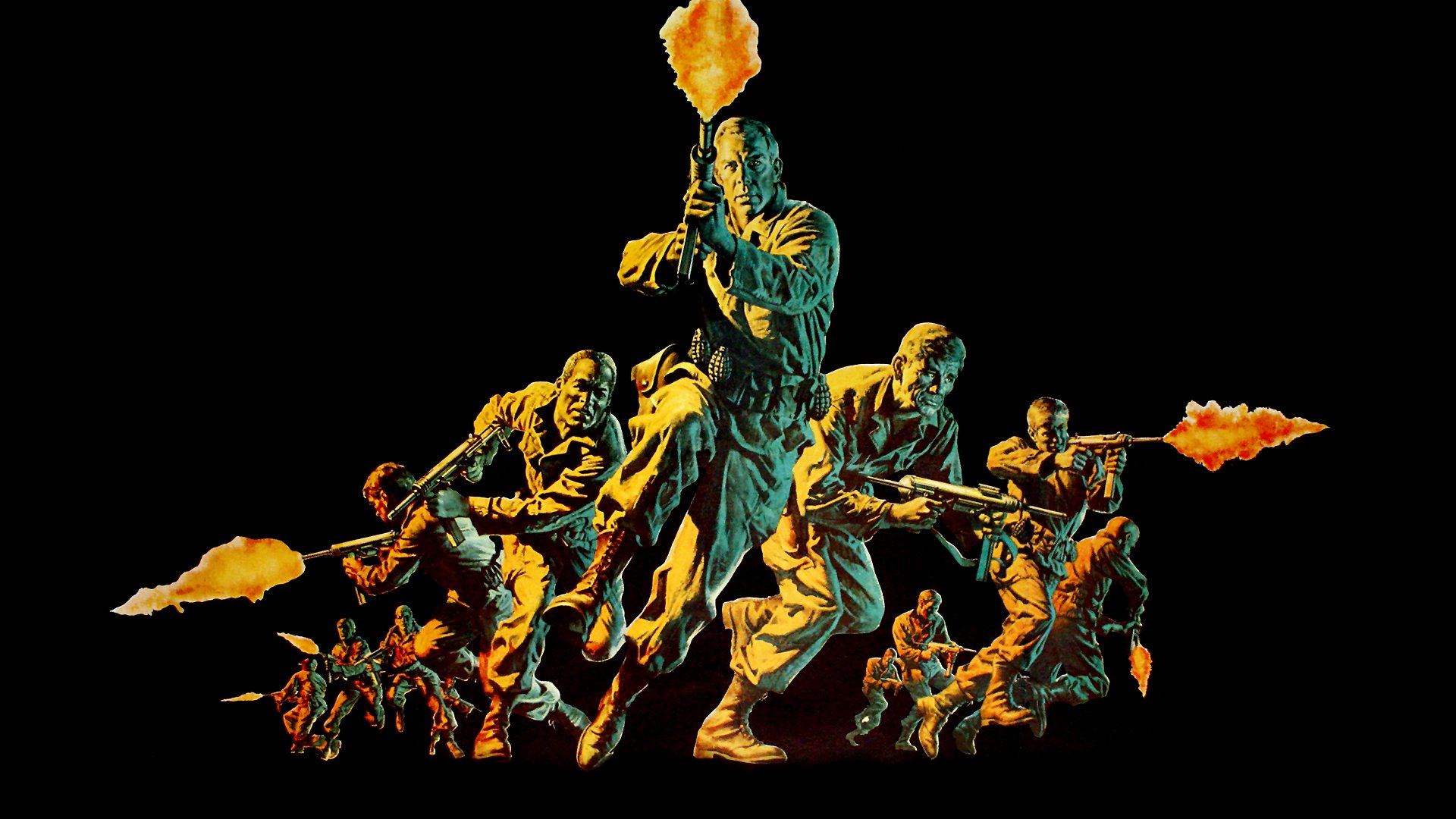

The Dirty Dozen (1967)
4K UHD + Blu-ray bonus disc · Arrow Video
Shelf Worthy
In Brief
Lee Marvin turns twelve military convicts into a commando unit in Robert Aldrich’s gloriously unruly wartime hit. Arrow’s 4K UHD offers a restoration from the original camera negative, three audio presentations, newly discovered production footage, and a bonus disc that even includes the 1985 television follow-up. The mission hasn’t lost its nerve, and the set is loaded for another tour.
The Facts
Synopsis: Before D-Day, an Army major who doesn’t play well with authority is ordered to train twelve military prisoners for a near-suicidal raid on a chateau housing German officers, with the promise of amnesty for those who survive.
Starring: Lee Marvin, Ernest Borgnine, Charles Bronson, Jim Brown
Directed by: Robert Aldrich
Rated: Not Rated
Running Length: 150 minutes
Buy It Here
The Package
Label: Arrow Video
Format: 4K UHD + Blu-ray bonus disc
Release Date: November 17, 2026
Video: 2160p, Dolby Vision and HDR10, 1.85:1, from a new 4K restoration of the original 35mm camera negative.
Audio: Restored original English mono (LPCM 1.0), restored DTS-HD Master Audio 5.1, and a newly restored 70mm 6.0 mix
Subtitles: English SDH
Discs: Two discs: 4K UHD containing the theatrical feature and Blu-ray containing extras, including the 1985 television sequel The Dirty Dozen: Next Mission. No 1080p copy of the original feature is included. Limited edition with slipcover, reversible sleeve, and collector’s booklet.
The Film
The summer of 1966 seemed determined to stop The Dirty Dozen before the Germans ever got the chance. Relentless rain delayed the English shoot, pushed costs roughly $1 million over budget, and turned outdoor filmmaking into its own military campaign. Part of a chateau set burned down by accident. Meanwhile, Cleveland Browns owner Art Modell insisted that Jim Brown choose between professional football and acting, prompting the star running back to walk away from the NFL. Somehow Robert Aldrich finished the movie anyway. Made for around $5.4 million, it earned roughly $45.3 million and became MGM’s biggest hit of 1967. Apparently, the operation was more successful than anyone expected.
It’s March 1944, and Major John Reisman (Lee Marvin, Point Blank) is not a man the Army enjoys having around. He’s insubordinate, impatient with bureaucracy, and considerably more interested in getting a job done than respecting the rank of whoever is standing in front of him. Major General Sam Worden (Ernest Borgnine, Marty) has a particularly dangerous assignment for him: assemble twelve convicted military prisoners, train them into a functional fighting force, and send them behind enemy lines to attack a fortified chateau housing senior German officers ahead of the Normandy invasion. If the men survive, their sentences may be reduced or forgiven. That’s an unusually generous retirement plan for men who have already been written off.
Reisman’s recruits are a collection of killers, troublemakers, and misfits, some facing execution. Joseph Wladislaw (Charles Bronson, The Magnificent Seven) is guarded and capable, Robert Jefferson (Brown, Ice Station Zebra) has a justified distrust of the institution ordering him around, and Victor Franko (John Cassavetes, Rosemary’s Baby) seems determined to challenge every instruction before the sentence is finished. Archer Maggott (Telly Savalas, Kojak) is the one whose violent religious obsession makes even the others uneasy, while Vernon Pinkley (Donald Sutherland, M*A*S*H) is the sort of recruit you’d never picture in a commando squad until somebody gave him an opportunity to prove otherwise.
The movie takes its time turning this assortment into anything resembling a team. There are fights over discipline, schemes to undermine Reisman, and training exercises that reveal exactly how little the conventional Army thinks of the men it has been asked to use. Reisman is no sentimental leader. He manipulates, threatens, and occasionally rewards them, mostly by understanding that these prisoners have very little reason to trust anyone giving orders. Their gradual progress gives the film a satisfying rhythm, and by the time the mission finally begins, every success feels like something earned through sweat and bad behavior.
Aldrich adapts E. M. Nathanson’s bestselling novel through a screenplay by Nunnally Johnson and Lukas Heller. Nathanson drew loosely on the wartime exploits of a real group nicknamed the Filthy Thirteen, but this is pulp adventure rather than a documentary. Aldrich delights in putting authority figures on opposite sides of the screen, often making the respectable officers look smug, foolish, or eager to protect their careers. Reisman may be difficult, but he’s at least honest about what he’s asking the men to do. The convicts become a rough-edged challenge to military respectability, even as the film never forgets that some of them are truly dangerous.
Marvin is superb at keeping Reisman tough without turning him into a motivational speaker. He barks orders, delivers insults with almost no effort, and manages to make the men’s gradual loyalty believable without asking for a sentimental group hug. Cassavetes earned an Oscar nomination playing Franko as a loud, suspicious bundle of nerves, while Bronson barely has to raise his voice to make Wladislaw seem formidable. Savalas makes Maggott genuinely frightening, and Sutherland finds comic opportunities without breaking the film’s tension. This is an ensemble full of actors who can command a scene, yet they never make you doubt who’s running the operation. Marvin doesn’t lead the Dozen so much as dare them to give him another reason to lose his temper.
The film’s length is the most obvious obstacle. At two and a half hours, it invests heavily in training and personality before delivering the main assault, and anyone expecting continuous action might wonder when the platoon plans to leave camp. The treatment of women is also limited to a handful of largely decorative appearances, while the climactic violence can be grimmer than the earlier comic swagger suggests. Aldrich’s irreverence is the great appeal, but it comes wrapped in a movie whose moral interests are sometimes less complicated than its unruly characters.
Even so, The Dirty Dozen knows how to build a mission, introduce a terrific cast, and make an audience enjoy the collision between desperate men and the officers who despise them. Its influence stretches through countless men-on-a-mission pictures, from war stories to comic-book ensembles. Three television sequels followed, but the original retains the best cast and the most persuasive reason to cheer for a crew that nobody upstairs wanted to save. They’re no model soldiers. That’s precisely why the movie works.

The Transfer
Video
Arrow returns to the original 35mm camera negative, scanned at Warner Bros. Motion Picture Imaging and restored by Duplitech with supplemental elements used where needed. The film arrives in 2160p at 1.85:1 with Dolby Vision and HDR10, replacing Warner’s older 1.78:1 Blu-ray presentation. The greater detail and more natural grain are particularly valuable in the crowded training sequences, while the English locations and military uniforms offer plenty of subtle tonal variation. It’s a much more fitting presentation for a large-scale 1967 production than the earlier high-definition disc.
Audio
Three English presentations trace the film’s sound history: restored original LPCM 1.0 mono, restored DTS-HD Master Audio 5.1, and a newly restored 6.0 mix from the 70mm release. The film won an Academy Award for sound-effects work, so access to these lossless options is especially welcome. The mono keeps the original theatrical character, while the 70mm mix allows the score by Frank De Vol, military activity, and battle effects to spread across a larger stage. English SDH subtitles are included.
Transfer Notes
The original feature is presented in its 150-minute theatrical version on the 4K disc. The supplementary Blu-ray carries the extras and the 1985 television film The Dirty Dozen: Next Mission, rather than a 1080p copy of Aldrich’s movie. The archive of features from Warner’s 2007 disc returns, supplemented by new interviews and newly found behind-the-scenes footage.

Special Features
- Audio commentary by Alain Silver and James Ursini (NEW): The authors and film historians take a fresh look at Aldrich’s production.
- Archival audio commentary: Jim Brown, Trini Lopez, E. M. Nathanson, Captain Dale Dye, and others contribute to the older track.
- Introduction by Ernest Borgnine (3:30): A short visit with General Worden.
- The Dirty Dozen: Next Mission (1:35:33): The 1985 TV sequel reunites Marvin, Borgnine, and Richard Jaeckel, presented in standard definition.
- Peter Whitehead Archives (NEW, 14:00 and 6:11): Newly discovered location footage and a Lee Marvin interview.
- War Is Over (NEW, 23:41): Kim Newman discusses the film’s place in war cinema.
- The War March (NEW, 37:43): David Huckvale examines Frank De Vol’s score.
- Armed and Deadly: The Making of The Dirty Dozen (30:57): The archival behind-the-scenes documentary, presented in 720p.
- The Filthy Thirteen: Real Stories Behind the Lines (47:14): The military unit associated with Nathanson’s inspiration, also in 720p.
- Operation Dirty Dozen (9:14): Vintage studio promotion.
- Combat Leadership: The Ultimate Challenge (29:42): A military training film narrated by Marvin.
- Theatrical trailer (3:32) and image gallery: Original advertising and stills.
- Collector’s booklet: New work by Sean Hogan and Paul Talbot, plus excerpts from Killin’ Generals and What Ever Happened to Robert Aldrich?
- Reversible sleeve and slipcover: Original campaign art and new artwork by Tom Ralston.
The discovery of the Peter Whitehead material is the standout addition, giving collectors a rare glimpse of the production as it was happening. With the commentaries, archival pieces, music study, and television sequel, the extras feel like another full-length campaign. Arrow hasn’t merely brought back the Dozen; it’s called up the reserves.
Shelf Worthy?
Shelf Worthy
A terrific cast, a director with a talent for controlled disorder, and a mission that earns its long buildup make this a film worth returning to. The negative-based restoration and three audio options give the disc genuine value beyond the supplements, and the newly discovered footage is a prize for longtime fans. Shelf Worthy for war-film collectors, Marvin admirers, and anyone still watching Warner’s old Blu-ray. Nearly sixty years later, these men clean up surprisingly well, provided nobody asks them to behave.
Shelf Worthy: Buy it. This one earns a spot on the shelf.
Stream First: Watch it before you buy.
Completionists Only: For collectors who need every edition.
Arrow Video provided a copy for review. My opinions are my own.

Reviewed by Joe Botten
Joe Botten is The MN Movie Man, a Twin Cities film critic writing spoiler-free reviews since 2012. He also writes for Loud and Clear Reviews, a Rotten Tomatoes approved site. Find him on Instagram and Letterboxd.
Looking for something?
Search by actor, movie, director, genre or keyword.


Leave a Reply