It’s unsettling to watch our digital lives unfold in real time—messages popping up at inopportune moments, videos glitching right when things get tense. That’s also the eerie appeal of a well-crafted screenlife film. When done right, the format doesn’t just tell a story; it pulls you in, making you an unwilling participant in a voyeuristic nightmare. Screenlife movies like Spree, Searching, and Host have shown how our ever-connected world can be turned against us.
Unfortunately, Bloat drowns in its own ambition. Instead of heightening suspense, its technological flourishes trip over themselves, resulting in an uneven experience that feels more like an endurance test than an engaging thriller. What could have been a slick, unsettling horror film gets bogged down by flat performances, aesthetic gimmicks, and an over-reliance on digital noise.
Drawing inspiration from Japanese folklore’s kappa—water-dwelling tricksters notorious for drowning victims and extracting the shirikodama (a mythical organ, disturbingly extricated from the least desirable part of the body)—Bloat attempts to merge cultural mythology with modern digital anxiety. This should be fertile ground for a screenlife horror film, spooky waterlogged terror lurking within every pixelated frame. But first-time director Pablo Absento never quite finds the right balance between dread and digital immersion.
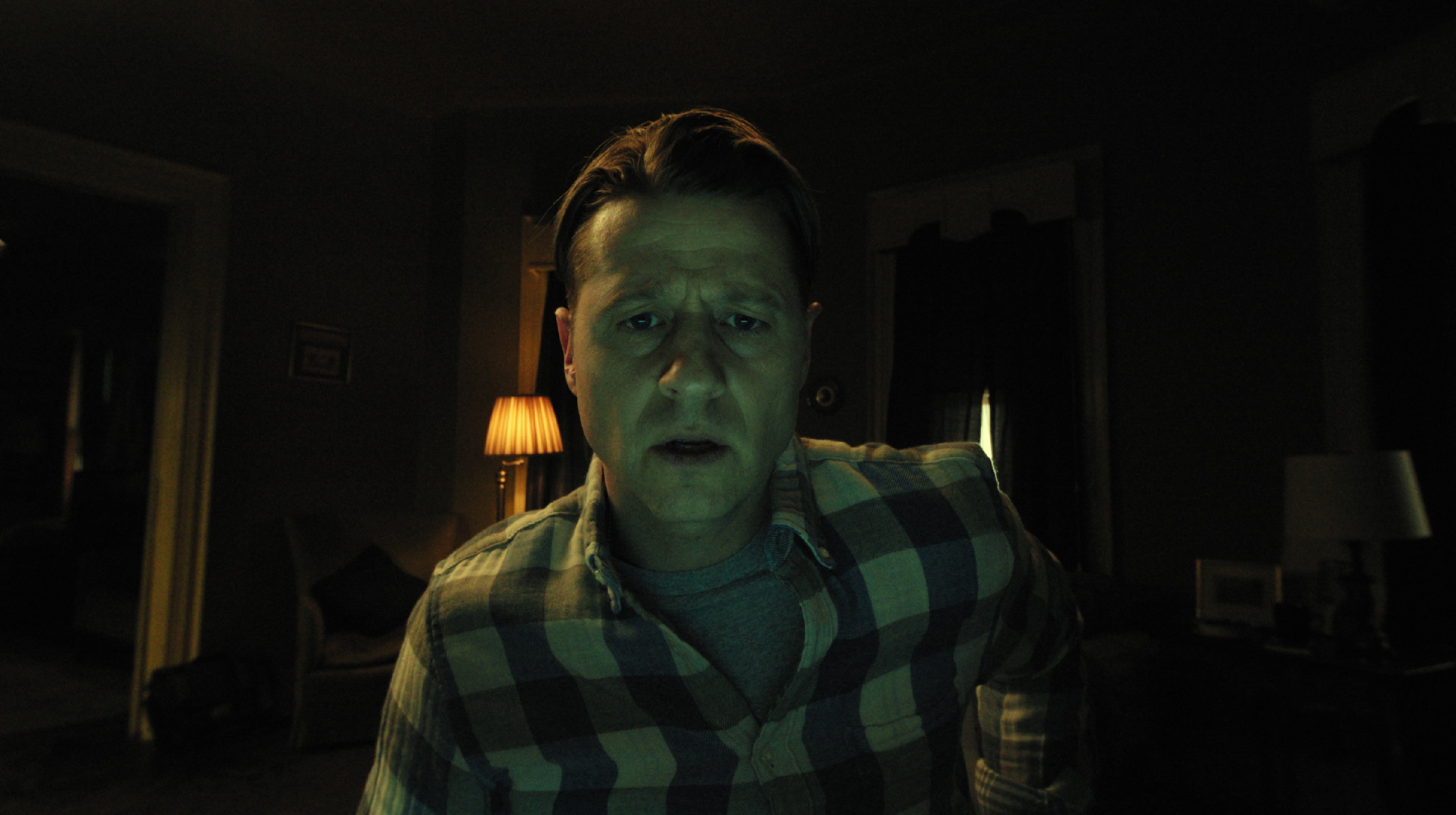
Jack (Ben McKenzie), a Marine still reeling from the stillbirth of his daughter, has planned a long-overdue family trip to Tokyo. The vacation derails when his bereavement leave is revoked after military attacks escalate in the Middle East, forcing his wife Hannah (Bojana Novakovic, Birds of Prey) and their kids to travel without him. The vacation takes a horrifying turn when young Kyle (Sawyer Jones, Antlers) nearly drowns in a lake, only to resurface with an eerie fondness for raw cucumbers and an increasingly violent demeanor. With Jack stuck watching from afar and Hannah numbing herself with pills, their eldest son Steve (Malcolm Fuller) starts piecing together the sinister truth, while Jack’s military buddy Ryan (Kane Kosugi) investigates in Tokyo.
The premise has all the ingredients for a gripping psychological horror—a father, trapped behind a screen, powerless as his family unravels. But Bloat never figures out how to make that tension work. McKenzie, tethered to a stationary performance, struggles to convey the weight of his character’s despair. His attempts at tortured paternal anxiety often feel exaggerated, veering into unintended comedy. Worse, his oddly stilted voice delivery makes his distress feel robotic rather than raw. The supposed emotional distance between Jack and his family becomes unintentionally meta—the actors, likely filming separately, lack the chemistry to make their separation feel poignant instead of just technical.
Novakovic fares better, grounding her performance even as the film spirals into digital chaos. However, her work is often drowned out—literally—by excessive visual glitches. Director Absento leans hard on garbled audio, pixelated distortions, and stuttering frames, presumably to heighten unease. Instead, these effects quickly wear thin, feeling more like a bad internet connection than an intentional horror choice. Watching Bloat often resembles sitting through a buffering video call—perhaps thematically fitting, but frustrating as a viewing experience.
The film’s biggest misstep is misunderstanding what makes screenlife horror work. The best entries in the genre let viewers discover unease lurking in the margins—a shadow moving in a video feed, a message appearing that shouldn’t be there. Bloat takes the opposite approach, relying on rapid cuts and digital distortion to force its scares, even shoehorning in a viral jump-scare video as a shortcut for tension. Rather than creeping dread, it mostly registers as sensory overload.
What’s most disappointing is how Bloat squanders its cultural foundation. The kappa legend is rich with horror potential—these creatures are both polite and predatory, with weaknesses rooted in folklore that could have added depth to the narrative. But instead of a thoughtful exploration, the film reduces its mythology to little more than creepy cucumber munching, leaving its folklore as hollow as its emotional center.
Absento’s debut lacks the innovation or restraint that made earlier screenlife films so gripping. Fans of the subgenre will likely walk away disappointed, longing for the sharper tension of films that did more with less.