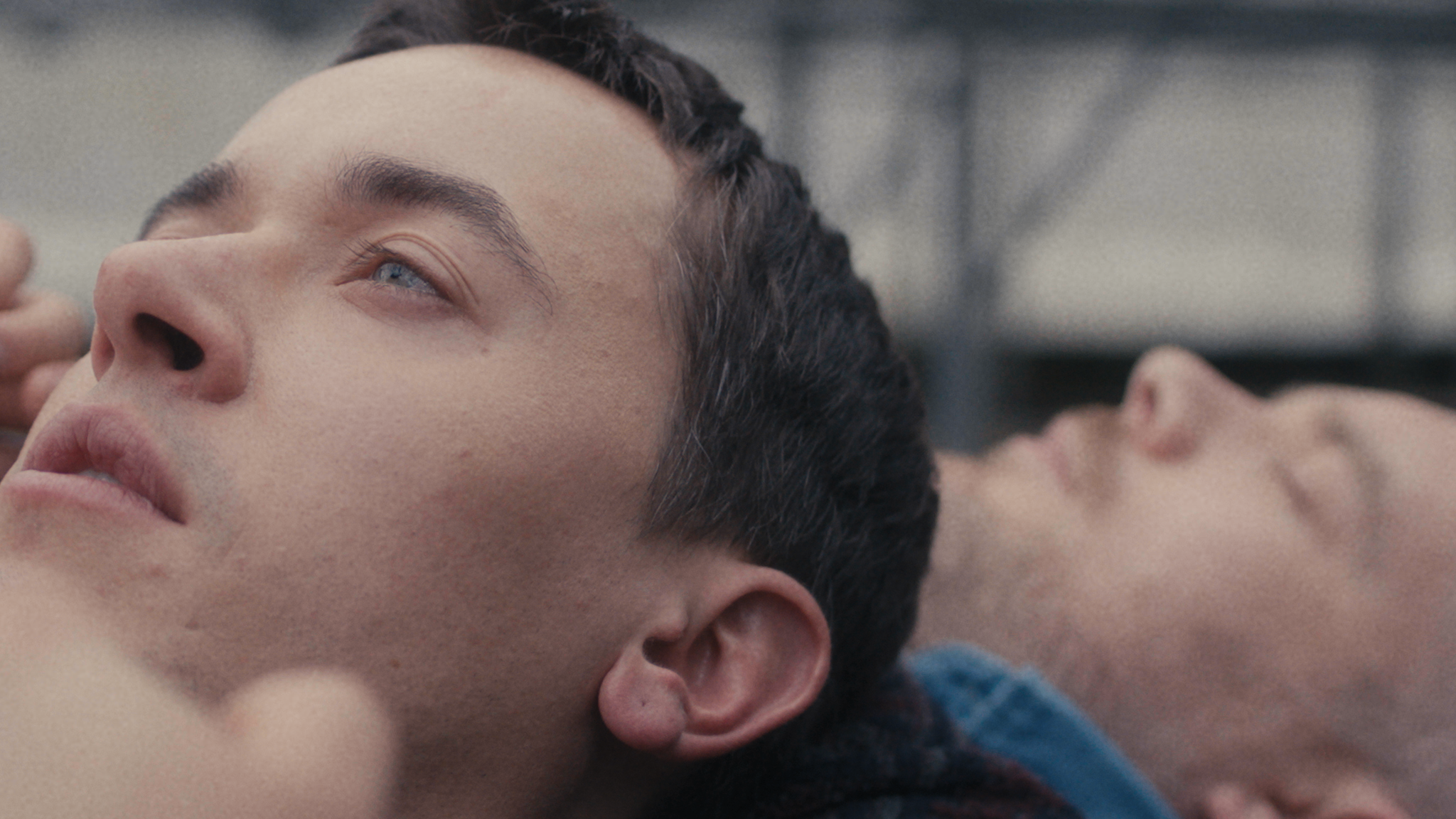
The 1990s balance precariously on memory’s edge—close enough to recall dial-up modems and pagers, distant enough to expose how drastically acceptance and identity have shifted. Carmen Emmi‘s directorial debut Plainclothes leans into that uneasy duality, crafting a romantic thriller built on entrapment’s quiet violence, where shame was once codified into law enforcement procedure.
Police operations targeting gay men didn’t vanish with the 1950s—a sobering reality that inspired Emmi’s Sundance-selected drama. Set in 1990s Syracuse and drawn from real events that continued into the 2010s, Plainclothes tackles urgent subject matter with admirable intentions. Unfortunately, noble purpose doesn’t guarantee compelling cinema, and this film too often resembles a television movie rather than the nuanced theatrical experience its important story deserves.
Tom Blyth (The Hunger Games: The Ballad of Songbirds & Snakes) plays Lucas, a promising young officer assigned to undercover “plainclothes” duty. His task proves sordid: lure gay men into compromising bathroom encounters, then stand aside as they are arrested by his partner. These stings supposedly prove loyalty to the badge, but everything shifts when Lucas meets Andrew (Russell Tovey, The Good Liar). What begins as routine assignment transforms into dangerous intimacy, pushing Lucas toward a collision between professional duty and personal desire. Unfolding through fractured timelines, the film jumps between sting operations, covert encounters between the two men, and a suffocating New Year’s Eve family gathering where a lost letter threatens to expose everything Lucas has buried.
Blyth has been steadily choosing roles that resist easy categorization, much like peer Harris Dickinson, and Lucas represents another risky swing. His performance carries rough edges, sometimes verging on melodrama, but there’s earnestness in his portrayal that makes the character’s internal struggle feel authentic. However, Emmi’s script and direction don’t always serve him well. The film tries too hard to recreate specific atmospheres of voyeurism and emotional masking, but the approach feels heavy-handed. This directorial uncertainty seeps into performances, making even capable actors occasionally come across as overwrought.
Tovey, usually an actor who balances vulnerability with wit, takes longer to connect. His Andrew doesn’t fully land until late in the film when the script pulls back the curtain further to reveal collateral damage, and by then it’s too late to fully invest in his emotional journey and loss. When their chemistry does click, the two men find massive sparks with the kind of passion that could have elevated Plainclothes into something more potent.
The supporting cast adds vital texture where the central romance falters. Maria Dizzia (My Old Ass) plays Lucas’s mother with wary precision, all sidelong glances and buried suspicion, while Amy Forsyth (The Novice) injects restless warmth as Emily, a confidante and family friend who spots cracks in Lucas’s facade. These women provide the film’s most authentic emotional beats, finding genuine moments even as the leads struggle to connect.
Technically, Plainclothes announces Emmi as a director that’s unafraid of risk. Cinematographer Ethan Palmer aims for faux-16mm aesthetics, but the beige palette makes everything look unappetizingly flat—like cafeteria food under fluorescent lights near the end of their life. The inclusion of Hi8 footage shot during production to visualize Lucas’s fractured perspective adds experimental edge, though it doesn’t always integrate seamlessly. Emily Wells‘s score hovers effectively between intimacy and dread, while Erik Vogt-Nilsen‘s editing struggles to smooth the tonal shifts between thriller and romance.
Emmi’s personal connection provides the film’s most compelling dimension. Inspired by real sting operations and his own coming-out experience, the director threads autobiography into fiction. Plainclothes isn’t just about a cop questioning his sexuality; it explores the surveillance culture that forced queer people to police themselves long before anyone else did. The cultural stakes couldn’t be higher—these entrapment operations represent devastating betrayal, with vulnerable people believing they’re engaging consenting adults only to be exposed and destroyed by public officials.
Messy debuts can still matter, and Plainclothes proves it because the film arrives with historical weight. Emmi hasn’t fully mastered tone or pacing, but his intent remains clear: honoring those who lived in fear of exposure while creating space for stories that resist erasure. Entrapment of queer men by law enforcement persisted into the 2000s and beyond in some areas. Plainclothes forces us to reckon with that legacy, and though its storytelling can be uneven, its anger at institutional betrayal feels urgent and necessary. Imperfections may keep audiences at an overall distance, but its ache—the longing for honesty in a world that punishes it—lingers long after the credits roll.