Jesus Christ Superstar 4K Review: Heaven on Their Speakers

4K UHD + Blu-ray · Kino Lorber
Shelf Worthy
In Brief
Kino Lorber gives Norman Jewison's desert rock opera its 4K UHD Blu-ray debut, restored from the camera negative. A new 5.1 remix steals the show, the original stereo stays for purists and the extras add two new commentaries. Shelf Worthy.
The Facts
Synopsis: A busload of young performers arrives in the Israeli desert to stage the last week of Jesus’ life as a rock opera, with a doubting Judas, a devoted Mary Magdalene and priests who fear the crowds.
Starring: Ted Neeley, Carl Anderson, Yvonne Elliman, Barry Dennen
Directed by: Norman Jewison
Rated: G
Running Length: 106 minutes
Label: Kino Lorber
Format: 4K UHD + Blu-ray
Release Date: September 29, 2026
Video: 2160p, Dolby Vision and HDR10, 2.35:1. New 4K restoration from the 35mm original camera negative. Blu-ray in 1080p from a new HD master of the same scan
Audio: English DTS-HD Master Audio 5.1 and 2.0 (new 2026 mix by Brian Kehew), plus the original theatrical stereo in DTS-HD Master Audio 2.0
Subtitles: English SDH
Discs: 2 discs: 4K UHD (feature and three commentaries) and Blu-ray (feature, commentaries and extras, Region A). Slipcover
It started with a record. Barry Dennen, who had a small part in Fiddler on the Roof, handed Norman Jewison the 1970 concept album he had sung Pontius Pilate on. That origin matters in a review of the new Jesus Christ Superstar 4K release, since the disc’s big news is a remix that finally digs the band out from under the vocals. The director of In the Heat of the Night was already hinting at a film version at Fiddler’s New York premiere. Tim Rice drafted a Ben-Hur-sized epic that got scrapped, so Jewison wrote his own script with Melvyn Bragg while scouting the Israeli desert.
A bus rolls into that desert, and a troupe of young performers piles out. They’ve come to stage the last week of Jesus’ life among the ruins. Judas (Carl Anderson) frets that Jesus (Ted Neeley) has started believing his own press. Mary Magdalene (Yvonne Elliman) tries to soothe him, and the high priest Caiaphas (Bob Bingham) decides the crowds are getting dangerous. Andrew Lloyd Webber and Rice’s score carries every beat, and there’s barely a spoken word in the whole thing.
Casting could have sunk it. Jewison weighed rock royalty for Jesus, two Beatles among them. Ian Gillan, who sang the role on the album, chose a Deep Purple tour instead. So Jewison went to the stage. Neeley and Anderson had both auditioned for Judas on Broadway and lost the part to Ben Vereen. Neeley joined the chorus and understudied Jesus, and Jewison spotted him in a Los Angeles staging of Tommy. Anderson understudied Judas and took over when Vereen fell ill, then flew from the Los Angeles production to London for a screen test. Elliman had been Mary since Rice and Lloyd Webber heard her singing in London clubs. Her single of “I Don’t Know How to Love Him” had already cracked the Billboard Hot 100. All three were making their screen debuts, and each was paid the same $16,500.
The shoot was punishing. Cameras rolled at more than twenty Israeli locations, from the caves of Beit Guvrin to the ruins of Avdat. Cinematographer Alex Thomson was badly hurt falling from a camera crane in the first week. Douglas Slocombe took over. Heat near 120 degrees pushed the dance numbers to early morning and sunset, which may explain all that golden light.
Critics split down the middle in 1973. Roger Ebert called it “a bright and sometimes breathtaking retelling,” while The Washington Post dismissed it as “a work of kitsch.” The New York Times didn’t buy it either. The Anti-Defamation League warned it could fuel antisemitism, and some Christians objected to a Jesus with no resurrection. Pope Paul VI, on the other hand, reportedly loved it and predicted it would bring more people to Christianity than anything before it.
Audiences settled the argument. Made for just under $3.5 million, the film grossed $24.5 million worldwide and was the top-grossing musical of 1973 in the U.S. and Canada. The Golden Globes handed it six nominations, including Best Motion Picture (Musical or Comedy). All three leads made the list: Neeley and Anderson for Best Actor and New Star of the Year, Elliman for Best Actress. The score earned an Oscar nomination, the soundtrack won a BAFTA, and Slocombe took the British Society of Cinematographers award. Italy’s David di Donatello Awards named it Best Foreign Film. That’s a staggering run for a sung-through rock opera led by three screen newcomers.
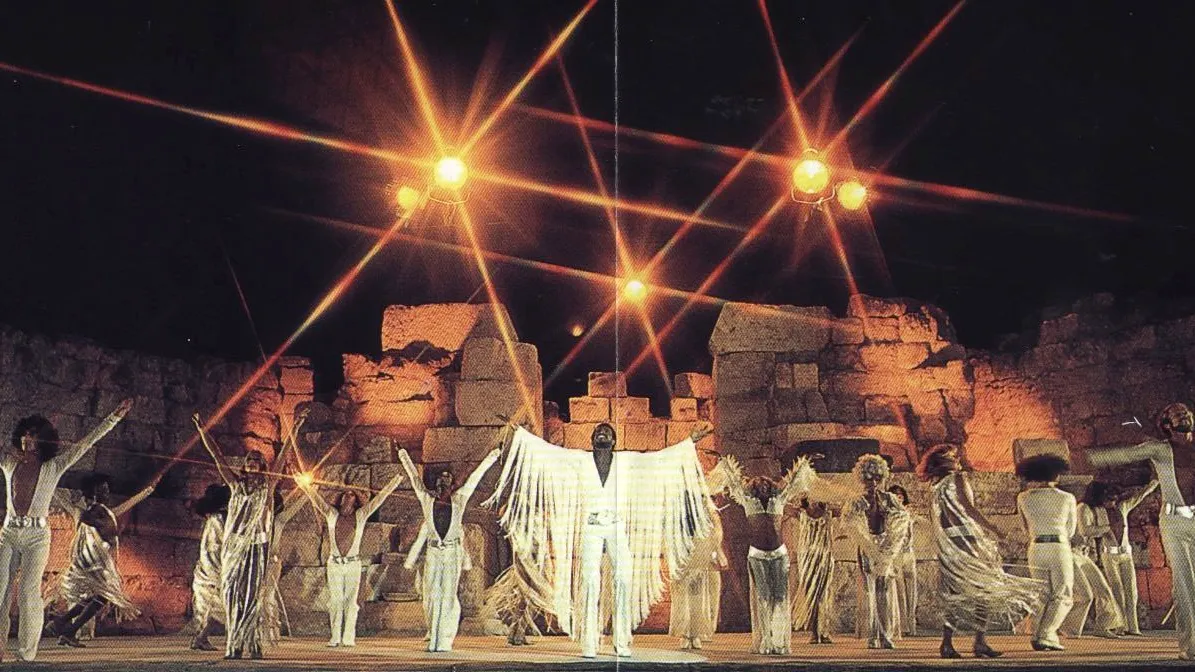
Time has sided with the audiences, and the three leads are the reason. Anderson opens the film with “Heaven on Their Minds” and owns it within a verse. He returns in white fringe for the title number, “Superstar,” one of the great entrances in any movie musical. Neeley’s “Gethsemane” climbs to a scream that still raises goosebumps. Elliman sings “I Don’t Know How to Love Him” like a thought she’s having for the first time. Take any one of them out, and the film loses its pulse.
The full film review from this spring called it a masterpiece, and a second look in 4K only strengthens the case. Neeley and Anderson kept the partnership going on stage, touring together from 1992 to 1997. Anderson died in 2004, and Neeley, now in his eighties, still tours with the film. The framing device is the smart part. A troupe putting on a show turns a Passion play into a rock concert in the ruins, and that still feels fresh. Over half a century later, the hosannas still rock.

Kino worked from a 4K scan of the 35mm camera negative, presented at 2.35:1 in Dolby Vision and HDR10. Slocombe shot with Todd-AO 35 lenses, and the desert finally looks as vast as it should. Ridgelines and ruins stay crisp deep into the frame. Close shots pick out grit on skin and the rough weave of the costumes. Color runs bold but natural over solid blacks. The few soft shots, like a wide view inside a cave early on, pass quickly. The bundled Blu-ray uses that scan for a new HD master.
Brian Kehew, a mixer Kino credits with Talking Heads and Aretha Franklin albums, built the new 5.1 and 2.0 tracks. Old complaints about the film’s sound read like ancient history. Earlier discs mixed the vocals too hot and barely spread the stereo. Now guitar and organ step forward, the drums widen and the low end deepens. The surrounds swell in the crowd numbers. The band finally climbs out of the orchestra pit. A few sound effects and crowd sounds sit lower than before, a small trade. Purists can have it their way too because the original theatrical stereo in lossless DTS-HD Master Audio 2.0 is also included.
Universal's DVDs came first, including a special edition that added the Jewison and Neeley commentary. The 2013 40th anniversary Blu-ray followed with lossless stereo. Kino ports that disc's commentary, Tim Rice interview and trailer, but its photo gallery and French dub stayed behind. The theatrical cut runs 106 minutes, and the slipcovered set's Blu-ray is Region A.

All three commentaries sit on both discs. What’s missing is any new word from the cast, and fans who wore out that soundtrack will feel the gap. It would have been nice to package this with a recently made documentary about the show that has been screening (in various lengths) around the country for some time.
Shelf Worthy
Critics never settled this one, and they don’t have to. The picture is the film’s best yet, and the remix makes the score hit like a concert. The original stereo is still on hand for anyone who wants to feel like they are back in 1973, untouched. Fans of the album or the stage show should buy it…and probably already have. Shelf Worthy. I’d even say skeptics should buy it outright. Just don’t blame anyone when “Superstar” follows you to work the next morning.
Shelf Worthy: Buy it. This one earns a spot on the shelf.
Stream First: Watch it before you buy.
Completionists Only: For collectors who need every edition.
Kino Lorber provided a copy for review. My opinions are my own.

Reviewed by Joe Botten
Joe Botten is The MN Movie Man, a Twin Cities film critic writing spoiler-free reviews since 2012. He also writes for Loud and Clear Reviews, a Rotten Tomatoes approved site. Find him on Instagram and Letterboxd.
Looking for something?
Search by actor, movie, director, genre or keyword.
The MN Movie Man
Spoiler-free film critic on a mission to ensure your cinematic experience is unforgettable. Let's dive into the magic of movies together!
Subscribe now to keep reading and get access to the full archive.


Leave a Reply