

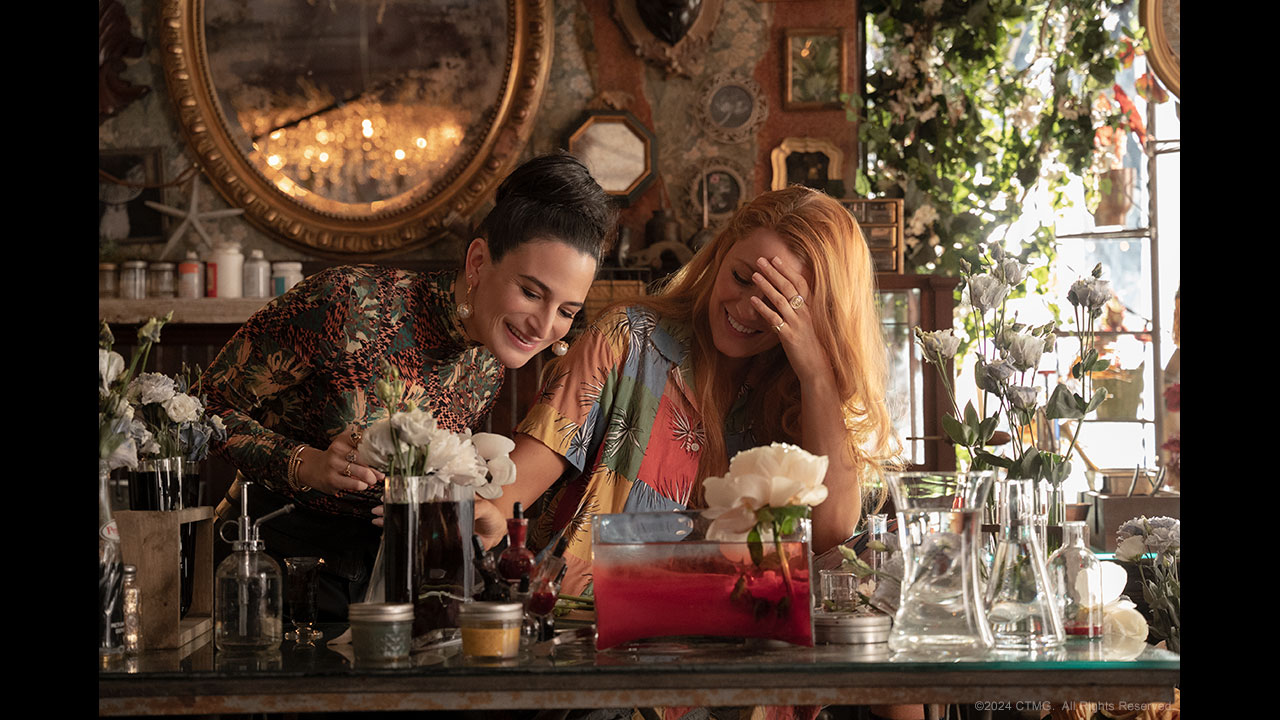
Synopsis: Lily overcomes a traumatic childhood to embark on a new life. A chance meeting with a neurosurgeon sparks a connection, but Lily begins to see sides of him that remind her of her parents’ relationship.
Stars: Blake Lively, Justin Baldoni, Brandon Sklenar, Jenny Slate, Hasan Minhaj, Isabela Ferrer, Alex Neustaedter, Amy Morton
Director: Justin Baldoni
Rated: PG-13
Running Length: 130 minutes
During a summer of superhero spectacles, franchise reboots, and the continued rise in popularity (and quality) of horror, a film like It Ends with Us is coming along at just the right time. This page-to-screen adaptation of author Colleen Hoover’s blockbuster 2016 novel has amassed legions of adoring fans since its publication. They’ve all been waiting to see if the film version of a book seen as a powerful rebuke of the typically stark relationship drama would translate without losing its complex message.
Films exploring the inner workings of a relationship and abuse at the hands of a loved one have been around for some time, with box office winners like 1991’s Sleeping with the Enemy and 2002’s Enough proving to be hot tickets as well as terrific vehicles for their leading ladies. However, most of these films painted a sensationalistic picture of clear-cut villains and victims, lacking nuance in a portrait of love tangled with pain and hope. Domestic trauma is horrific in any dose, but cinematically, only the most treacherous cases were used as examples.
In Hoover’s story (and in Daddio‘s Christy Hall’s adaptation), characters live in a gray area where their motivations are not solely evil or totally pure, and this conversation is critical to have and to be heard by anyone who might see part of their lives depicted onscreen. Through the book (which I admittedly have not read) and now the movie, an opportunity arises for open dialogue that could help many people through troubled waters as it explores love’s dark undertow.
Haunted by memories of her late father’s abuse toward her mother growing up in Maine, Lily Bloom (Blake Lively, The Shallows) has relocated to Boston, where she has purchased a run-down storefront she intends to convert into a dreamy flower shop. The resentment she feels toward her father, and partly her mother, fuels her need to create a different life for herself. When she meets neurosurgeon Ryle Kincaid (Justin Baldoni, who directs and co-stars), she first hesitates to let him into her heart but is gradually worn down by his adoration of her.
Red flags abound, though. Ryle is frequently moody, easily jealous, troubled by his past, and likes to wear the pants in their relationship, even though he happily removes his in one of the film’s lukewarm scenes of passion. As their relationship deepens and Lily’s flower shop begins to find success, a past she thought she’d put to rest comes back with Atlas Corrigan (Brandon Sklenar, Midway), her first love and now successful restauranter in the area. When Ryle finds out about Atlas and pieces together he’s the man from her past she has struggled to get over, his darker impulses emerge, further complicating their tumultuous relationship and pushing it into territory that eerily echoes Lily’s painful family history.
At the outset of It Ends with Us, there’s a lot of earnest intention, which puts it on an oddly uneven path. Lily’s initial meeting with Ryle should be creating a hint of a spark, but to the audience, it’s all warning bells and signs that say, “steer clear,” suggesting Lily can’t spot the same pattern she knows to avoid. The lack of chemistry between Lively and Baldoni doesn’t help, with Lively doing her best to come off as relaxed, but Baldoni appears to be angling to look the best he can on camera.
For me, It Ends with Us began with the arrival of Jenny Slate (Marcel the Shell with Shoes On) as Allysa, a bored and nosy Boston wife who looks into Lily’s shop as she renovates it and asks for a job. Slate’s energy is infectious, and the movie instantly gains momentum (and keeps it going) whenever she’s onscreen. Thankfully, she not only becomes Lily’s best friend but happens to be Ryle’s sister, so she has the opportunity for much onscreen time, and we are better served for it. Slate’s performance in the film is the best she’s ever been, and hopefully, it will lead to more wholly dramatic roles in films she can carry completely.
The film gets a second significant boost when Sklenar shows up, reconnecting Atlas and Lily after years of separation. Offering a compelling counterbalance to Baldoni’s more stiff performance, his presence is a welcome respite from the tension of Ryle and Lily’s issues. He also clicks with Lively nicely, bringing a palpable, subtle heat to their scenes that makes you want to shout, “Choose him!” into the darkness of the theater. In smaller roles, veteran stage actress Amy Morton delivers a poignant turn as Lily’s mother, whose own history of abuse parallels her daughter’s journey. Hasan Minhaj (in a husband role that reminded me of his work in Babes) brings a touch of fun as Marshall, while Kevin McKidd’s brief appearances in flashbacks as Lily’s father effectively establish the roots of her trauma. This is Lively’s film, though, and the underrated actress embodies her character with a vulnerability that anchors the narrative.
Baldoni’s previous films, including Five Feet Apart, have already shown his knack for telling a story with a beating heart, though It Ends with Us could benefit from tighter editing. The narrative occasionally drags, notably in the middle, diluting its impact. I also never fully understood what anyone aside from Ryle and Atlas did for a living or how Lively’s character could afford to buy a store in Boston and wear such a luxe wardrobe. This is pure fiction fantasy for the most part, with characters living their best lives (well, mostly) and never seeing to care about taxes, pets, or pulling the blinds when they are getting undressed.
Speaking of undressed, Eric Daman’s costume design richly defines each character, enhancing their personalities through distinct wardrobes. The score by Duncan Blickenstaff and Rob Simonsen complements the film’s tone, with soft ballad covers from breathy female vocalists creating a haunting backdrop. A Taylor Swift anthem is strategically placed, heightening a pivotal moment. The production design by Russell Barnes has lovingly translated the world of Hoover’s novel to the screen, creating spaces that feel lived-in and authentic.
Baldoni’s commitment to portraying the complexities of abusive relationships was my biggest takeaway, having had no exposure to the story before the screening. The film resists the urge to paint its characters in broad, garish strokes of black and white, instead choosing a more realistic palette of grays that mirror the often-confusing nature of toxic love. This approach shines through in Lily’s conflicted feelings towards Ryle, her growing understanding of her mother’s past choices, and her ultimate decision of how she will break the cycle.
It Ends with Us may not reinvent the wheel of romantic dramas, but it spins it with enough skill to keep audiences engaged. Despite some casting and pacing issues, the film blossoms into a thoughtful examination of love, trauma, and the courage it takes to say ‘enough’. For fans of the book and newcomers alike, it’s a poignant, albeit slightly flawed, cinematic experience that resonates deeply as a reminder that sometimes, the bravest love story is the one we write for ourselves.
Looking for something? Search for it here! Try an actor, movie, director, genre, or keyword!
The MN Movie Man
Spoiler-free film critic on a mission to ensure your cinematic experience is unforgettable. Let's dive into the magic of movies together!
Subscribe now to keep reading and get access to the full archive.


Leave a Reply