Memory. Memory is what surges through every frame of Walter Salles’ masterful I’m Still Here (Ainda Estou Aqui) like a current of electricity, illuminating both the darkest corners of Brazil’s military dictatorship and the enduring power of familial bonds. From its opening moments and throughout the story of a family’s adamant fight for truth, the film extends beyond its historical setting, becoming a universal demonstration of the human spirit’s refusal to forget. Based on Marcelo Rubens Paiva’s memoir of what happened to his father and family, this haunting chronicle arrives when democracies worldwide grapple with their historical wounds and look to an uncertain future, serving as both evidence and warning to the courage of bearing witness.
Opening with sunlit scenes of familial bliss, the film paints an idyllic portrait of Rubens Paiva (Selton Mello), his wife Eunice, and their five children in 1970s Rio de Janeiro. This serenity is shattered by the apprehension of Rubens, a former congressman and quiet dissident returning from exile. What follows is both a gripping personal tragedy and a searing indictment of the authoritarian regime that engulfed Brazil in violence and fear. After Rubens is taken and subsequently vanishes, from that moment, the family’s life becomes a relentless quest for answers, led by Eunice, whose transformation from a sheltered, privileged homemaker to a fierce advocate for human rights of victims of political repression and their families underscores the film’s emotional core.
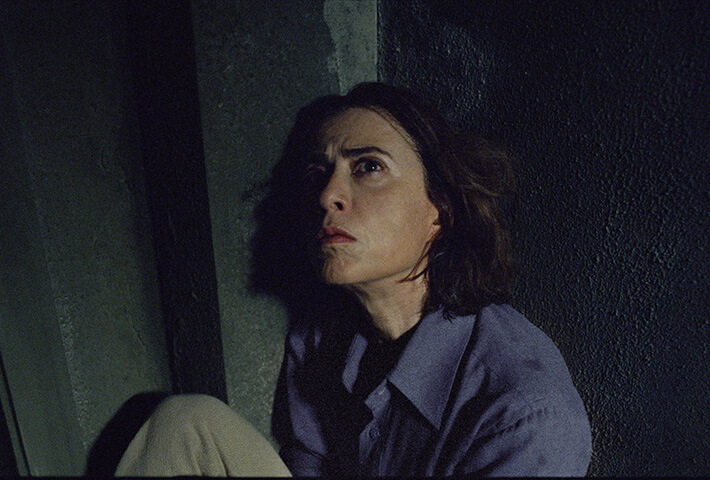
Fernanda Torres delivers an outstanding (Golden Globe-winning), transfixing performance as Eunice. Portraying every shade of grief, determination, and vulnerability, from the despair of unanswered questions to the steely resolve of a mother protecting her children, it’s never bigger than it needs to be but rather strength contained in the power of having to face her head on. The film’s most striking moments often come in silence—Torres’ expressive face conveying more than words ever could. Her performance is beautifully complemented by Torres’s own mother, stage and screen legend Fernanda Montenegro, whose tender appearance as the elderly Eunice bridges generations, adding a poignant weight to the film’s meditation on memory and time.
The multigenerational casting proves inspired. Though Torres could easily have played Eunice in a short final scene, Montenegro’s brief but impactful presence deepens the story’s emotional ties to the past. Younger talents like Guilherme Silveira and Valentina Herszage bring warm energy to their portrayals as just a few of the uniformly excellently acted Paiva children. Though he isn’t there for much of the film, Mello, as Rubens, does make the most of his screen time, sketching his character with dignity. Salles, along with screenwriters Murilo Hauser and Heitor Lorega, make Mello’s time all the more impactful by showing Rubens as a dedicated father and husband, someone who was desperately missed.
Echoing his empathetic work on 2004’s The Motorcycle Diaries and the acclaimed Oscar-winner Central Station from 1998 (for which, it must be noted, Montenegro became the first Brazilian woman to be nominated for Oscar’s Best Actress statue), Salles’ assured direction is grounded by humanism. Despite his privileged background (Salles is the 3rd richest director in the world at the time of this writing, trailing only Spielberg and Scorcese thanks to being the heir to a 4+ billion dollar banking institution in Brazil), Salles maintains an unflinching focus on the human cost of political violence, never allowing style to overshadow substance. Without delving too deeply into the specificities of Brazil’s troubling political history that might push the PG-13 film into R-rated territory, Salles can still craft a story that feels universally relatable.
Mirroring the narrative’s emotional trajectory, Adrian Teijido’s score moves from warm, sunlit hues to colder, more oppressive tones as the family’s world narrows. Meanwhile, Warren Ellis’ understated score stings with melancholy, a quiet yet powerful undercurrent to the unfolding tragedy. The meticulous production design from Carlos Conti reconstructs 1970s Rio de Janeiro with an authenticity that feels lived-in rather than ornamental. Streets are populated with life, interiors of the Pavias beachside home are cluttered with the tell-tale signs that a family, a big one, lives there, and the omnipresent shadow of authoritarianism lurks in every frame alongside the posters of popular singers of the day.
The film’s modern political relevance is impossible to ignore. Released during rising authoritarianism and democratic backsliding on its native soil, I’m Still Here became a mighty rallying cry for its country. Despite attempts at boycotts, its success in Brazil (grossing 11.3 million and becoming the 5th highest-grossing Brazilian film of the year) speaks to its profound resonance in a country still coming to terms with its past. While some might question whether any film can adequately capture the full scope of state-sponsored terror, I’m Still Here succeeds by maintaining its focus on one family’s experience while suggesting the thousands of similar stories that remain untold.
Salles resists the temptation of melodrama, and at a time when democracy feels increasingly fragile, I’m Still Here reminds us that remembering is itself an act of resistance. It stands as an important, achingly beautiful work that honors those who refused to be silenced, those who sought truth against insurmountable odds, and those who remain—living proof that to remember is to resist, and to resist is to endure.


Leave a Reply