SPOILER-FREE FILM REVIEWS FROM A MOVIE LOVER WITH A HEART OF GOLD!

From the land of 10,000 lakes comes a fan of 10,000 movies!

Inside the Making of Exorcist II: Boorman’s Bold Vision

Synopsis: Fresh off the success of Point Blank and Deliverance, John Boorman took on the daunting task of directing Exorcist II: The Heretic. The film became one of Hollywood’s most infamous flops, nearly ending his career. Decades later, the cast and creative team look back on its bold vision, reevaluating its ambitions and artistic merits.
Stars: John Boorman, Linda Blair, Louise Fletcher, Karyn Kusama, Joe Dante, Mike Flanagan, Doug Pentek, Garrett Brown, Jim Hemphill, Ronald L. Vargas Jr., Rospo Pallenberg, Simon Abrams, Stephanie Zacharek
Director: David Kittredge
Rated: NR
Running Length: 112 minutes
Movie Review in Brief: An eight-year excavation of the Exorcist II catastrophe that is funnier, faster, and smarter than its subject.

Boorman and the Devil Review: The Sequel That Broke a Career

June 1977. Warner Bros. opens the sequel to the third-highest-grossing film ever made. It was directed by the man who’d given them Deliverance five years earlier. It carried the biggest budget in the studio’s history. Patrons walk out. Patrons demand refunds. At a couple of theaters, by multiple accounts, they rip up the seats in anger. John Boorman spends the opening week frantically recutting his own movie while it’s still playing. That’s the filmmaking equivalent of performing surgery on yourself in the lobby. This recut version didn’t wind up helping matters at all.

That opening week is the black hole Boorman and the Devil orbits. This documentary, a labor of love from David Kittredge, is a better film about Exorcist II: The Heretic than Exorcist II: The Heretic is a film. It’s also funnier, faster, and more useful about how movies actually get made and remembered.

Locusts, Ghost Glass, and a Star Who Wasn’t There

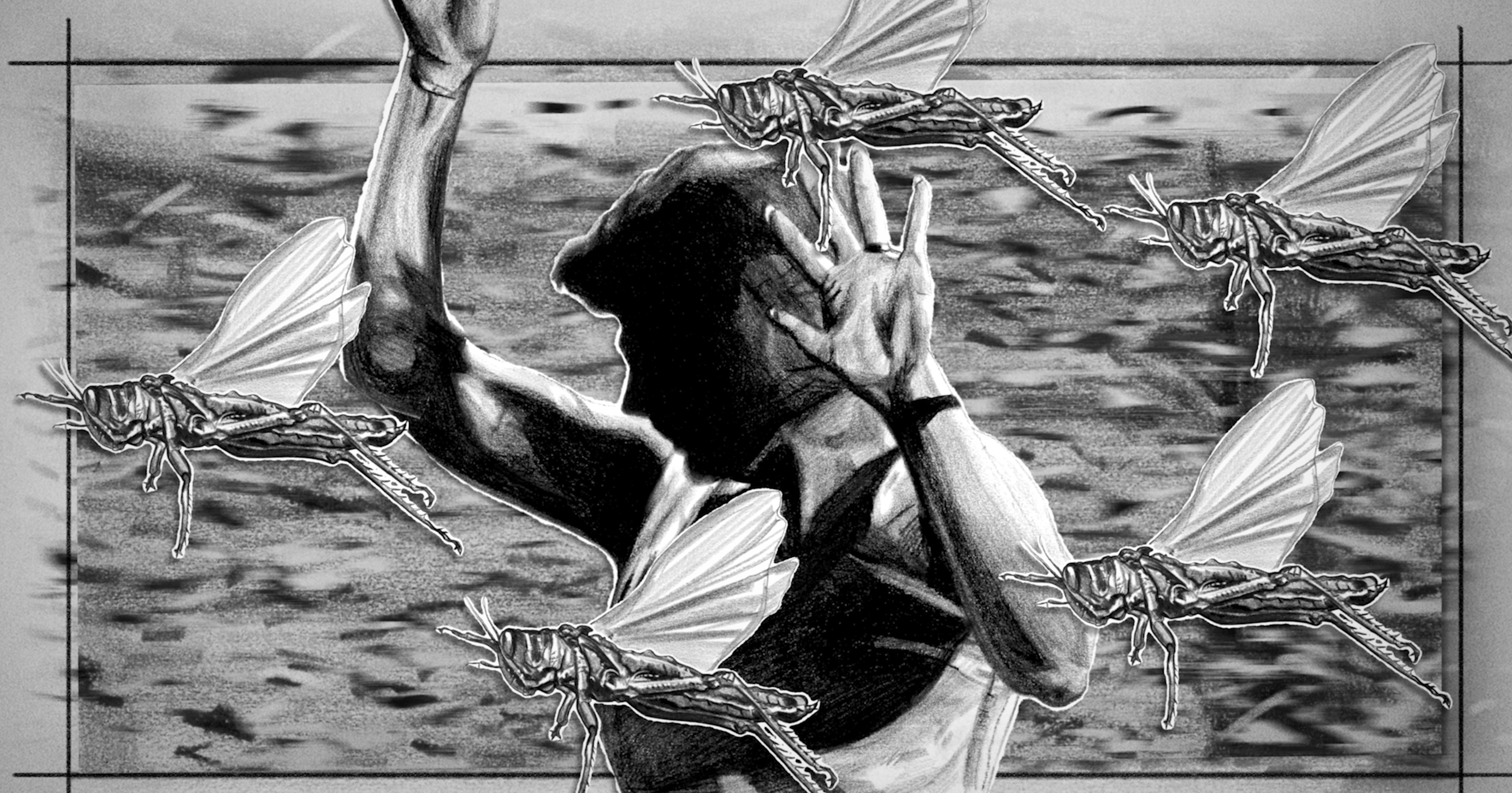
Kittredge tells the story in order, with a fresh disaster at every stop. Warner Bros. hands Boorman a blank check and the keys to the biggest horror property on earth. He answers with a script that has almost no interest in horror and an enormous appetite for spiritual awakening. The African exteriors get built entirely on soundstages, where a swarm of locusts turns up with its own entomologist attached. Boorman contracts a rare illness that nearly kills him mid-production. And Richard Burton, by every account here, is present in body and absent in every other respect.

The technical stretch gets equal time, and it’s the best surprise in the film. Kittredge digs into one of the earliest professional runs of the Steadicam. He walks through Boorman’s in-camera effects work, including a ghost-glass setup that later made some of Excalibur’s most memorable images possible. He gives Ennio Morricone’s score its due, written on a crushing deadline and still admired by people who loathe the picture attached to it. He picks apart the screenplay rather than dismissing it.

Everyone Still Willing to Talk

Kittredge took roughly eight years to build this, and the delay shows up as increased depth rather than dragging his feet. He’s no stranger to the material, either. He recorded the commentary tracks for Arrow Video’s releases of both Exorcist II and Excalibur, and he earned an Emmy nomination cutting Queer for Fear: The History of Queer Horror. A first assembly cut of this doc ran 196 minutes. Getting it to 112 without losing the story appears to have been the hardest thing he’s done. While I would have gladly sat through all 196 minutes (and hope they include the excised material on a physical media release), you can’t feel the compression.

What separates this from the standard making-of doc is who he pointed the camera at. Boorman himself sits in a living room, with props from previous films in the background. Getting Boorman to talk about the film, a topic he often avoids, is a sign of trust between the two filmmakers. It’s wrapped around a larger discussion of Boorman’s career, a fascinating resume that can’t be pinned to only one genre.

Around him, Kittredge tracked down the script supervisor, the first assistant camera and the second assistant director. He also found Boorman’s assistant and the entomologist who wrangled the locusts. He got Garrett Brown, who invented the Steadicam and operated it here in one of its earliest uses. He got Rospo Pallenberg, Boorman’s co-writer, longtime collaborator, and often the nemesis of the actors and crew.

These are people with hundreds of credits and an Academy Award or two between them. Every one of them remembers The Heretic like it happened last week. Fifty years and a hundred better jobs later, the turkey is still the one they get asked about. That tells you more about the movie business than any executive would.

Linda Blair (Summer of Fear) turns up and speaks warmly about Burton as her co-star. Directors Karyn Kusama (The Invitation), Joe Dante (Gremlins) and Mike Flanagan (Doctor Sleep) are interviewed as filmmaker witnesses. Critics Stephanie Zacharek and Simon Abrams supply the reception history. For me, the soul of the film belongs to Louise Fletcher (One Flew Over the Cuckoo’s Nest), who died in 2022. This is among her last interviews and she has no regrets about any of it. Her closing passage stops being about Exorcist II somewhere in the middle and becomes about how a person spends a working life. Along with her speech the night she won her Oscar, it’s another impressive, classy moment from Fletcher.
Rough Cartoons and a Razor-Sharp Cut

Kittredge cut this himself, and editing is where documentaries live or die. He splices the interviews so the energy never sags. One person’s version of a story cuts straight into somebody else’s, and they keep matching. Kittredge says the accounts overlapped about ninety percent of the time, and you can feel that on screen. Nobody’s protecting a reputation. You walk out fairly confident you’ve heard what actually happened and not the “nice” version of events.

The animated inserts fill the gaps where no footage exists. They’re not slick. They’re rough around the edges and they occasionally run away with a sequence. In a way, the shaggy quality suits a story about a production coming apart. Eduardo Daniel Victoria’s score keeps the tone light without turning the thing into a comedy roast. The cinematography is split across four shooters: Seamus Deasy, Ed Herrera, Alan Jacobsen and Elle Schneider, and it gives the interviews a warmth the material could easily have lost.

The high-profile fans get special mention, too. Film critic Pauline Kael, who notoriously could go scorched earth on horror films, came back months later and noted the film had more ideas than a dozen movies put together. She gets her due here as does Martin Scorsese.

When a Flop Was Still Worth Arguing About

Back then, the first conversation about Exorcist II was whether it was any good. Now we frequently get a sequel to a reboot nobody asked for; it clears a fortune, and the quality conversation never starts. The Boorman era ran on studios betting enormous sums on individual artists, then living with the results in public. That system produced catastrophes, but they were catastrophes worth arguing about fifty years later.

So what is Boorman and the Devil really trying to accomplish? After all, Kittredge isn’t mounting a rescue operation. No, he’s asking a better question than good or bad. Is it interesting? Is it doing something nobody else tried? Does it show you a thing you haven’t seen? By that measure Exorcist II: The Heretic clears the bar easily, and so does the documentary about it.

Looking for something?  Search for it here!  Try an actor, movie, director, genre, or keyword!

Subscribe to Blog via Email

Enter your email address to subscribe to this blog and receive notifications of new posts by email.

Join 5,237 other subscribers
Where to watch Boorman and the Devil