Synopsis: Deep in the Amazon rainforest along the Curuçá River, a routine humanitarian medical mission turns into a fight to survive when the group wakes Boiúna, a colossal ancient serpent out of Brazilian folklore that means to reclaim her territory.
Stars: Kiana Madeira, Jessica Rothe, Logan Marshall-Green, Jackson Bews, Juan Pablo Shuk, Will Close, Vicente Peña, Mateo Moreno, Jaime Newball
Director: Mike P. Nelson; screenplay by Alan B. McElroy, story by McElroy and Tony Giglio
Rated: R (bloody violent content, some grisly images, and language)
Running Length: 104 min
Movie Review in Brief: Kiana Madeira leads a committed cast through a sweaty jungle creature feature with more on its mind than feeding a giant snake. The tension and environmental angle work better than the murky action, which hides too much of the monster we came to see.
Beware Boiúna Has More Bite Than Sight
There’s a basic courtesy I ask of a movie about a giant snake: let me see the giant snake. Beware Boiúna puts considerable effort into introducing the people who might become dinner, and I appreciate a creature feature with interests beyond its feeding schedule. But after all that preparation, I wanted a better look at the attraction. Mike P. Nelson delivers a decent jungle nightmare with committed actors and some genuinely unpleasant wildlife encounters, then leaves too much of the reptile business in the dark.
That’s frustrating because this isn’t a disposable monster picture assembled by people embarrassed to be making one. It has an appetite for the genre, a point of view about its setting, and enough conviction to make familiar material feel worth revisiting. There’s more thought here than the giant snake strictly requires, and less visibility than she deserves. The care makes its shortcomings easier to forgive, though it doesn’t make them disappear.
Taking the Long Way to Dinner
A humanitarian medical mission heads into the Amazon, where the presence of outsiders and the destruction surrounding illegal gold mining have already made the territory dangerous. The group’s arrival coincides with the reawakening of Boiúna, an ancient serpent with very firm ideas about who belongs there. A trip intended to help people becomes a struggle to avoid joining the local food chain.
The first forty minutes feel closer to a jungle exploitation picture than a full-fledged monster movie. Human threats occupy the foreground, and Nelson takes time to establish the people who will eventually become prey or attempt to become hunters. I liked that the film wanted us to know them before they got snake-d. The trouble is that some of this preparation promises character development the later rush toward creature mayhem can’t quite finish.
There’s a difference between giving the audience reasons to care and giving every potential victim an introduction. The film manages the former often enough to earn its leisurely start, but it doesn’t always know which relationships need more attention. Once the snake takes over, several of those human details seem less developed than the time spent establishing them suggested.
This Snake Has Prior Claim to the Property
Boiúna comes from Amazonian and Brazilian folklore, rather than a screenwriter’s search for something bigger than Anaconda. Also known as Cobra Grande, the serpent belongs to traditions linking her with the creation of the world and the power to change waterways. Accounts vary, so I wouldn’t turn those stories into one tidy monster biography. The useful idea here is that the river has an owner, and the humans have mistaken access for permission.
That gives the conflict between Indigenous communities and illegal miners more weight than a convenient explanation for why everyone is stranded. The film presents its predator as an ancient presence reclaiming a domain threatened by human greed. Its environmental concerns connect the horror to the exploitation of land and the people living on it. The snake can still be frightening without making the jungle itself an evil place waiting to punish visiting Americans.
Nelson approaches that material with a taste for the rough textures of older genre filmmaking. There are echoes of seventies jungle exploitation and the Italian monster pictures that borrowed enthusiastically from whatever was selling tickets. Thankfully, familiarity doesn’t become an excuse for laziness. This jungle feels sweaty, hostile, and full of things that could hurt you long before the main attraction arrives. The bugs and caimans provide their own excellent reasons to reconsider the itinerary.
Screenwriter Alan B. McElroy brings a history that includes Halloween 4: The Return of Michael Myers and the original Wrong Turn. Nelson’s underappreciated 2021 reworking of the latter showed a similar willingness to give familiar horror another set of concerns. His work on V/H/S/85, Silent Night, Deadly Night, and the Jason Voorhees short Sweet Revenge suggests a filmmaker comfortable getting his hands dirty. His newly announced assignment directing the next film in the Saw franchise makes sense. He works with the energy of somebody who remembers why these movies were worth renting.
Madeira Knows What Kind of Movie She Is In
Kiana Madeira, of Fear Street: Part One – 1994, gives the film its most persuasive survival instinct. Her hard-nosed presence and belief in Boiúna’s mythology make the danger feel immediate. She doesn’t treat the folklore as information to recite before the next attack; she makes it something that affects how a person behaves. Madeira is the best reason to worry about who makes it out of this jungle.
Jessica Rothe, of Happy Death Day, and Logan Marshall-Green, of Upgrade bring credibility to the outsiders. Neither gives the impression of waiting around for a special effect to finish the scene. Their commitment helps the film move between its human troubles and oversized predator without losing the people caught between them. The cast understands the assignment, even when the screenplay moves past an emotional beat before it has fully landed.
Please Turn a Light on for the Leading Reptile
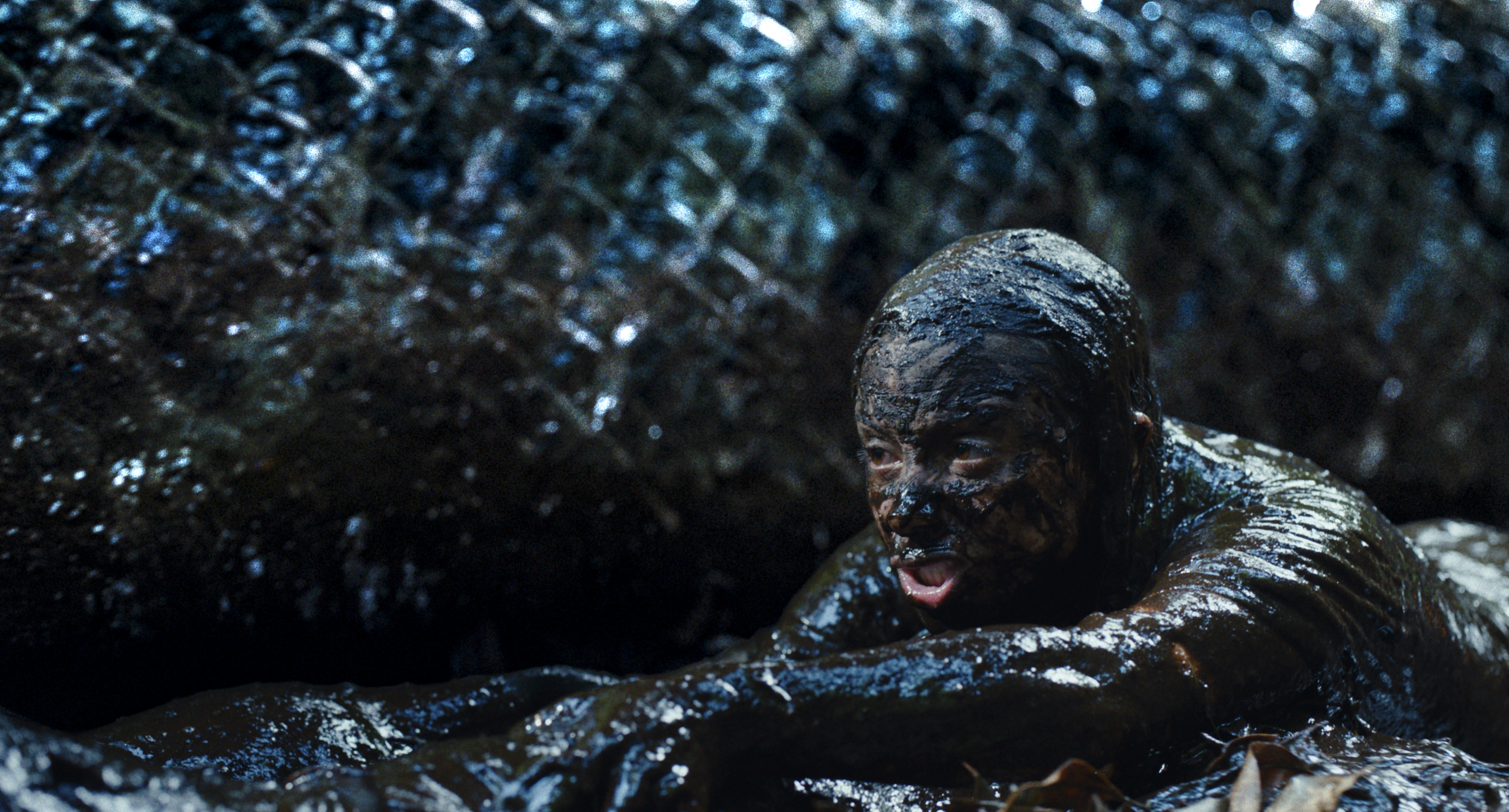
Cinematographer Nick Junkersfeld gives the surroundings enough texture to make the wilderness threatening without constant monster activity. But the extensive night shooting becomes a real obstacle once Boiúna starts doing the work we came to watch. Concealment can build suspense; it can also leave you studying another section of snake belly when you want to see the whole animal. I wanted a longer look at the maw responsible for all this panic.
One action sequence seemed ready to deliver an Aliens-style battle royale, only to become almost indecipherable. The excitement depends on understanding where the danger is and how people are responding, and the murk makes that difficult. Editor Tom Elkins can keep events moving, but speed doesn’t solve the problem when the images won’t let the action register. Bigger scale becomes less impressive when you’re squinting to work out what happened.
A Decent Meal Served in the Dark
Beware Boiúna has more going for it than a huge reptile and a supply of expendable bodies. Madeira stands out, the ensemble takes the danger seriously, and the jungle supplies tension even when the snake is elsewhere. Its environmental perspective gives the familiar setup a purpose beyond another expedition going badly wrong.
The pacing is less assured, with the patient introductions giving way to hurried character payoffs. And although there’s enough menace to make this an above-average creature feature, horror fans hoping for an extravagant display of blood and viscera may want more. I mostly wanted to appreciate the monster the filmmakers had gone to the trouble of building. Nelson has made a jungle worth fearing and populated it with people worth following. Next time, give the giant snake her close-up.
Looking for something? Search for it here! Try an actor, movie, director, genre, or keyword!

Leave a Reply