SPOILER-FREE FILM REVIEWS FROM A MOVIE LOVER WITH A HEART OF GOLD!

From the land of 10,000 lakes comes a fan of 10,000 movies!

Trust Me, I’m a Doctor Review: Tabloid Drama Needs a Cure

Synopsis: Dr. Sandeep Kapoor’s life comes apart when he is implicated in the 2007 prescription overdose death of his former patient, model and reality star Anna Nicole Smith. Paparazzi surround his office, police raid his home, his private journals leak, and he goes to trial on a drug conspiracy charge with attorney Ellyn Garofalo.
Stars: Kal Penn, Linda Hamilton, David Julian Hirsh, Abbie Cornish, Ted Jeffries, Elon Gold
Director: Thane Economou 
Rated: R
Running Length: 111 min
Movie Review in Brief: Linda Hamilton and Dhirendra bring focus and dignity to a tacky drama about Dr. Sandeep Kapoor and the aftermath of Anna Nicole Smith’s death. Exaggerated lead performances and busy tabloid recreations leave its ethical questions poorly explored.

Trust Me, I’m a Doctor Needs a Second Opinion

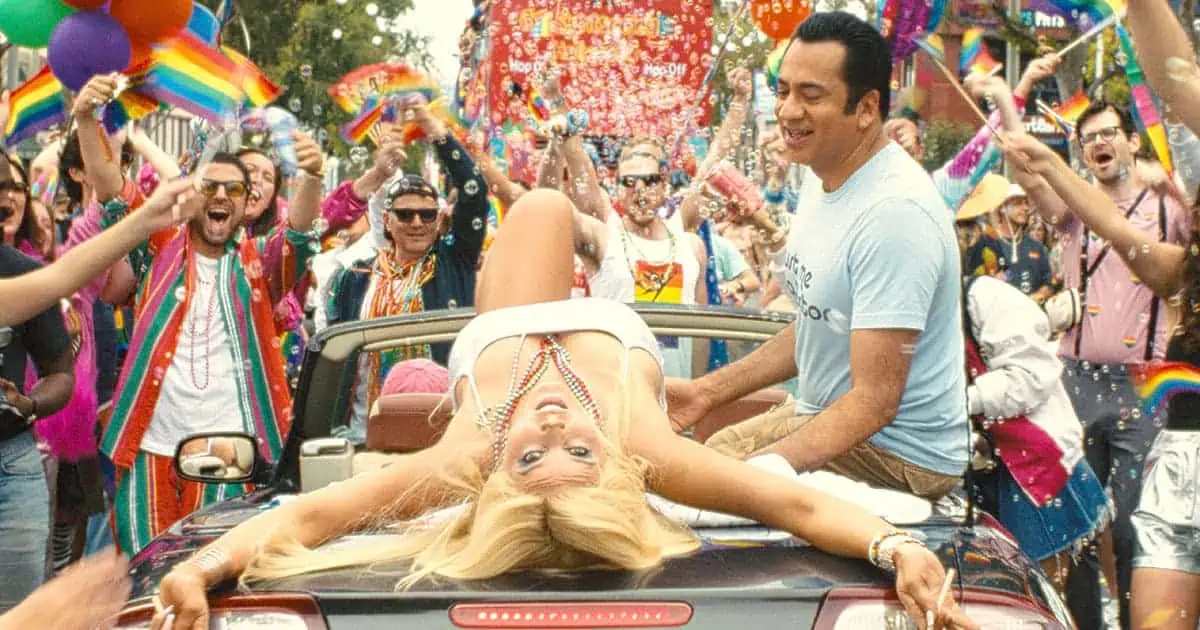
Throughout my viewing, I kept wondering who Trust Me, I’m a Doctor was made for. People who want another account of Anna Nicole Smith’s tragic treatment by the people and institutions around her? Viewers hoping for a revealing courtroom drama? The film gives its attention to Dr. Sandeep Kapoor, adapting his memoir about being caught up in the investigation following Smith’s death, yet its mixture of self-explanation, tabloid recreation, and dark comedy never becomes a persuasive reason to revisit the story.

There’s room for a film about the difference between behaving foolishly and committing a crime. There’s also room to examine the damage a celebrity scandal can do to somebody on its outskirts. This tacky, grubby production approaches those possibilities through performances and stylistic flourishes that keep making it feel like a parody. Only Linda Hamilton brings the seriousness the rest of the film keeps misplacing. Every time she appears, I’m reminded of the movie this might have been.

The Doctor Would Like to Explain Himself

Dr. Sandeep Kapoor (Kal Penn, Smile) becomes a target of intense scrutiny after the 2007 overdose death of former patient Anna Nicole Smith (Abbie Cornish, Three Billboards Outside Ebbing, Missouri). His association with her, his personal journals, and footage of their time together feed a story already irresistible to the tabloid machine. Attorney Ellyn Garofalo (Linda Hamilton, Terminator: Dark Fate) helps him face the drug-conspiracy prosecution that follows.

Writer-director Thane Economou adapted Kapoor’s memoir, which makes the doctor’s perspective the film’s starting point. What matters is what the adaptation does with that viewpoint. I found it far more interested in explaining how Kapoor was misunderstood than in making the ethical complications of his conduct dramatically compelling.

His eventual acquittal is a matter of public record, not something a movie has to obscure. It also doesn’t settle every question about boundaries, judgment, or the desire to be close to fame. A stronger film could keep those issues active without pretending to retry the case. This one often seems satisfied with treating scrutiny itself as the central injustice.

The Mannerisms Have Taken Over the Case

Penn’s performance is the largest obstacle. Having seen Kapoor in interviews, I understand there are specific rhythms and physical habits to draw on. Penn emphasizes them so heavily that I kept seeing the demonstration rather than the person. The vocal mannerisms and exaggerated reactions feel like an easy route into characterization, leaving less room for the conflicting impulses the script says it wants to explore.

The problem isn’t Kapoor’s sexuality or the fact that he has a distinctive presence. It’s how narrowly the performance channels those details into a collection of repeated gestures. A character who is seeking approval, defending his judgment, and trying to preserve his professional life ought to offer Penn more than a series of behavioral highlights.

Cornish, an actor I ordinarily enjoy, fares little better. Her Smith doesn’t capture the magnetism or vulnerability that would make the recreations of familiar images worthwhile. The lack of a convincing physical resemblance becomes harder to ignore when the film keeps returning to recognizable tabloid and reality-show material. Economou says he wanted embodiment rather than a one-to-one imitation, a reasonable aim that I don’t think the performance achieves.

Hamilton plays Garofalo with welcome focus. She knows what the lawyer wants from a scene and makes pursuing it interesting, bringing authority without draining the exchanges of energy. Dhirendra, as Kapoor’s father Devinder, supplies another rare patch of conviction and dignity. Those performances allow actual people to emerge in a film that too often turns everybody else into a presentation.

Every Trick in the Bag and Little to Show

Economou deliberately set out to use flashbacks, voiceover, direct address, and recreated media footage. Cinematographer Bobby Shore shot across several formats, including Beta cameras for period material, while editor Brian Berdan was enlisted to help organize the film’s busy construction. Daniel Stockdale and Niles Hollowell-Dhar provide the score, and Melanie Garros designed the reconstructed courtroom.

The press notes make clear that this style was intentional, not simply an accident. That doesn’t make it effective. I found the parade of devices distracting, and the recreated television material frequently embarrassing rather than revealing. Reproducing the look of invasive coverage needs a purpose beyond recognition, especially when the film is revisiting a woman whose public image was already picked apart for entertainment.

The dark-comic approach also needs a better sense of where the joke belongs. Kapoor’s appetite for celebrity attention might support satire, but the film’s treatment of Smith doesn’t consistently distinguish its own gaze from the material it is reproducing. When the serious passages arrive, the surrounding performance style makes the request for sympathy harder to accept.

Linda Hamilton Deserves a Better Brief

Hamilton is an actress I always like seeing on screen because she seems to choose her roles carefully and with purpose. Here, she gives Garofalo the force and clarity the film badly needs, and the same is true of Dhirendra, who finds a welcome measure of humanity in Kapoor’s father. Those performances also make the artificiality of Penn and Cornish’s work more conspicuous. Between the busy storytelling and the tabloid recreations, the ethical questions keep getting crowded out of their own movie.

I don’t need a biographical drama to be neutral, but I do need it to give me more than a subject’s case for why I should understand him. What this becomes, then, is a tabloid tragedy reduced to a tacky exercise in self-defense. Trust Me, I’m a Doctor keeps asking for a hearing while giving its most compelling performer surprisingly little worth defending.

Looking for something?  Search for it here!  Try an actor, movie, director, genre, or keyword!

Subscribe to Blog via Email

Enter your email address to subscribe to this blog and receive notifications of new posts by email.

Join 5,231 other subscribers
Where to watch Trust Me, I’m a Doctor

Leave a Reply


Discover more from The MN Movie Man

Subscribe now to keep reading and get access to the full archive.

Continue reading