You Can See Everything Review: Fake It Till You Film It

Movie Review
10/10
Nathan Fielder and Lance Oppenheim move in for Elizabeth Holmes’s last 34 days of freedom. The early needling grates, then the film turns into something no true-crime documentary has tried. Go in cold.
Where to watch: In theaters October 16 (A24)
Synopsis: Thirty-four days before she’s sent to prison, notorious Silicon Valley founder Elizabeth Holmes invites a skeptical film crew to document her every move. What begins as an intimate portrait of an enigmatic felon becomes a mind-bending three-year journey into the abyss.
Director: Nathan Fielder and Lance Oppenheim
Stars: Elizabeth Holmes, Billy Evans, Nathan Fielder
Rated: R, for language and some graphic nudity
Running Length: 174 minutes
By now, Elizabeth Holmes has been covered from just about every angle. There was the bestselling book, the hit podcast and Alex Gibney’s 2019 documentary, The Inventor: Out for Blood in Silicon Valley. Hulu even turned her story into The Dropout, obvious television flourishes and all. I didn’t think there was much left to say. I also caught this new Elizabeth Holmes documentary the same day as Gibney’s four-hour Musk, and I wasn’t sure I had it in me. Boy oh boy, was I wrong. You Can See Everything took me somewhere I never expected to go, and by the end I didn’t want it to stop.
Here’s the wildest part: Holmes went looking for a documentary herself. She and her husband had approached A24 before co-directors Nathan Fielder (The Rehearsal) and Lance Oppenheim (Some Kind of Heaven) ever came aboard. She was convinced of her own innocence and sure the rest of us would be too, if she could just tell her story. Fielder had read “Bad Blood,” the book that cracked the Theranos story open, and figured it had all been told. What pulled him in was her side of it, after she disappeared from public view.
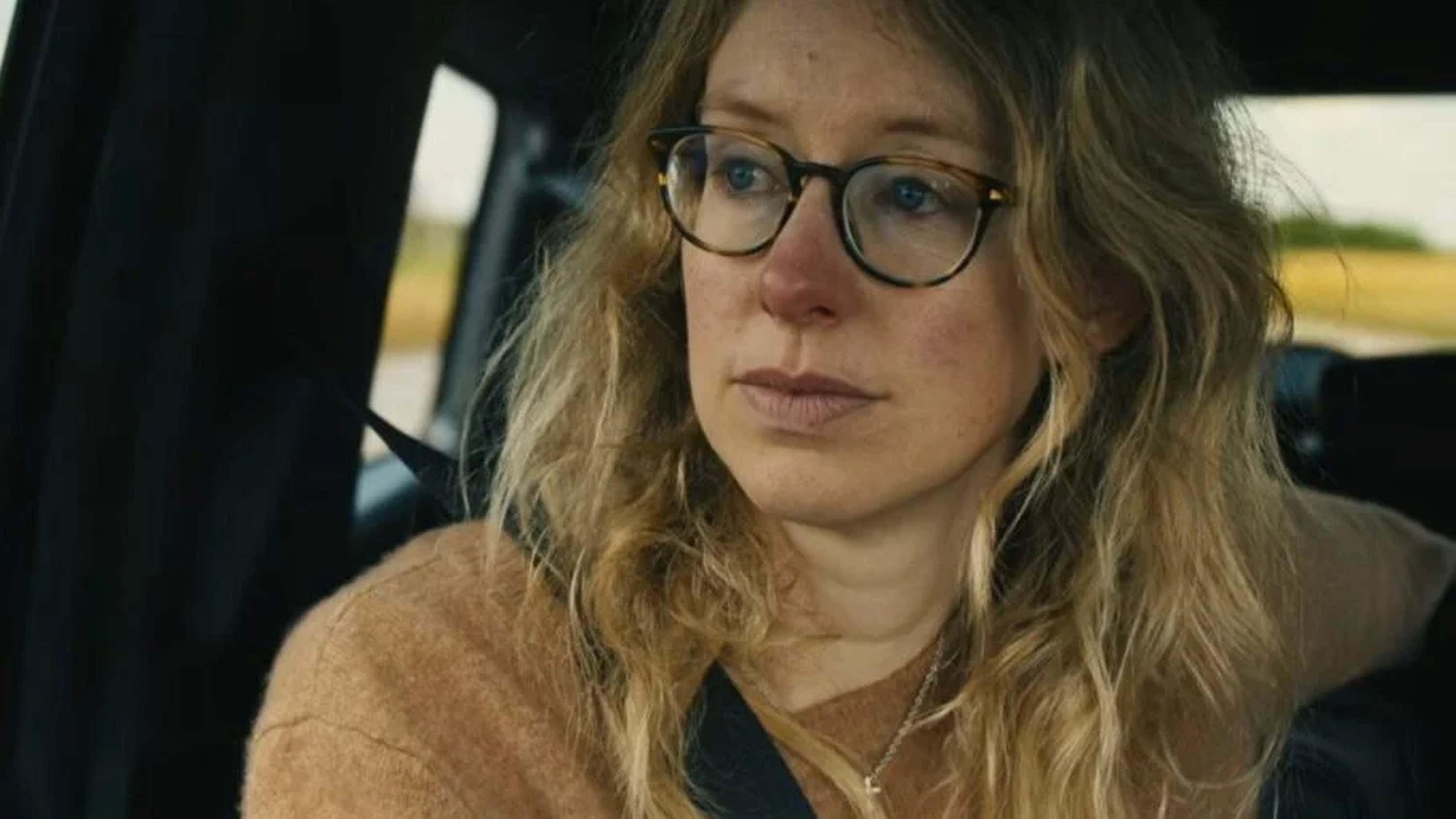
In 2023, Holmes and her husband, Billy Evans, invited the crew to move into their cottage by the sea. They’d live alongside the couple and their two young children for the 34 days before she reported to prison on an 11-year sentence. The directors tried to interview people from her past, but almost nobody would talk, so the film lives inside that house. It’s as much a portrait of a family bracing for a goodbye as it is a crime story.
Evans deserves a closer look. He’s the one on the phone in the opening scene, making the arrangements, and he’s rarely far from the frame after that. Fielder has since said Evans tried to exert more control over the project than the filmmakers were comfortable with. Knowing that, every helpful thing he does around the house starts to look a little like stage management.
A24 gave the directors something close to a blank check: no deadline, no obligation to finish, and no problem scrapping it all. That freedom set up a long game of chicken between a filmmaker known for never looking away and a subject who refuses to blink. Neither one does for three years of filming, which is how a 34-day visit became a 174-minute film. Fittingly, A24 premiered it at Telluride as a secret screening, with phones confiscated at the door. Holmes, of all people, would appreciate the mystique.

I appreciate what Fielder has done on television, from Nathan for You and The Rehearsal to his acting in The Curse. His way of working with subjects, though, often runs against how I think a documentarian should behave. When he inserts himself, it starts to feel as if he’s orchestrating the film instead of documenting it. I had the same problem with the upcoming Everest: The Other Side. There, the Oscar-winning team behind Free Solo steps in front of the camera and loses some credibility.
I felt it right away here. A few minutes in, a camera inside the house catches Fielder staring at Holmes through the blinds. It’s meant to get a laugh, and I kept asking why we needed a joke on his very first appearance. The first sit-down is worse. Fielder asks why Holmes and Evans would want him, of all people, to film her, since he’s not smart and he’s not a scientist. Then he flips it, telling her he has read up on her, can tell when she’s lying, and thinks she probably has been. She ends up in tears and can’t continue. Fielder knows exactly why his crew is there, so the question felt needlessly cruel to me.
That’s the Fielder method in a nutshell. He raises questions like they’re burning elephants in the room when nobody has mentioned an elephant at all. Then he stares, waiting for her to answer or waiting to answer her, while the camera catches every darting eye and every step too close. Holmes performs domestic innocence like her freedom depends on it, because it does. Fielder counters with an awkward, needling presence that keeps pushing to see what cracks, and at first it threw me off.
Here’s the thing, though. Fielder is very good at asking the same question a second or third time, right when the answers stop adding up. That’s when the film really starts to groove. The patience pays off in small slips and strange contradictions, and suddenly 174 minutes start flying by like a locomotive. Somewhere along the way, Fielder starts to feel for Holmes, and then he catches himself. Is that real empathy, or is it the famous Holmes persuasion working on him the way it worked on investors? If she can get to him, you have to wonder how much she shaped the film we’re watching, either consciously or subconsciously. That question hangs over everything, especially once she starts sketching plans for a new Theranos.
About 60 percent of the way through, after Holmes reports to prison, the storytelling changes. I knew that one detail going in, and it didn’t ruin a thing. The final 80 or so minutes take on a new life, built around a jarring, meta-textual framing device about performance itself. Who is acting, and for whom? That’s all I’m going to say. This kills off the talking-head true-crime documentary, and it does it with style and real risk.
The craft is the reason that risk pays off. Editor Adam Locke-Norton shapes three years of footage into something neatly organized that never feels tidy. Cinematographer David Bolen keeps shifting whose side the camera is on. There’s also a production designer in the credits, Alex DiGerlando (Beasts of the Southern Wild), which should tell you something. And Ari Balouzian‘s score has the hardest job in the room, deciding moment to moment whether we’re allowed to laugh.
Silicon Valley has sold “fake it ’til you make it” as a business plan for decades. Holmes is the logical extreme of that idea, and she’s still insisting on her innocence with total conviction. We live in a moment when performing certainty can matter more than being right, which makes that conviction the scariest thing on screen. Oppenheim, who also has Primetime in theaters right now from A24, understands how people perform for a camera. Fielder understands how to make that performance squirm.
Together they’ve made an Elizabeth Holmes documentary that’s really about all of us watching. I came in skeptical of Fielder and walked out convinced. This is the film I’ll be pushing on everyone this fall, with one rule: go in knowing as little as possible. You can see everything, just like the title promises, but you’ll still have to decide what you believe.

Fielder and Oppenheim turn Elizabeth Holmes’s last days of freedom into a game of chicken, then pull off a second-half turn that kills the talking-head true-crime doc. The most daring nonfiction film this year. Go in cold.
10/10
Where to watch: In theaters October 16 (A24)

Reviewed by Joe Botten
Joe Botten is The MN Movie Man, a Twin Cities film critic writing spoiler-free reviews since 2012. He also writes for Loud and Clear Reviews, a Rotten Tomatoes approved site. Find him on Instagram and Letterboxd.
Looking for something?
Search by actor, movie, director, genre or keyword.
The MN Movie Man
Spoiler-free film critic on a mission to ensure your cinematic experience is unforgettable. Let's dive into the magic of movies together!
Subscribe now to keep reading and get access to the full archive.


Leave a Reply