
Movie Review
Godzilla Minus Zero
10/10
TLDR
Takashi Yamazaki’s Godzilla Minus Zero is every bit as thrilling as Minus One and maybe more so, pairing true emotional stakes with edge-of-your-seat monster mayhem. Sensational effects, a magnificent Naoki Satō score, and Godzilla versus Ghidorah make it a must in IMAX, though its R rating means the little ones should sit this one out.
Where to watch: In theaters and IMAX November 6 (IMAX early access November 3)
The Facts
Synopsis: In 1949, two years after Godzilla’s attack on Tokyo, Japan is still clawing its way back when a new monster from the sky, the three-headed Ghidorah, tears through the country. As Kōichi and Noriko Shikishima and the Disaster Response Bureau scramble for a way to stop it, Godzilla rises from the sea again, bigger than before.
Director: Takashi Yamazaki
Stars: Ryunosuke Kamiki, Minami Hamabe, Min Tanaka, Hidetaka Yoshioka, Masami Nagasawa, Yuki Yamada, Kuranosuke Sasaki, Jun Kunimura, Sakura Ando, Miou Tanaka
Rated: R for some violent content/bloody images
Running Length: 135 minutes
The Thoughts
When I slotted Godzilla Minus One in at No. 10 on my Best of 2023 list, I opened the entry by asking myself, “A Godzilla film? Really, Joe?” Three years later, I’m not asking anymore. Takashi Yamazaki’s Godzilla Minus Zero opens in theaters and IMAX on November 6, and it’s every bit as thrilling as the previous film and maybe more so, thanks to sensational special effects and a plot that really moves while never skimping on the details. It’s utterly extraordinary filmmaking, with stakes (true emotional stakes) to go along with edge-of-your-seat monster mayhem.
Godzilla Minus Zero Picks Up the Pieces
Keeping its period setting, Godzilla Minus Zero moves the action ahead two years to 1949, when the survivors of the first film are just getting their lives back to normal. Former kamikaze pilot Kōichi Shikishima (Ryunosuke Kamiki) has married Noriko (Minami Hamabe), who came through Godzilla’s attack on Ginza in far better shape than anyone expected. The couple is raising their adopted daughter, Akiko (Sae Nagatani), with a little help from their neighbor Sumiko Ōta (Sakura Ando), who now runs a local orphanage for children who lost their parents in the war. Meanwhile, Kenji Noda (Hidetaka Yoshioka) has gone from weapons engineer to director of the government’s new Large-Scale Disaster Response Bureau, pulling a few familiar faces back together to get ready for whatever comes out of the sea next.
Yamazaki wastes no time putting audiences right back into the action. If you see it in IMAX, the excitement starts before the movie even does, with a brand-new IMAX introduction built around Godzilla that’s pretty thrilling in its own right. Then, before the Toho logo has even left the screen, Naoki Satō’s score kicks in with a recurring motif that sounds like a warning alarm. That’s with good reason, because the film opens with Matsumoto City under attack by a dragon that spits crackling bolts of energy and shrugs off every attempt to destroy it. Just when things can’t get any worse, it sprouts two more heads and becomes Ghidorah.
Even with the American forces still occupying Japan offering some help (albeit with ulterior motives), the only one who could possibly save the country is the very monster who nearly destroyed it the first time. But how do you coax Godzilla back up from the ocean depths? And is it worth the risk of more lives lost after the country has struggled to put itself back together again? I’m not going to spoil how, because it gives away a clever new wrinkle in this monster tale. Let’s just say it raises the stakes considerably for Shikishima and his family, as well as for Professor Kanji Murakami (Min Tanaka, Perfect Days), a biologist with his own personal reasons for wanting to lure Godzilla back onto dry land.

Yamazaki’s Answer to Oppenheimer
Part of what makes this sequel hit so hard is that Yamazaki built it as a reply. After he and Christopher Nolan both took home Oscars in 2024, Yamazaki met Nolan at the Japanese premiere of Oppenheimer and told him he’d like to make a response to that movie someday, a story he shared with TIME. He first pictured a straight drama about Hiroshima before realizing that the King of the Monsters has been a walking, stomping stand-in for the bomb since 1954.
Where Nolan kept the human cost of the atomic bomb off screen, Yamazaki puts it right in front of you. Professor Murakami survived Hiroshima, and he carries that day like an open wound, a living bridge between the bombing in 1945 and the monster that flattened Ginza in 1947. Yamazaki has said he thought back to James Cameron’s nuclear nightmare in Terminator 2: Judgment Day when deciding how far to go, and there are images here of what nuclear fire does to human beings that you won’t shake for a while.
There’s a political edge to it, too, because the uneasy postwar relationship between Japan and its American occupiers gives the film more to chew on than simple survival. Even the title is part of the story. In Minus One, the war had already left Japan with nothing, and Godzilla’s arrival knocked the country down below zero. Two years later, it has clawed its way back to zero (or “neutral,” as Yamazaki put it), and the question hanging over Minus Zero is whether it can stay there. Bringing in a three-headed dragon from outer space nudges things a little closer to the classic Shōwa-era monster matchups than the first film’s gritty realism, but Yamazaki never lets the history lose its weight.
A Family Worth Fighting For
Kamiki offers another solid performance as the leading man (after Godzilla, of course), and he and Hamabe have the kind of easy chemistry that makes you believe these two have already survived the worst together. Nagatani completes their trio in believable fashion. I don’t know how someone so young managed to summon so many emotions so easily for the camera, but her range speaks highly of the directing, the acting, and the editing.
Yoshioka is more than welcome back as the mad scientist-esque head of the Bureau, a man who can see the trouble coming but can’t get anyone to pay attention, save for his ragtag team. That includes the team’s newest addition, meteorologist Makoto Aoyama (Masami Nagasawa, Shin Ultraman), who tracks the monster almost mystically through the weather, along with returning shipmates Mizushima (Yuki Yamada) and Captain Akitsu (Kuranosuke Sasaki). Tanaka gives Murakami a haunted dignity that keeps you guessing, and it’s good to see Munetaka Aoki’s Tachibana back in the mix as well.
Two Monsters, One Massive Screen
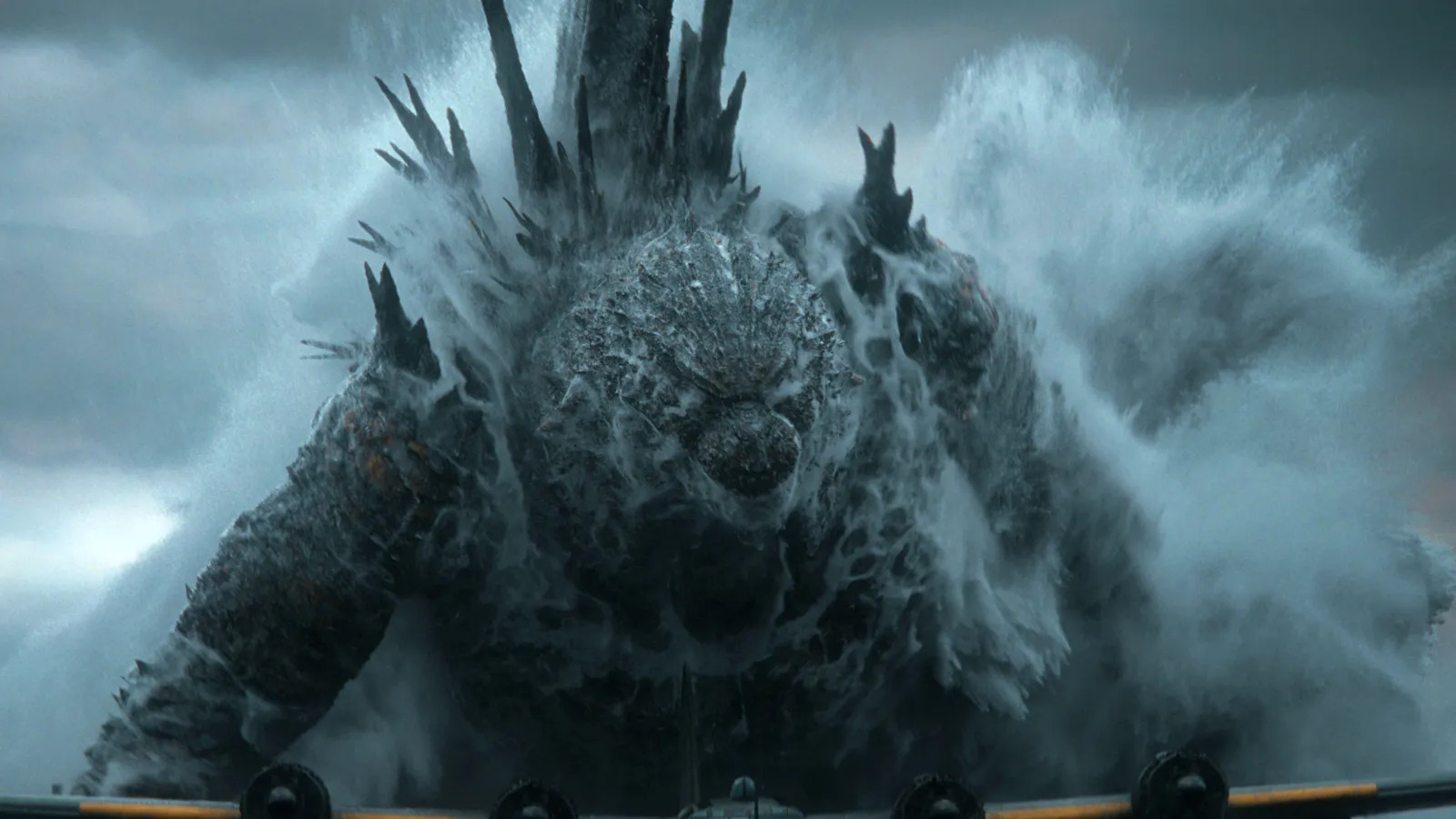
With a bigger budget than Minus One (which cost less than $15 million) to play with, Yamazaki’s Oscar-winning effects team at Shirogumi, the Tokyo studio where he got his start, has delivered unbelievable work, creating not one but two lethal monsters capable of massive devastation with a flick of their sizable tails. Godzilla is bigger and meaner than ever, a terrifying wall of scales and muscle, while Ghidorah, last seen tearing through the MonsterVerse in Godzilla: King of the Monsters, brings a cosmic, otherworldly dread that feels like it doesn’t belong on this planet. That keeps you on your toes, because no one is safe, and as the stakes climb, so does the unpredictability of what’s coming next.
This is also the first Japanese production filmed for IMAX, shot on IMAX-certified digital cameras, and the effects are in nearly every scene without ever calling attention to themselves. Cinematographer Kōzō Shibasaki keeps the camera in constant motion during the action, covering land and sea (and air) so that it feels like you’re watching from the perspective of a bird flying by. Editor Ryūji Miyajima brings all of it together into one cohesive whole, and costume designer Aiko Mizushima outfits everyone in period clothes that fit them precisely.
And then there’s that score. Satō’s music is truly magnificent, especially in the bravura final act when Godzilla gets down to business, and it’s ingenious throughout, finding ways to honor its creature-feature roots without ever becoming repetitive.
See It in IMAX and Have Your Mind Blown
Parents, a word of warning before you buy tickets. Yamazaki’s follow-up is rated R (up from PG-13 on the last film), the first Godzilla movie ever to land that rating. It earns it through very violent passages of creature mayhem and intense sequences that may upset kids who handled the first one just fine. It’s far more gruesome and shocking than Minus One, so exercise caution before bringing the little ones.
It’s also directed and acted with greater confidence, and it more than delivers on the promise of its initial outing. See it in IMAX and have your mind blown. Godzilla Minus Zero is an outstanding, epic monster movie, and after two hours and fifteen minutes in its grip, I’m already wondering how Yamazaki will top it, and what on earth he’ll call it.

The Final
Godzilla Minus Zero is outstanding, epic monster filmmaking with a beating heart and a score that will send shivers up your spine. Leave the little ones at home, find the biggest IMAX screen you can, and have your mind blown.
10/10
Where to watch: In theaters and IMAX November 6 (IMAX early access November 3)

Reviewed by Joe Botten
Joe Botten is The MN Movie Man, a Twin Cities film critic writing spoiler-free reviews since 2012. He also writes for Loud and Clear Reviews, a Rotten Tomatoes approved site. Find him on Instagram and Letterboxd.
Looking for something?
Search by actor, movie, director, genre or keyword.


Leave a Reply