

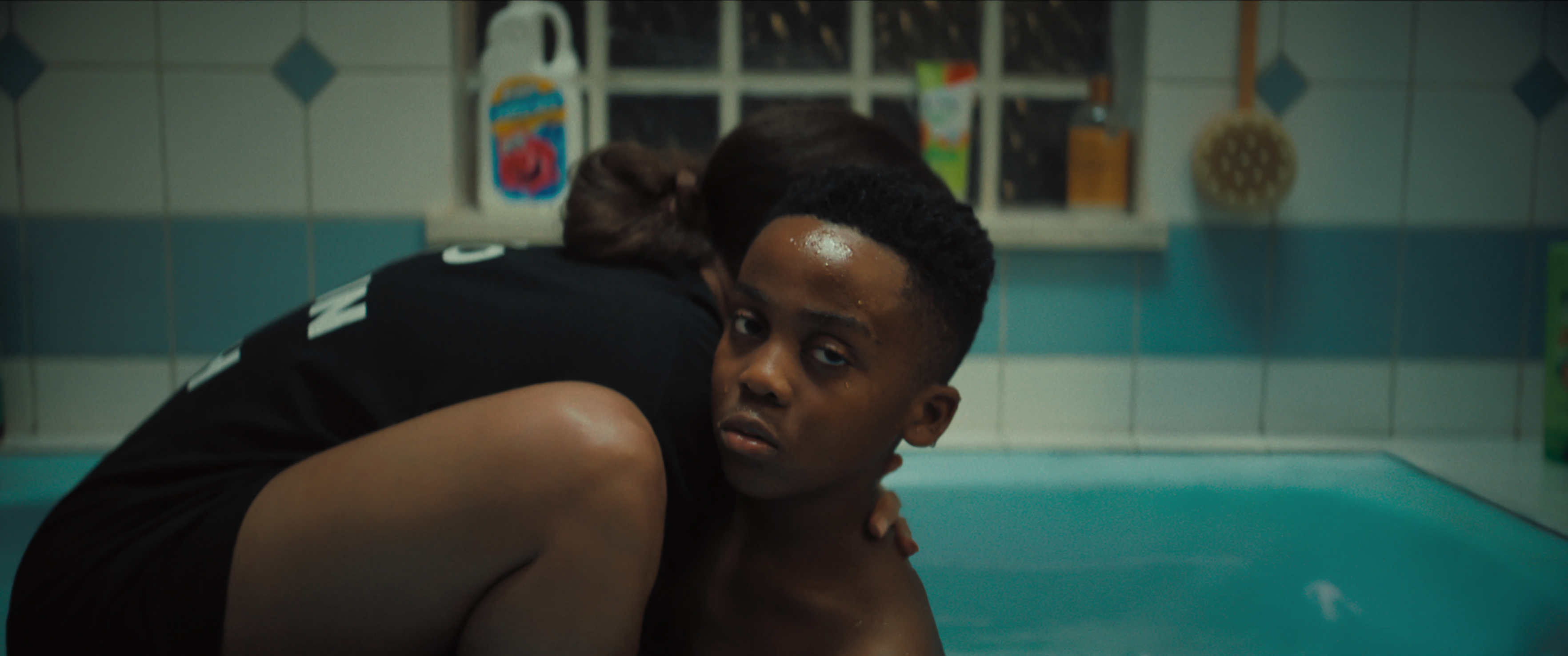
Synopsis: A family living in a home in Indiana discover strange, demonic occurrences that convince them and the community that the house is a portal to hell.
Stars: Andra Day, Caleb McLaughlin, Anthony B. Jenkins, Demi Singleton, Aunjanue Ellis-Taylor, Omar Epps, Mo’Nique, Glenn Close
Director: Lee Daniels
Rated: R
Running Length: 112 minutes
The haunted house film has almost become a rite of passage for filmmakers and moviegoers alike. The Exorcist, Poltergeist, The Conjuring, and The Amityville Horror (and its horde of sequels) have focused on families terrorized by an evil living in their house. Often affecting one or more household members, the presence takes on various forms and faces, but the result is never pleasant. The idea of a family being threatened within the supposed safety of their home has always struck a raw nerve in audiences, and, naturally, Hollywood and creatives seek to explore/exploit that fear.
Director Lee Daniels is the latest director to toss his hat into the rattling ring of horror with The Deliverance, a Netflix film being released in limited theaters before its streaming debut on August 30. A two-time Oscar nominee for 2010’s Precious, Daniels has followed up that brutal (but beautifully moving) film with a series of bizarre, misshapen misfires that have gone nowhere. 2012’s The Paperboy was critically reviled (and was revolting), 2013’s The Butler was billed as an Oscar contender until people got a look at it, and while star Andra Day nabbed an Oscar nom for her work, 2021’s The United States vs. Billie Holliday was a sloppy biopic with no style or substance.
Despite consistently attracting A-list talent in front of and behind the scenes, Daniels can’t produce a winner. I’m sure he was thinking that with horror being such a hot ticket, the true story that fueled The Deliverance would help him gain traction back to the top. Sadly, this is yet another unfortunate crash-and-burn effort for the director, a messy, genre-bending fiasco in every sense of the word that seems to have lost its way between concept and execution. It’s often jaw-droppingly bad on basic filmmaking principles alone, with respectable actors giving performances that I think are bad only because they are so poorly edited.
Inspired by a supposedly true story, David Coggeshall & Elijah Bynum’s screenplay follows Ebony Jackson (Day), an alcoholic single mother grappling with the inner demons from her past while trying to provide a fresh start for her family in their new Pittsburgh home. Living with them is Ebony’s cancer-stricken, newly religious mother, Alberta (Glenn Close, Hillbilly Elegy), who wears wigs to cover up her balding head and fishnet jeans to attract the attention of her chemo nurse (an unrecognizable Omar Epps, Trick). Ebony’s three children, Nate (Caleb McLaughlin, Concrete Cowboy), Shante (Demi Singleton, King Richard), and Andre (Anthony B. Jenkins), complete the household but serve as emotional (and physical) punching bags for Ebony, who can’t control her actions when her emotions take control.
With the children’s father out of the picture (it’s never clear why), Alberta is now living with Ebony, but the two women don’t see eye to eye much. Ebony calls her mother by her first name, and both routinely tell the other, in increasingly colorful terms, that they are willing to fight whenever and wherever. The cycle of generational trauma exists within this family, but Daniels isn’t interested in exploring this horror or how it reflects on our modern society. Instead, Coggeshall and Bynum’s script will randomly introduce a supernatural element between domestic disputes to remind audiences of yet another threat preying on this family.
As bizarre events unfold, Child Protective Services gets involved in the form of ill-defined case worker Cynthia Henry (Mo’Nique), who appears in the film as if we already know who she is. The malevolent forces that seek to capture the souls of Ebony and her children become the least of their worries when Cynthia is on the scene, a case worker so clueless and befuddled she asks for directions to the front door while sitting two feet away from it. I thought things were turning around when Aunjanue Ellis-Taylor (Origin) showed up as a Reverend who calls herself an apostle with knowledge of the history of the house, but sadly, Ellis-Taylor becomes yet another victim of the shoddy script that has no clue what it’s trying to say or do. What could have been a chilling exploration of maternal instinct and faith versus supernatural wickedness instead unravels into a confused mess of clashing tones and half-baked ideas.
I was quite impressed with Day as Billie Holliday (not enough to think the Oscar nom was deserved, but still), but here she needs help to breathe life into her extremely poorly written and edited role. Her performance oscillates between melodramatic hysterics and wooden delivery, never finding a believable middle ground. I get the feeling there’s a good performance in there that was lost in Stan Salfas’ editing bay because, now and then, something in Day’s performance catches fire. Close brings her trademark intensity to the role. However, even her considerable talents and willingness to look and sound absolutely foolish can’t elevate the clunky junk she’s stuck with.
Perhaps the most egregious sin in The Deliverance is its tonal whiplash. Daniels’s attempt to marry gritty family drama with supernatural horror creates an ugly Frankenstein monster bride that wastes time and resources. One moment, viewers are experiencing a ham-fisted exploration of familial trauma; the next, they’re subjected to CGI possessions and demons that feel like they were taken from some direct-to-DVD sequel from Dimension Films in the early 2000s. That it takes it one step further and traffics in offensive stereotypes and clumsily bumbles its attempt to tackle weighty themes is even worse. Its cringe-worthy depiction of religious fervor for the superficial treatment of addiction and abuse shows an extreme immaturity in narrative filmmaking, and this isn’t the first time Daniels has proven to be lacking in this regard. It’s misguided and, at times, outright irresponsible in its messaging.
Saying that The Deliverance lurches from scene to scene, leaving audiences wondering if they’ve wandered into some avant-garde experiment gone horribly wrong, would suggest that the film has some style to speak of. It doesn’t. It fails to deliver scares, drama, or meaningful commentary on the human condition. It’s another misfire in Daniels’ increasingly perplexing filmography that could have been a powerful addition to the haunted house canon.
Looking for something? Search for it here! Try an actor, movie, director, genre, or keyword!
The MN Movie Man
Spoiler-free film critic on a mission to ensure your cinematic experience is unforgettable. Let's dive into the magic of movies together!

<script async src="https://widget.justwatch.com/justwatch_widget.js"></script>Subscribe now to keep reading and get access to the full archive.


Leave a Reply