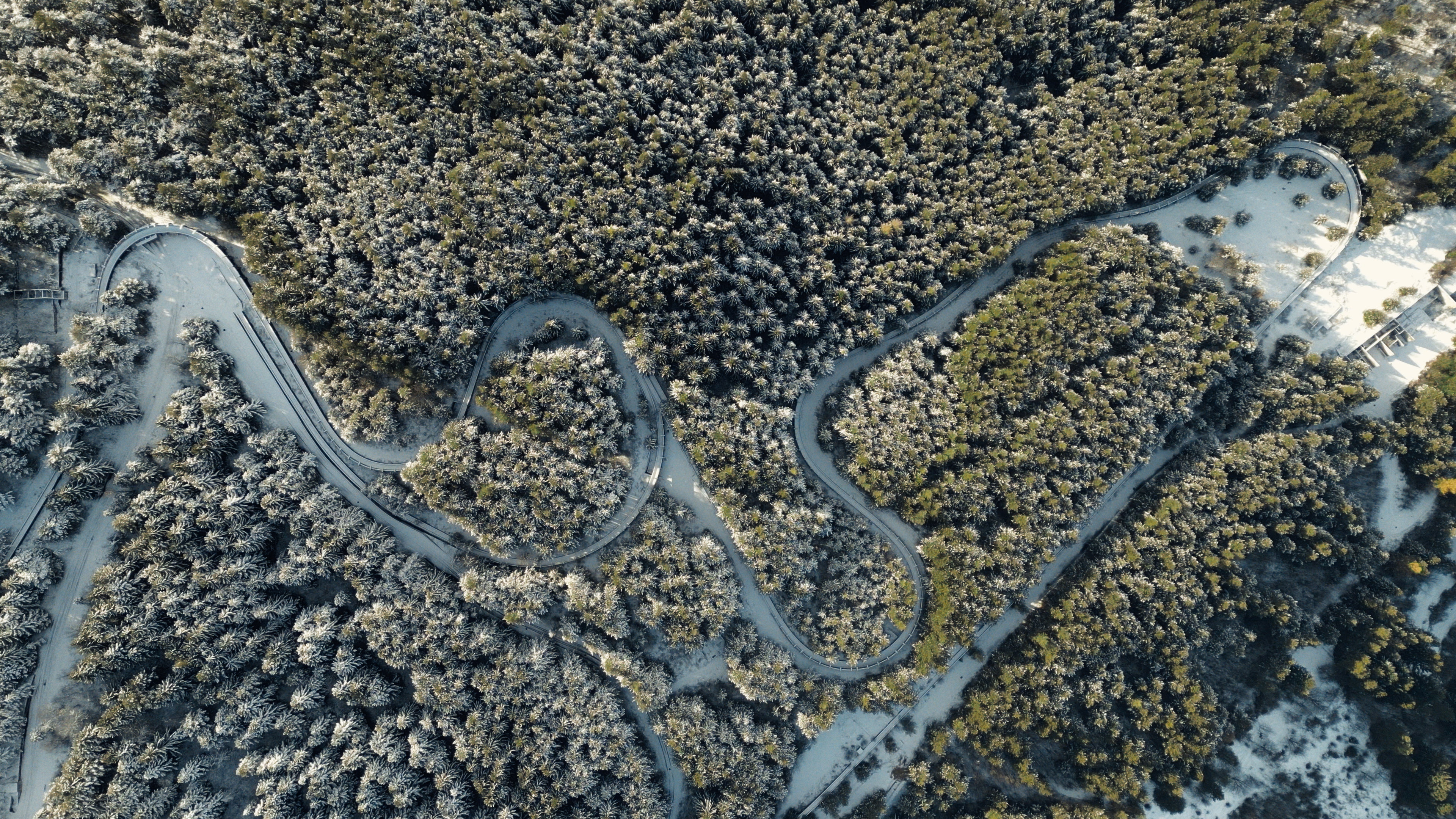
Synopsis: Three Bosnian teens train on a decaying, war‑scarred luge track as they chase Olympic dreams, guided by a devoted coach despite limited resources and the lingering impact of Bosnia’s past.
Stars: Mirza Nikolajev, Zlatan Jakić, Hamza Pleho, Senad Omanović
Director: Ryan Sidhoo
Rated: NR
Running Length: 90 minutes
Movie Review in Brief: The Track has one of the best real-life sports setups in recent documentary memory and an endearing group of subjects — it just can’t fully decide whether it’s a comeback story or a coming-of-age portrait, and occasionally pays the price for it. Still worth watching.
The Track Has Been Through More Than the People on It
It was built for the 1984 Winter Olympics, when Yugoslavia put Sarajevo on the world map and the bob and luge track on Mount Trebević was heralded by international federations as one of the finest sliding facilities anywhere. Then the country fractured. The siege of Sarajevo lasted 1,425 days, the longest attack on a capital city in modern history, and the track became an artillery position. Bullet holes were drilled into the final turns. The refrigeration plant was destroyed. Both start houses were lost. The forest started growing back over the concrete. For years, the only people on it were graffiti artists and mountain bikers.
And then, somehow, people started luging on it again. That’s The Track. That single fact — that this place exists, that it still functions, that anyone thought to try — is more than enough to carry a documentary. The kind of human sports story Hollywood would absolutely love to get its hands on. (Angel Studios, the line forms here.) Canadian filmmaker Ryan Sidhoo found his way to it in 2016 and spent the better part of five years following what he found there.
Three Athletes, Three Very Different Definitions of the Dream
Sidhoo follows three athletes and their coach across four-plus years, and the film’s sharpest instinct is treating them as distinct people rather than a single underdog unit. Mirza Nikolajev is the one you’d put on the poster: the most camera-ready of the three, polished in a way that sets him apart from his teammates, with a focused intensity that carries him through near-misses and setbacks that would have finished most people. He made it to the 2022 Beijing Winter Olympics, carrying Bosnia’s flag at the opening ceremony, then in one of those genuinely cruel sports twists, just missed the qualifying cutoff for the 2026 Milan-Cortina Games, leaving his country without representation.
Zlatan Jakić is the dreamer, more comfortable wandering than training. Sidhoo’s camera finds him best when it follows him away from the track entirely, moving through a city that can’t quite offer him a future, trying to locate what he actually wants from the life in front of him. There’s a whole other documentary inside Zlatan, one about a young man searching for purpose in a country that keeps running out of it.
Then there’s Hamza Pleho, the most complicated of the three. The man of his household at an age when most people are still figuring out their class schedule, he’s caring for two sisters and his mother while carrying more weight than he ever shows. His relationship with the sport and with his own potential is the film’s most affecting thread.
Coach Senad Omanović holds it all together. A former Olympian himself, back when the country was still Yugoslavia, he maintains the track on his own dime and his own time: filling cracks, waving tourists through, showing up every day for athletes who don’t always return the favor. He has a wife so fiercely in his corner that she’d seem like a screenwriter’s invention if the camera weren’t right there watching her. The two of them together are the kind of real-life partnership that makes you wonder why anyone bothers writing fiction.
Where the Film Hits a Curve
The Track is a documentary that had the material for a very strong short film and made the call to stretch it into a feature, and you can feel that tension in the middle third. The first thirty minutes are confident and engaging: the history of the track, the stakes, the characters, Sidhoo establishing his footing. Then the film pivots away from the athletic momentum and spends a significant stretch in the personal lives of the three men in ways that feel less like depth and more like time being filled.
Those personal stories aren’t the problem. Zlatan’s and Hamza’s are genuinely worth the time. The issue is that major events occasionally get rushed past while quieter stretches linger, and at least one pivotal moment near the end arrives and departs so fast that the outcome is never made clear. Leaving an audience hanging on something that consequential isn’t dramatic restraint; it’s an editing choice that doesn’t serve the film. A few closing title cards would go a long way.
The chronology also gets muddy: in one scene, a friend of Zlatan’s gets his curly hair shaved down to nothing; in the next, it’s back to full volume, with no indication of how much time has passed. As the subjects age and change across four years, new hairstyles, new tattoos, new faces on the periphery, the film doesn’t always do the work of keeping you oriented.
What Sidhoo and His Team Get Right
None of that diminishes what cinematographer Jesse McCracken pulls off on that mountain. The Track is a bright, vivid doc, and the luge footage is genuinely exhilarating: the curves, the speed, the forest pressing in on both sides of the concrete. It makes you want to book a flight to Sarajevo, walk that track yourself, and try to understand how a place this scarred by history still manages to produce something this alive.
Colorist C.J. Julian keeps the image warm without prettifying what shouldn’t be pretty. The score from composers Edo Van Breemen and Johannes Winkler, anchored by solo violin work from Rusanda Panfili, sits under the film with the right weight, never pushing you toward emotions you haven’t already arrived at on your own.
Editor Graham Withers, who also co-wrote the film, shapes the four-year span into something that mostly flows. Like the track itself, it holds together even where the damage shows. Sound designer Troy Slocum’s work on the luge sequences deserves a mention. The track has a particular sonic texture, concrete and speed and wind, and it comes through.
A Story That Deserves to Be Seen
Bosnia’s youth unemployment rate is among the highest in the world. The war ended thirty years ago and its consequences are still being sorted through by a generation born into the aftermath of a conflict that targeted the Bosniak community with particular brutality and left an entire country trying to figure out what comes next. Three young men training on an Olympic relic with no government support, guided by a coach who asks nothing in return: that’s not just a sports story. It’s a story about what a generation does when the world has moved on and left them with the wreckage. The Track captures that honestly, even when it doesn’t fully know what to do with it narratively.
The film won audience awards at both the Sarajevo and Vancouver film festivals and took the Tides Award for Outstanding Canadian Documentary at the Vancouver International Film Festival. The True/False Film Fest‘s True Life Fund put over $20,000 directly into the luge team’s hands. That’s the film doing something documentaries rarely do: actually changing the material conditions of the people it’s about. Imperfect as it is at times, The Track gets somewhere worth going.
Looking for something? Search for it here! Try an actor, movie, director, genre, or keyword!
