Synopsis: When a soldier’s mother discovers the bullet that killed her son in Afghanistan was made at the factory where she works, she sets out on a path of revenge against those responsible
Stars: Lena Headey, Hamza Haq, Amybeth McNulty, Jordan Kronis, Amanda Brugel, Enrico Colantoni
Director: Chad Faust
Rated: NR
Running Length: 91 minutes
Movie Review in Brief: Chad Faust’s small, serious drama about a mother who traces the bullet that killed her son finds Lena Headey doing the best dramatic work of her career. Not the thriller the marketing is selling, and much better for it.
Ballistic Review: Mother Load
Lena Headey has been one of the most reliable actors of her generation without ever quite getting the film vehicle to match. She’s played regal villains, scheming Brits, and thankless love interests for so long that it’s easy to forget she started in smaller, stranger pieces where the intensity had room to land. Ballistic, from writer-director Chad Faust, is her second genuinely strong showing of 2026, Normal was recently release where she plays someone quite different, and it may be the first American release in a while that really understands what to do with her.
Fair warning up top: the marketing is selling this one as an action thriller, and it isn’t. Ballistic is a tough, serious drama with thriller undertones that start to tighten in the third act. The poster wants you to expect Liam Neeson. What you’re getting is closer to Frances McDormand — specifically the McDormand of Three Billboards, grief wound so tight it distorts the world around it.
A Bullet, Traced Backwards
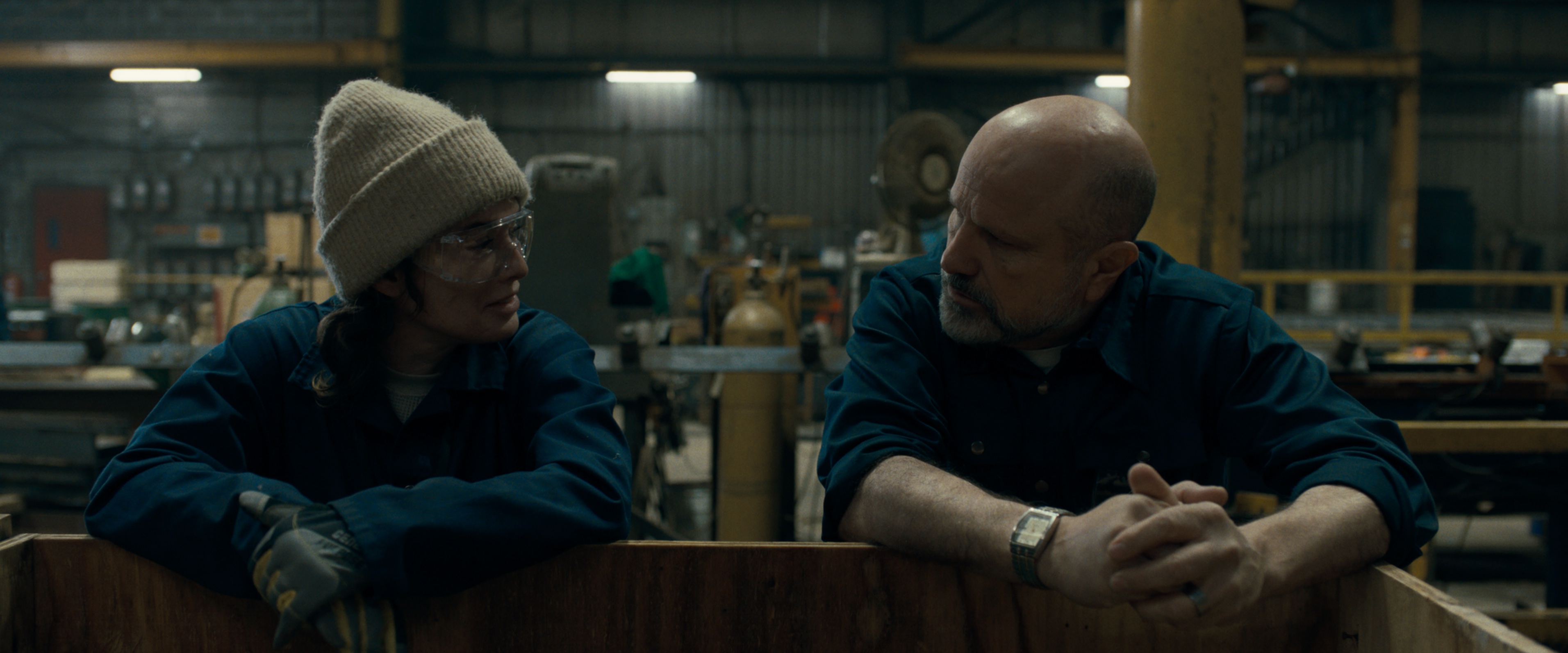
Nance (Headey, Gunpowder Milkshake) works the line at a munitions plant in small-town Ohio. She makes bullets. She boxes them. She doesn’t think much about where they go. Her son Jesse (Jordan Kronis) is deployed to Afghanistan, his pregnant wife Diana (Amybeth McNulty) is preparing to move in with her, and Nance is counting down to the end of his tour. Then Commander Galindo (Amanda Brugel, Becky) arrives at her door to say that Jesse is coming home in a casket.
It’s what Nance does next that defines the film. She asks what caliber of bullet killed him and goes rogue in private moments the movie doesn’t glamorize. Extracting a sample of the bullet still lodged in his corpse which the official channels wouldn’t provide, she runs it against the ammunition she manufactures. When she gets the match she was half-expecting, she spirals — not toward catharsis, but toward something much more uncomfortable.
Faust isn’t interested in handing Headey a Neeson-style revenge arc. He’s interested in what happens when grief has no clean outlet and nowhere safe to land.
Headey Goes Somewhere Rare
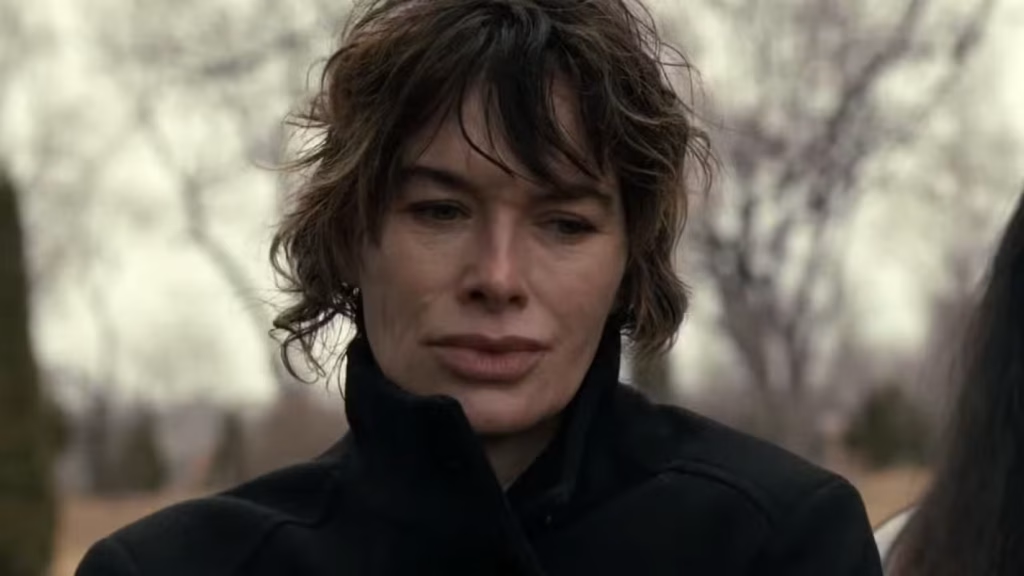
Headey’s performance is the film. She’s raw in a way that doesn’t feel performed, hollowed out in a way that doesn’t feel calculated. When Nance finally starts lashing out, at her boss, at the Army, at strangers, the violence is unnerving because it’s indiscriminate rather than righteous. This is the best dramatic work she’s done on screen since 2019’s Fighting with My Family, an underseen small gem where she was particularly good. It’s the kind of role that, if nurtured correctly, could get her into the conversation at the independent ring of awards season.
McNulty is excellent as Diana, the young widow Nance can’t quite bring herself to see clearly in her own grief. Brugel is also effetive as Galindo, carrying the bureaucratic weight of a job that requires delivering devastation with a straight face. It’s also good to see Enrico Colantoni (FUBAR) again doing sharp, uneasy work as Nance’s factory boss Rick, a man who knows more than he wants to. However, it’s Hamza Haq (The Queen of My Dreams) who gives the film its sharpest counterweight as Kahlil, an Afghan immigrant who lost his own son. He meets Nance at the shooting range, the two of them circling the same wound from opposite sides.
Faust casts himself as a wounded veteran turned recruitment officer. It’s an interesting choice to step behind the camera, except he also writes himself a chunk of speechifying that plays more like a rehearsed checklist of veteran talking points than something a real person would say out loud. It’s a rare false note in a script that mostly trusts its audience.
Small-Town Specificity, Big-Picture Questions
Shot in Sudbury, Ontario, playing a red-state Ohio town, Ballistic nails the blue-collar specificity of a place where guns are part of the furniture and the nearest gun club is on the way to the grocery store. Cinematographer Kristofer Bonnell finds a working-class grit in the overcast light that never tips into poverty porn. Composer Dillon Baldassero underscores the emotional arc without overplaying it. Editor Mariana Urrutia keeps the runtime to a lean 91 minutes with credits, and nothing feels rushed or padded. Set decorator Billy Gridley deserves a shout for making Nance’s house feel like a home — one that gets colder and emptier as the film goes on.
What makes the film stick is how specifically it asks its questions. How do we treat our neighbors? When are we allowed to demand justice for our own? What does it mean that around 30% of American combat deaths come from American-made bullets? Faust doesn’t try to answer any of it. He just puts it in the room with you.
The Quiet Power of a Small Film
By the time Ballistic reaches its closing movement, the thriller framing has fallen away, and what’s left is closer to drama in real life. Faust trusts his audience to sit inside a fragile, unresolved stillness. It’s the kind of ending that would feel like a cop-out in a bigger film and feels exactly right in this one. This is the kind of small, specific, genuinely felt American drama that used to get an arthouse release and disappear inside two weeks. I hope this one finds its people. Headey has earned the audience. The film has earned the look.
Looking for something? Search for it here! Try an actor, movie, director, genre, or keyword!