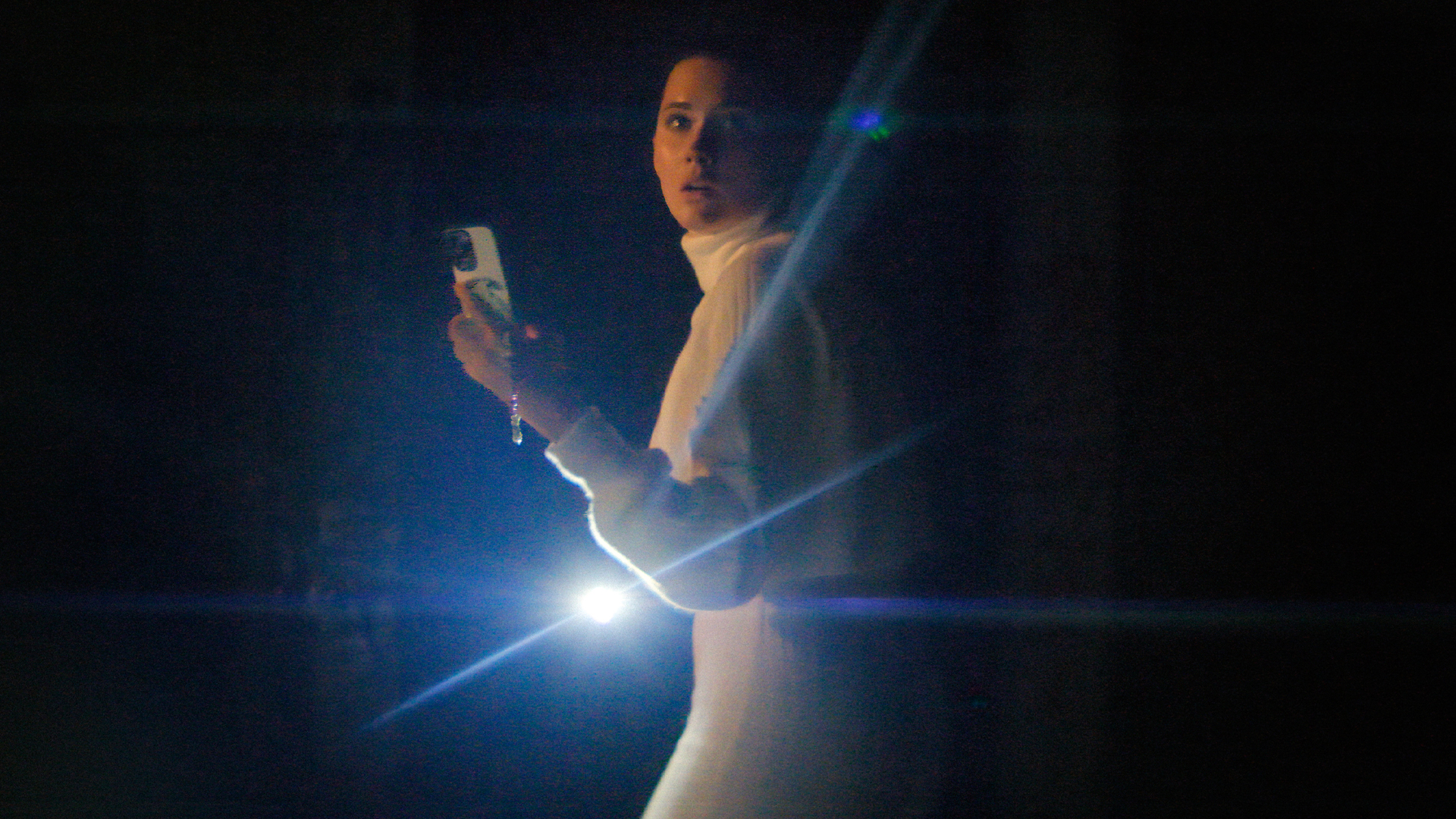
Synopsis: British beauty and lifestyle influencer Chiara King travels to Copenhagen with a documentary crew promising an unfiltered look at the business of online fame. The cameras follow her, her fans follow her, and so does somebody else. As a stalker closes in, the documentary turns into something other than a documentary.
Stars: Chiara King
Director: Mike Nybroe (feature directing debut)
Rated: R
Running Length: 101 mins
Movie Review in Brief: Chiara King gives The Influencer Project a protagonist worth worrying about, and the camera-based scares are often effective. Logical gaps and an overlong runtime keep it from fully delivering on its creepy premise.
The Influencer Project Turns Followers Into a Threat
There’s a difference between inviting people to watch your life and giving them permission to enter it. Horror built around influencers often loses sight of that distinction, treating an obnoxious lead’s suffering as the audience’s reward for putting up with them. The Influencer Project surprised me by avoiding that trap. Its central character is somebody I could actually stay with, which makes the increasingly invasive attention around her unsettling rather than something to cheer on.
It isn’t going to change your life, and several of its explanations require more generosity than they’ve earned, but it knows how to make you uncomfortable. Being watched has rarely felt less like being admired. I found it creepy, at times seriously disturbing, and considerably easier to enjoy than I expected from every other camera-based nightmares about online fame.
She Came to Copenhagen With an Audience
British beauty and lifestyle creator Chiara King plays a fictionalized version of herself, traveling to Copenhagen with a documentary crew that promises to show the less polished side of the influencer business. The cameras are supposed to offer access on her terms. An obsessive stalker introduces another kind of attention, and the premise becomes a test of how much control a public-facing person really has over the people looking at her.
Director Mike Nybroe has a useful advantage in King’s casting. She already knows the work of presenting herself to a camera, so the documentary setup doesn’t need to spend its opening stretch explaining why somebody would behave this way. The performance gives the film a credible starting point, and King remains a good lead when the situation becomes less manageable.
The public character isn’t so abrasive that you’re waiting for the movie to take her down. That choice changes the stakes. The intrusion feels like a violation of a person’s life, rather than a punishment the script has decided she deserves for having an audience.
If You Keep Filming You Need a Reason
Producers Eduardo Sánchez and Gregg Hale bring an obvious connection to The Blair Witch Project, but the film’s contemporary setting changes the questions a recorded nightmare has to answer. A camera can now be a work tool, a personal record, an invitation to strangers, and a source of evidence. Those functions don’t always agree about what should be captured or who ought to see it.
The film operates in the territory shared by found footage and screenlife horror, although the documentary setup gives it reasons to move beyond a single device. Its strongest moments make that recording environment feel like part of the threat. Watching becomes uncomfortable because the image no longer guarantees that the person being filmed controls the situation.
I also appreciated that the camerawork didn’t make me seasick. That sounds like a modest compliment, but anyone who has sat through a found-footage movie that mistakes constant shaking for authenticity knows what a relief it can be. Here, I could follow what I was watching and still feel the instability of the situation. The framing and the placement of the scares give the audience something to react to beyond physical irritation.
Fifteen Fewer Minutes Would Do More Damage
The version I watched ran 101 minutes with credits, and I’d have welcomed a substantial trim. This kind of setup benefits from keeping you close enough to the immediate danger that you don’t start auditing every recording decision. When scenes repeat information or prolong a situation without changing it, the audience gets time to ask questions the film would rather keep in the background.
Some of the filming is too convenient, and a few reveals don’t hold up especially well when you consider their logic. A documentary camera provides a useful reason for footage to exist, but that reason still has limits. The more time the movie gives us to inspect its construction, the more those limits show.
That doesn’t make the scares ineffective. I was often caught up in the nasty power imbalance between a woman who believes she can manage her visibility and somebody intent on turning it against her. I just wished the film would trust those strong stretches enough to lose the repeated beats around them. Another fifteen minutes of exposure doesn’t necessarily make the danger greater; it can make the mechanics easier to see.
A Follow Is Not Permission to Come Closer
King gives me someone to worry about, and the clear camerawork lets the scares do their job without making the format an endurance test. The shakier reveals and convenient recording choices become harder to overlook when the film lingers, which is why I kept wishing my 101-minute cut would lose the extra stretch and keep its strongest material moving.
The Influencer Project has a useful cautionary idea without needing to pretend that every viewer will leave reconsidering their social accounts. Its more immediate success is entertainment: an unpleasantly effective scenario with a lead who keeps you invested even when the plotting wobbles. It’s a creepy reminder that followers don’t always keep their distance. I wouldn’t call it essential viewing, but I would call it a good reminder to check who’s looking over your shoulder before you post.
Looking for something? Search for it here! Try an actor, movie, director, genre, or keyword!

Leave a Reply