SPOILER-FREE FILM REVIEWS FROM A MOVIE LOVER WITH A HEART OF GOLD!

From the land of 10,000 lakes comes a fan of 10,000 movies!

The Last Picture Shows: A Journey Through 123 Theaters

Synopsis: Ten states. 10,825 miles. 123 theaters. In his latest feature, filmmaker Rustin Thompson journeys into the American West on a search for traces of what was once a center of small-town life: the movie theater.
Stars
: Ross Melnick
Director
: Rustin Thompson
Rated
: NR
Running Length
: 78 minutes
Movie Review in Brief: Rustin Thompson’s small-town theater road trip is full of charming owners and empty of the audiences who keep them open. Noble, lovely, half-finished.

The Last Picture Shows Review: Everybody Wants to Talk About the Room Again

Nostalgia is having a moment, and movie theaters are right at the forefront. Repertory houses are booked solid, 70mm runs sell out in an afternoon, and people who spent five years praising the delights of the couch have suddenly remembered that the room is the point. I’m happily participating in this celluloid boom: last month I introduced a 70mm screening of the 1961 West Side Story at The Heights here in Minnesota, and Christopher Nolan’s The Odyssey has spent the past four weeks turning 70mm IMAX showings into the hottest ticket in the country. So The Last Picture Shows, a documentary about vanishing small-town cinemas, ought to be a slam-dunk success, and to be fair this one starts from real affection. Ten states, 10,825 miles, 123 theaters. That’s a heck of a pitch.

Seattle filmmaker Rustin Thompson set out to make something bleak, a tone poem about dead marquees and windswept main streets. All buildings, no people. Then came his first stop, the Desert Historic Theater in Burns, Oregon, population 2,713. The owner is a suspendered, bald, sixty-something man named Tiny who still works full time away from the theater. He and his wife bought the place with a bank loan and a Kickstarter campaign for a digital projector. Nineteen people were in the seats the night Thompson stopped by to interview him, and Tiny called that a good Friday in Burns. The film changed shape on the spot, and Thompson shows you why.

Great Hosts, Missing Guests

What follows is warm, sincere, and frustratingly incomplete. Owner after owner explains how hard the business is and how much the community means to them. The studios dictate what plays. Streaming hurt. Covid nearly finished the job. The stories start to rhyme. The sharpest material comes when they talk about having no say over their own screens. That is why so many of these theaters are grinding through week three or four of infamous turkey Shazam! Fury of the Gods. They were contractually stuck with it while nobody bought tickets. That single detail says more about the economics of exhibition than a dozen interviews about passion.

And then the movie stops asking questions. We hear from every person selling the popcorn and nobody buying it. Not one patron. Not one weeknight regular for whom this building is the only entertainment in fifty miles. Not one teenager on a first date in the balcony. The people who make a theater a community space are the whole argument for saving it, and they are absent.

Thompson also tends to stay in the lobby. He shoots beautiful facades, box offices, and concession stands, then moves on to the next town without walking into the auditorium. A movie about movie theaters keeps stopping at the door. The shuttered ones get the same treatment, admired from the sidewalk when the real story is under the dust inside.

The scope stings too. A hundred-plus theaters from Washington down to New Mexico, and the map simply ends there. There is no stated reason the Midwest, the South, and the Northeast sit this one out. I say that as somebody who could walk you through half a dozen Minnesota houses fighting the same fight. Draw the line coast to coast and you have an American story. Stop at the Rockies and you have a regional survey wearing a national title.

One Man, One Camera, 123 Marquees

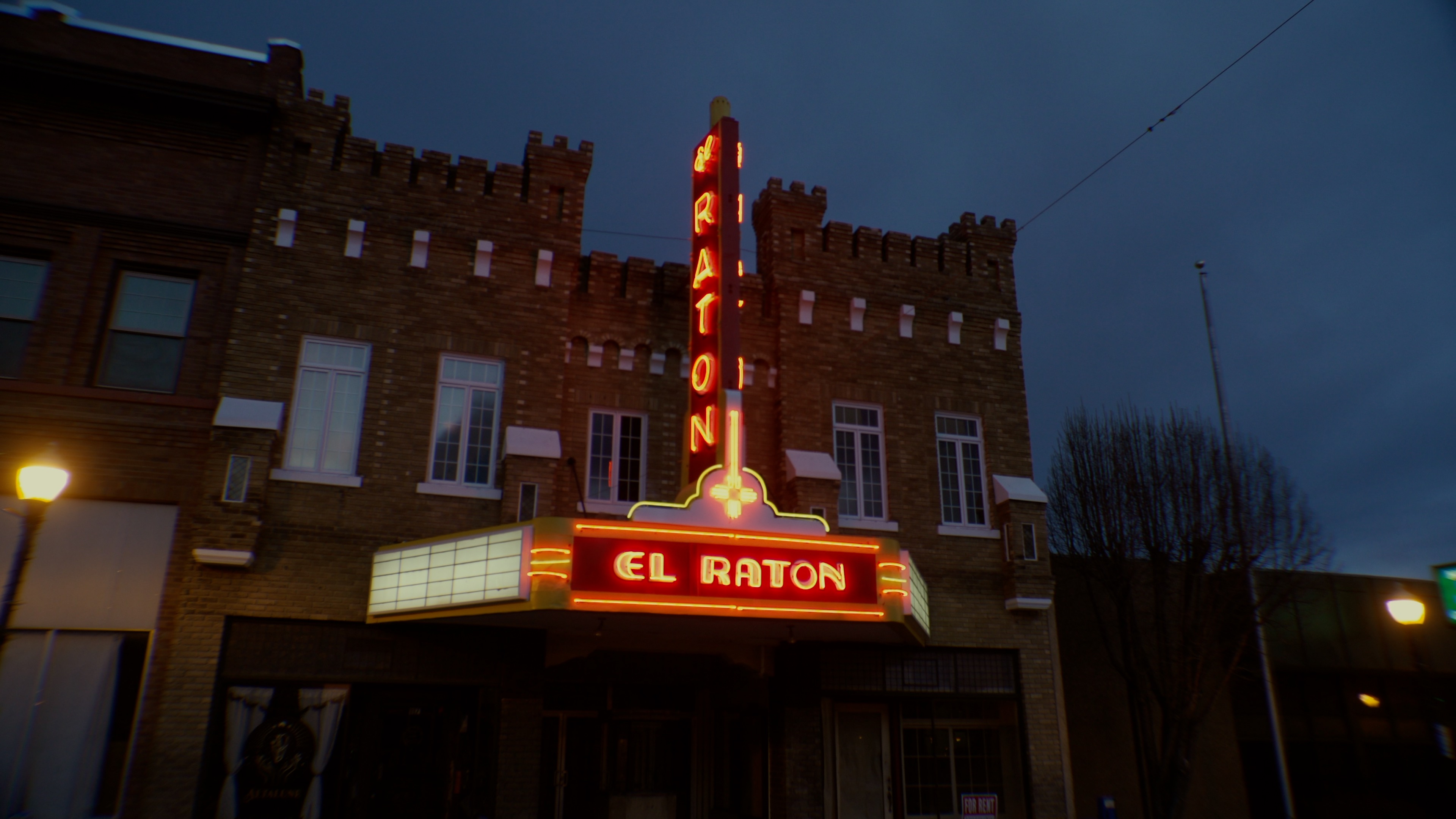
Thompson directed, wrote, produced, shot, edited, and recorded sound, and the work is capable across the board. He shoots the surviving marquees at dusk, neon buzzing against a darkening sky, and those images alone justify a lot of the mileage.

He also cuts in clips from Peter Bogdanovich’s The Last Picture Show and Giuseppe Tornatore’s Cinema Paradiso, placed with obvious love, and they’re also the two most obvious choices available. That would be forgivable if the film did anything with them, but beyond a couple of owners mentioning that Cinema Paradiso is a personal favorite, Thompson never connects those movies to what he’s actually looking at. The clips arrive, they’re lovely, and you’re left to assemble your own thesis about why they’re there. That’s a lot to hand off to the audience in a 78-minute film.

The historical spine comes from Ross Melnick, the UC Santa Barbara film professor who co-founded CinemaTreasures.org, and if you take one thing from this review, make it that link. Cinema Treasures is a volunteer-built database of more than 50,000 theaters, open and shuttered, with photos, histories, and comment threads full of people remembering the movie theaters they grew up in. It’s one of the great acts of film preservation on the internet and it’s free. Thompson thanks the site’s founders and volunteers in his credits, deservedly.

He’s also not above taking time to get arty, often being fond of a stray insert. I’m still mulling over Thompson’s inclusion of a trio of discarded iodized salt packets in a patch of grass on the grounds of a fading drive-in. At 78 minutes, the accumulation eventually flattens into a slideshow of entries you could scroll on the very site he keeps citing. Forty theaters with real depth would have beaten 123 in passing.
Still Worth the Ticket

None of that cancels what Thompson accomplished, however. He found the Washoe in Anaconda, Montana, a 1930s art deco palace being restored inch by inch, where Jerry Lussy has been running the show for 36 years and describes a building’s purpose as taking care of people. He found the Ruby in Chelan, open since 1914. He found a young couple in Winthrop, Washington who opened their town’s first cinema in sixty years. He’s also offering the film rental-free to theaters using it to raise money, which is the kind of thing that makes you want to grade on a curve.

I’m glad this exists and I wanted so much more of it. When a small town loses its theater, it loses the last sacred space where strangers still gather in the dark to feel something together, and that space deserves the exhaustive document nobody has made yet. (Check out April Wright’s Back to the Drive-In for a similar trek through outdoor theaters.) Every projector eventually runs out of film. This one stops with reels still in the can.

Looking for something?  Search for it here!  Try an actor, movie, director, genre, or keyword!

Subscribe to Blog via Email

Enter your email address to subscribe to this blog and receive notifications of new posts by email.

Join 5,235 other subscribers
Where to watch The Last Picture Shows