Synopsis: A happily married couple faces a growing threat when a notorious killer from their past, Max Cady, is released from prison and seeks revenge.
Stars: Amy Adams, Javier Bardem, Patrick Wilson, Lily Collias, Joe Anders, Malia Pyles, Anna Baryshnikov, Jamie Hector, CCH Pounder
Directors: Morten Tyldum, S.J. Clarkson, Amanda Marsalis, Reed Morano, Steven Piet, Trey Shults, Jon S. Baird, Stephen Williams, Jonathan van Tulleken
Rated: TV-MA
Running Length: 10 episodes
Movie Review in Brief: Apple’s Cape Fear is the year’s first must-watch. Bardem is a terrifying Cady, Adams and Wilson excel at hiding secrets, and it earns its place next to every prior version.
The Cady You Didn't See Coming
Some remakes justify themselves in a single performance. I found that after watching the new Cape Fear , my review began to be built around one. Apple’s ten-episode reinvention of the Max Cady story, produced by Steven Spielberg and Martin Scorsese and created by Nick Antosca, had every reason to feel redundant. Robert Mitchum and Robert De Niro already left impressive teeth marks on the role. Instead, the series finds fresh, mean new territory, and hands Javier Bardem the best villain he has had in years. This is event television, and it is genuinely frightening.
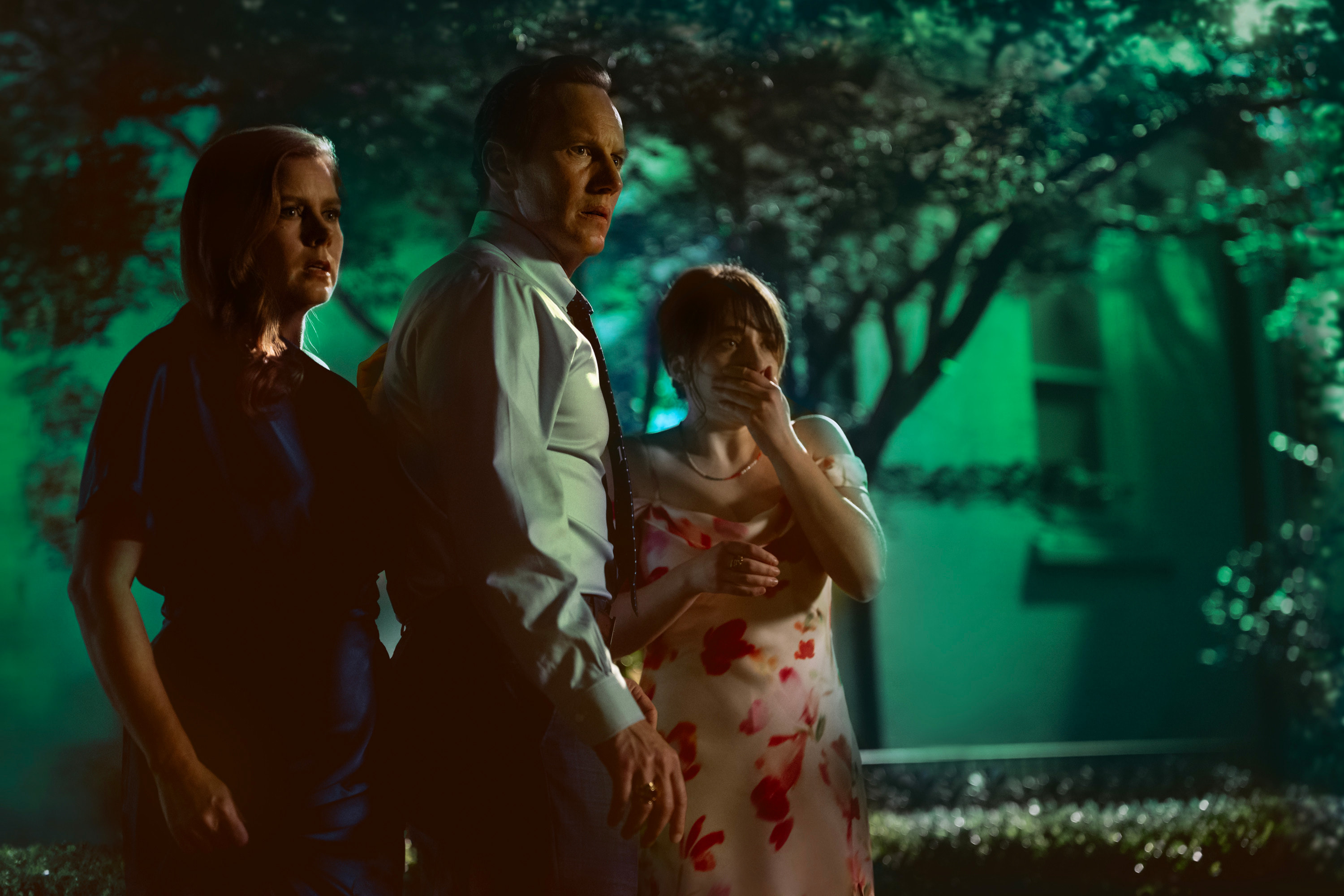
The clever twist is in the setup. Bardem’s Cady does not just stalk one nemesis. He targets both Anna Bowden (Amy Adams), the defense attorney who failed him, and her husband Tom (Patrick Wilson, Insidious), the prosecutor who put him away, two people on opposite sides of his case who conveniently married after his conviction. Stretching that dread across ten hours instead of two lets the menace seep into every corner of their lives, and the show uses the runway to twist the knife slowly.
Bardem Eats the Screen
Make no mistake, this is Bardem’s show. He does not imitate Mitchum or De Niro; he seeks out a different path forward than either of them did. His Cady is courtly and patient, a soft-spoken predator who balances Mitchum’s reptile cool with De Niro’s coiled mania and adds a streak of something even nastier. Watch closely for the way he will drop whatever mask he has chosen to wear in the last flash before the camera cuts away…small tells that illustrate how dangerous he really is.
Bardem, long one of our finest screen heavies since his Oscar-winning performance in No Country for Old Men and his Bond turn in Skyfall, finds new registers here. He can make a compliment sound like a threat and a threat sound like a delicate prayer. The familiar strains of Bernard Herrmann’s terrifying score wraps around him like fog. It is the rare reinvention that earns its existence on craft alone, and Bardem is the reason. Whenever he is on screen, the floor tilts.
Adams and Wilson, Both Hiding Something
The Bowdens are no innocents, and that is the smartest swing the show takes. Adams, shaking off a rough patch of non-starter roles in films like Dear Evan Hansen and Nightbitch, is superb as a woman who is vulnerable and in command at once while guarding a secret of her own all the same. Adams plays cornered better than almost anyone, and the series gives her room to simmer. Wilson brings an easy Southern charm that curdles the moment you look closely, a man with his own buried sins. They are matched by a deep bench, with Joe Anders (Bonus Track) all emotions and hormones as son Zack, Lily Collias (Good One) sharp as their daughter Natalie, plus CCH Pounder, Ron Perlman, and Ted Levine lending character-actor prestige to the edges.
Antosca, no stranger to slow-burn dread after directing domestic dramas A Friend of the Family, Candy, The Act, and writing Antlers, lets the moral rot breathe. The Bowdens spend the series realizing the man hunting them may understand them better than they understand themselves. That scares them more than anything.
The ten-episode shape is the real argument for its existence. Where the films had to compress Cady’s siege into a tense couple of hours, the series lets the intrusion creep, a favor here, a coincidence there, until the Bowdens cannot tell where their own paranoia ends and Cady’s design begins. Episodes end on small, awful turns rather than big cliffhangers, and the patience pays off. Perlman and Levine, used sparingly, add texture to a world that feels lived in rather than staged, and the production design keeps the Southern setting humid and oppressive. It is the kind of limited series that actually needs every hour it takes.
The craft underneath is what seals it. The score works like weather, a low, wrong hum that tells you Cady is near before he steps into frame like the shark from Jaws, and the camera keeps finding him at the edges of shots, half-seen, already inside. The writing is just as careful with its central gamble. By making the Bowdens guilty of something, but not telling you what, the series turns a simple stalker story into a moral pressure cooker where you dread Cady but also distrust his targets in the same breath. Adams sells that tension better than almost anyone working, a woman fighting for her family while a buried sin gnaws at her resolve. It is the kind of show that makes you feel complicit, rooting for people you are not sure deserve saving, and that discomfort is precisely the point.
Fear, Stretched Thin and Sharp
Prestige TV has been littered lately with glossy adaptations that forget to be about anything, and the limp 2024 take on Presumed Innocent is exhibit A. Cape Fear is the antidote. It is patient, gorgeously made, meaner than any version that came before, and anchored by a titan having the time of his life. It comfortably sits alongside the 1991 film and clears the bar set by the 1962 original. If you only make room for one new series this summer, make it this one. Just be ready to leave a few lights on when the credits roll, because this one lingers long after you turn the TV off.
Looking for something? Search for it here! Try an actor, movie, director, genre, or keyword!
