Synopsis: Two New Yorkers search for love on the one night of the year when sex is legal.
Stars: Monica Barbaro, Callum Turner, Maya Hawke, Julia Fox, King Princess, Ziwe, Ben Marshall, Ella Loudon, Molly Ringwald, Levar Burton
Director: Will Gluck
Rated: R
Running Length: 102 minutes
Movie Review in Brief: Twelve hours a year is all single America gets, and Monica Barbaro spends every one of them stealing the movie. One Night Only is the R-rated rom-com’s big comeback, minus an invitation for half the city.
One Night Only Review: The Grown-Up Rom-Com Clocks Back In
Hollywood used to make these all the time: the R-rated romantic comedy for adults, sexy without tipping into a gross-out contest, built for two people sharing an armrest and a large popcorn. Then the form lost its way. Men started the trend of swapping wit for bodily fluids, women got marched down the same road soon after, and before long the rom-com, raunchy or otherwise, was easier to digest as a Netflix original than as a studio summer release. So the pleasure here is simple: the grown-up date movie is alive, funny, and back on a big screen where it belongs.
Three years ago a Mandate outlawed premarital sex, leaving single America exactly twelve hours a year, 7 p.m. to 7 a.m., to sort itself out. Allie (Monica Barbaro, A Complete Unknown) is a singer with stage fright who pays rent recording pop covers as pharmaceutical jingles. Owen (Callum Turner, Green Room is a pizza shop owner who picked this exact night to propose to his girlfriend, played by Maya Hawke, and got dumped instead, ring still in his pocket. He and Allie collide, they feel it, and the city spends the rest of the night yanking them apart.
Director Will Gluck, who made Easy A and Anyone but You, keeps insisting this isn’t science fiction, and he’s right. It plays like an ordinary Tuesday with one extra rule bolted on. The script started as an original by Travis Braun that topped the 2024 Black List, Hollywood’s yearly poll of its favorite unproduced screenplays, before Gluck rewrote it himself, and the seams between the two don’t show.
Barbaro and Turner Have the Goods
Turner and Barbaro click, and not only in the sparks department. Gluck gives them time to become friends before anything else happens, the step most modern rom-coms skip on the way to the kiss, and it changes everything that follows. A rom-com can fake a spark. It can’t fake two people enjoying each other’s company.
Turner is a natural on camera, warm and a little goofy and completely at ease in a genre that eats stiffer actors alive. He’s also having quite a year away from the screen, both as a perennial name in the James Bond conversation and as the man who just married Dua Lipa across nine days of ceremonies in London and Palermo. I remain unsold on the Bond talk, and I mean that kindly. His face isn’t built for solemn. It’s built for romantic comedy, for the double take and the sheepish grin, and One Night Only is a far better use of him than a tuxedo will ever be.
Barbaro, though, is the one you walk out talking about. Her Oscar nomination for playing Joan Baez in A Complete Unknown was a genuine surprise on nomination morning and completely deserved on the merits, and what she does here is harder than it looks. She sings live throughout, plays her own piano, and she’s legitimately good, which is what makes Allie’s stage fright land: the fear was never about talent. Watching her perform with the nerves crawling all over an otherwise lovely voice, still holding the room’s sympathy and yours, is the most endearing thing in the movie. She turns being afraid of your own gift into something you lean forward and root for.
The night also throws rivals at them, which is where the bench starts earning its keep. Charlie Gillespie shows up as a smooth young singer who makes a genuine run at Allie, every bit as charming as he was in Suze, and a rom-com is only as convincing as its temptations. Gillespie is a very credible one.
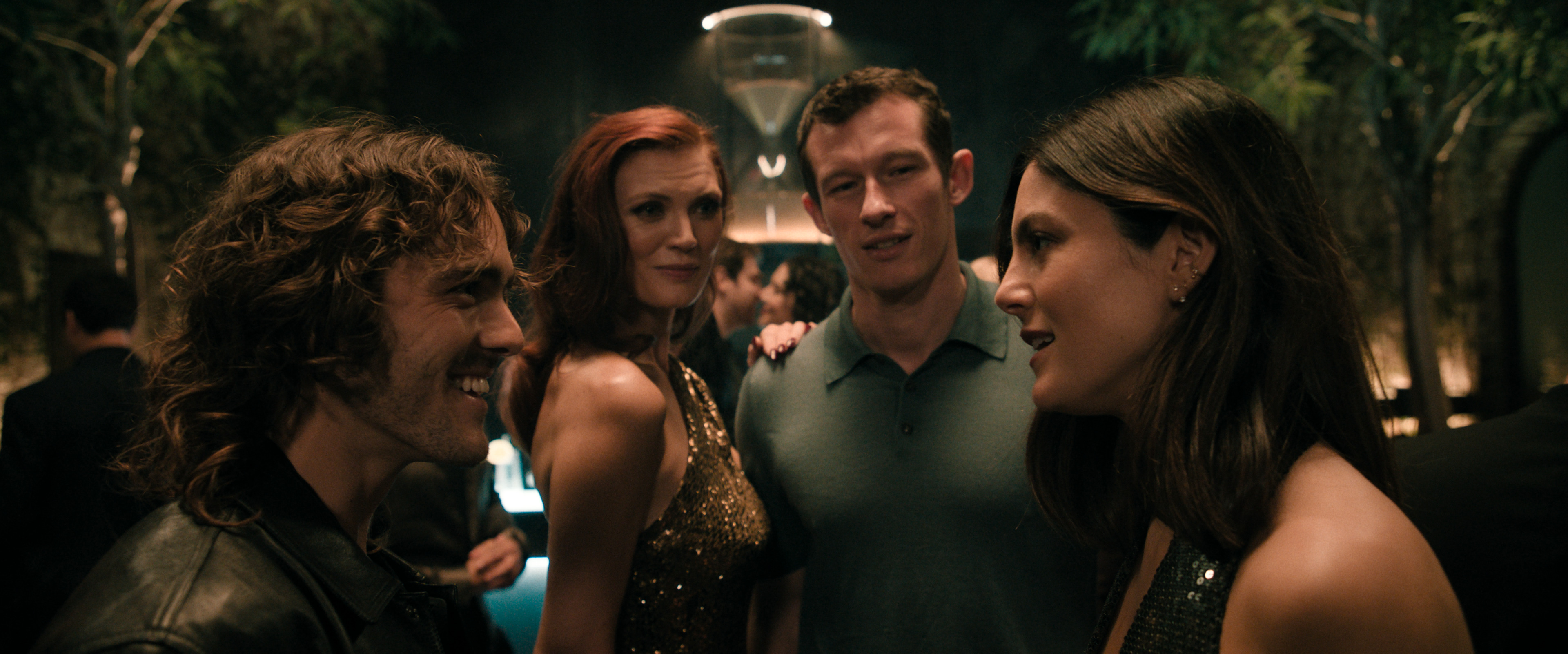
The Deepest Bench of the Summer
Molly Ringwald, an actress who knows her way around this genre better than almost anyone alive, plays Owen’s mother Linda, and there’s real pleasure in watching the person who once received all the advice become the one handing it out. Braun and Gluck’s script gives Linda a sex life of her own, including a bubble wrap sequence I won’t spoil. LeVar Burton plays her boyfriend Rick in a belly shirt with total Shakespearean commitment, and he is not kidding around for a second.
Hawke, who with every passing year morphs a little further into her mother, Uma Thurman, in the face and now in the voice too, delivers the breakup that diagnoses Owen in two words and exits like a coroner leaving the scene. Julia Fox (Presence) turns up as a bartender Owen will go an unreasonable distance to please, playing pure indifference as a superpower. King Princess (Song Sung Blue) lasts about ninety seconds as a wing-woman and makes them count. Mike Birbiglia (Sleepwalk With Me) wanders in as a cop at the worst possible moment, playing it with the unhurried patience of a man who has broken up a hundred of these. Not one of them is obnoxious, which in a comedy this crowded is much harder than it sounds.
A Beautiful Bubble With a Blind Spot
Here’s where the fantasy gets conspicuous, and I want to push on it, because the film opened the door itself. This is the one night of the year the entire country is permitted to have sex. Our leads cross a huge amount of New York, Brooklyn included, and encounter almost no queer people. There’s a single distant, blurry glimpse of two men sneaking a kiss. Ten feet closer to camera, straight couples are devouring each other in doorways. Otherwise it’s Allie’s lesbian roommate, who sits the whole night out babysitting for five grand, which means the movie’s one significant queer character is paid to be absent from the plot.
And think about the premise for one second longer than the film does. A national law criminalizing sex outside marriage would fall hardest on the people who have historically been denied marriage in the first place. That isn’t a niche observation, it’s the most obvious consequence of the rule the movie invented, and One Night Only never once looks at it. Everybody prowling this city is also good-looking, in terrific shape, or both. The film is racially diverse and otherwise sealed shut. You can’t build a story about who gets to be desired and then trim the guest list on the way in. The premise is a national referendum on desire. That omission is louder than any joke in it.
Bring a Date
Set that aside, or hold it alongside everything else, and this is still a great time. Yaron Orbach shoots a New York both familiar and a half step ahead of itself, and he’s quickly becoming one of the more dependable eyes in this kind of picture. Scott Kuzio’s design work fills the frame with pro-Mandate and anti-Mandate signage that does real world-building in the background of shots nobody is asking you to study. The Este Haim and Christopher Stracey score bounces. The song strategy is less disciplined: every corner turned brings another plucky little needle-drop intro, like a jukebox somebody keeps bumping with their hip. Gen Z brains will be fine. My patience frayed.
Universal should put this in front of as many couples as it can find. Plenty of partners spent this summer being gracious about The Odyssey and Spider-Man: Brand New Day, both of which are a good time, and equity says she gets to pick the next one.
For a film about one night a year, One Night Only has real staying power. I’m ready to ask it out again.
Looking for something? Search for it here! Try an actor, movie, director, genre, or keyword!
